
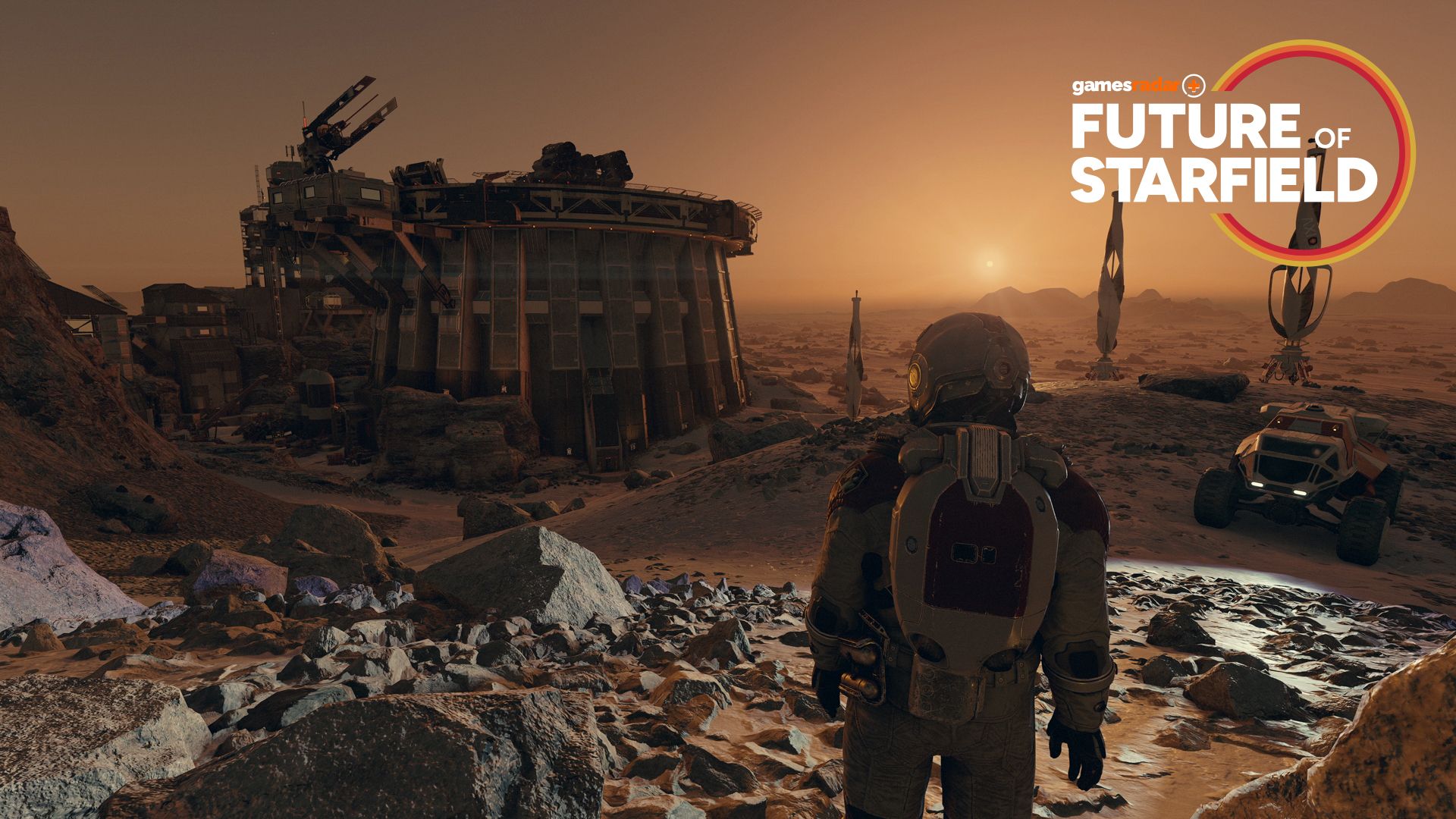

Former Starfield lead systems designer Kurt Kuhlmann says he would be surprised to see Starfield 2, but Bethesda has not announced or canceled a sequel.
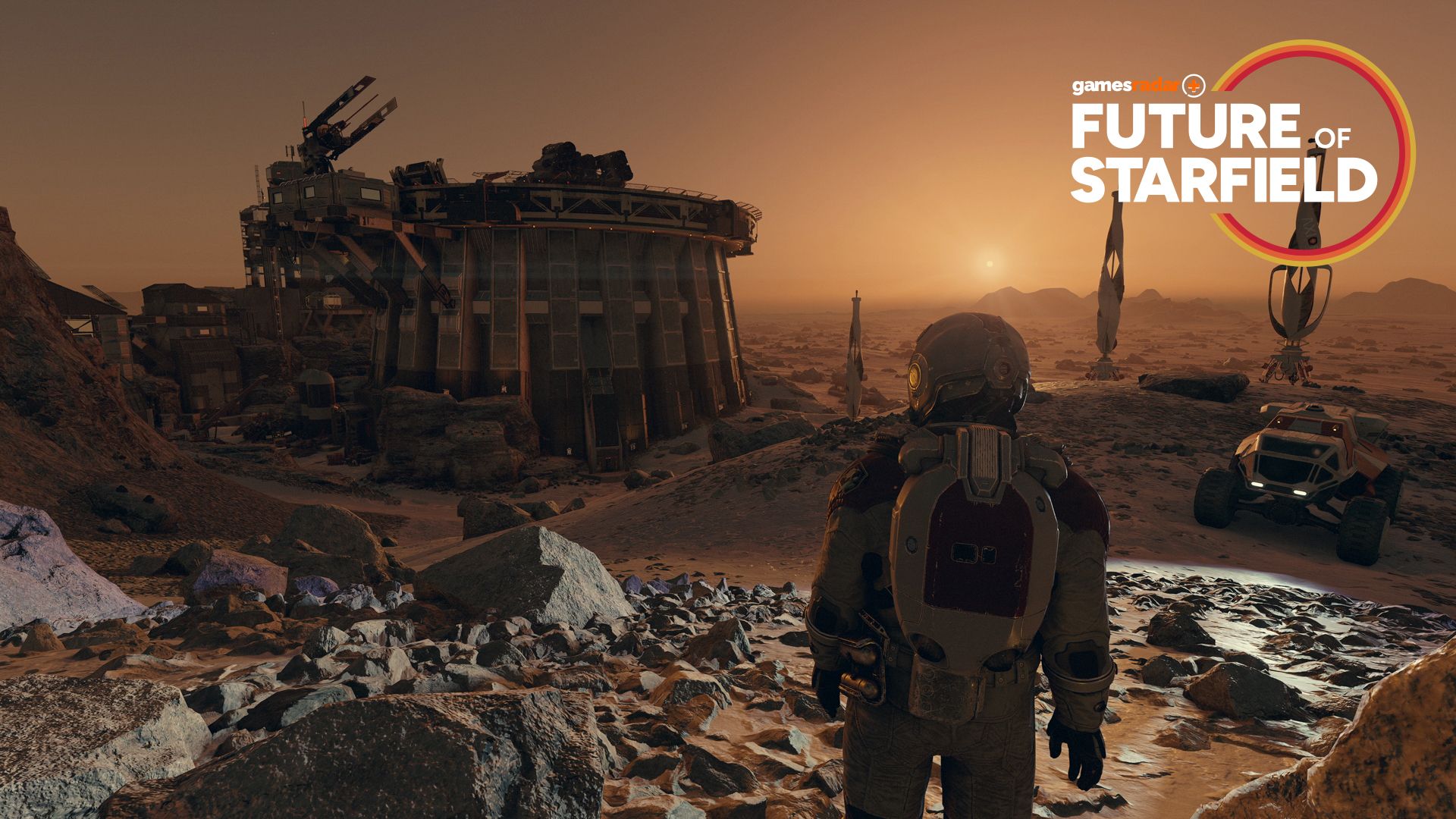
Image: gamesradar.com
A former systems lead says Starfield 2 would surprise him
Former Bethesda lead systems designer Kurt Kuhlmann has cast serious doubt on Starfield 2, telling FRVR in an interview reported by Video Games Chronicle and IGN that he does not think the first game cleared the bar for a full sequel.
Asked whether Bethesda Game Studios would want to make another Starfield one day, Kuhlmann said he would be “very surprised” if a sequel happened. His bluntest assessment was the line now driving the conversation around the Starfield future: “I don’t think Starfield was anywhere near successful enough to do a Starfield 2.”
That is a significant comment because Kuhlmann was not an outside analyst reading Steam charts from a distance. VGC identifies him as Starfield’s lead systems designer, the kind of role that sits close to the machinery of a Bethesda RPG: progression loops, build-supporting systems, player freedom, and the connective tissue between quests and mechanics. Still, his remarks are not an official Bethesda statement. Bethesda has not announced Starfield 2, and none of the provided reporting says Microsoft or Bethesda has canceled a Starfield sequel.
There is also a small sourcing wrinkle worth keeping clean. VGC and IGN identify the interview as an FRVR interview, while GamingBolt’s write-up says Kuhlmann was speaking to VideoGamesChronicle. The quote itself is consistently attributed to Kuhlmann, but the original interview venue in the stronger reports is FRVR. For readers trying to separate confirmation from inference, the confirmed fact is the former Bethesda developer’s stated belief. The unconfirmed part is Bethesda’s actual internal plan for the franchise.
Bethesda is still supporting Starfield, but support is not the same as a sequel
The tension around Kuhlmann’s comment is sharpened by Bethesda’s public posture. IGN reports that Bethesda remains “hard at work” on new DLC for Starfield, and VGC notes that the studio continues to release DLC and updates even as it is mainly focused on The Elder Scrolls 6.
IGN also points to a July statement from Todd Howard on Bethesda.net, where Howard said that as Starfield enters Year 3, Bethesda will continue expanding the Settled Systems with “new stories, targeted gameplay improvements, and additional updates,” while preparing “new Starborn content” for the following year. GamingBolt similarly refers to Year 3 content, new stories, and improvements, and says Starfield has continued receiving expansion support.
That gives players a clear short-term answer and a murkier long-term one. The practical read is that Starfield is not abandoned. If you already own it, Bethesda’s own public messaging, as cited by IGN, says more content and improvements are planned. If you are waiting specifically for Starfield 2, there is no announced release window, no platform list, no price, and no confirmed production status in the provided reports.
For a Bethesda RPG, ongoing support can stretch a game’s life dramatically, especially when post-launch updates refine rough systems or add quest content. But DLC is a different business case from a numbered sequel. A Starfield sequel would require a new multi-year production commitment at a studio whose next major public priority, according to VGC and IGN, is The Elder Scrolls 6.
The commercial question is real, but the public numbers are incomplete
Kuhlmann’s claim rests on success, yet the public record around Starfield sales remains unusually hard to parse. The provided reports do not include a confirmed lifetime sales total from Bethesda or Microsoft. Tech Insider cites Microsoft gaming leadership as saying Starfield passed 1 million concurrent players on launch day, and IGN cites Bethesda confirming 17 million players, but player counts are not the same as unit sales, especially for a first-party Xbox game available through Microsoft’s subscription ecosystem.
That distinction matters. “Starfield sales” has become a convenient shorthand in sequel discussions, but the sources here do not provide the revenue, profit, Game Pass conversion value, platform split, or DLC attach rate that would define the real business case. Kuhlmann is giving an insider’s assessment, not publishing a spreadsheet.
Reception gives part of the context. IGN describes Starfield as “massively divisive” despite its own mostly positive review, with reviewer Dan Stapleton saying the game’s roleplaying quests and combat eventually gave it a strong pull. Tech Insider cites an 83/100 Metacritic score and a “Generally Favorable” label. Those details point to a game that was well reviewed by many measures, but not received like the kind of consensus-defining Bethesda RPG that automatically turns a new IP into a generational pillar.
That is where the business risk lives. Starfield was Bethesda’s first new universe in decades, built with enormous expectations and a systems-heavy design that needed players to buy into exploration, ship-building, outposts, factions, procedural worlds, and a slower sense of discovery. A good reception might still fall short if the internal sequel threshold was set by the studio’s biggest franchises rather than by a normal successful release.
Kuhlmann’s regret is about systems that never fully connected
Kuhlmann’s comments were not framed as a dismissal of Starfield’s ambition. In VGC’s report, he said a sequel could have been “much closer” to the game Todd Howard had in mind, because Bethesda would have had the lessons from the first game. “You can envision that game, you can imagine that game,” he said. “That’s not quite what Starfield really is.”
His clearest example was outpost building. According to VGC, Kuhlmann described the ability to build a base anywhere on a planet as “cool” as a standalone system, but “not nearly as integrated with the rest of the game.” He connected that problem to Bethesda’s earlier experience with Fallout 4, saying integration with story and missions had caused problems there, so in Starfield the feature was “kind of put to the side.”
That is a systems critique with real RPG consequences. In a Bethesda RPG, a major subsystem earns its keep when it feeds character identity, quest outcomes, faction play, economy, exploration, or role-play. Starfield lets players build ships, scan planets, establish outposts, and pursue authored questlines, but Kuhlmann’s point is that some of those systems sit beside the story rather than inside it.
For completionist players, that gap is felt as friction. A base can be elaborate, but if it rarely changes quest logic, companion interaction, faction pressure, or the main arc, it becomes a parallel hobby. A sequel could theoretically redesign those connections from the start: settlements that matter to faction supply lines, exploration that alters quest states, outposts tied to companions or colonists, ships that define more than travel and combat. Kuhlmann’s argument is that Starfield 2 might have benefited from exactly those lessons, while the first game’s performance may prevent that second attempt.
The scale problem may be the hardest thing for a sequel to solve
Kuhlmann also told FRVR, as reported by VGC and Spilled, that Starfield’s original vision needed a larger development team than Bethesda had. “Even with the size of the team that we had for Starfield, it wasn’t big enough to create the amount of content that the grand idea of the game really required,” he said. “Like, we needed way more.”
That assessment lines up with one of the loudest player complaints after launch. Spilled notes that Starfield’s pitch included more than 1,000 planets, with Bethesda mixing handmade quests and locations with procedural terrain and reused points of interest. Spilled also reports that repeated locations and empty planets became common complaints among players.
The issue is not simply that space is large. The issue is that Bethesda’s best RPG loops have historically depended on dense discovery: a cave beside a road, a faction note in a ruin, a small choice that bends a quest, a dungeon that quietly tells a story through placement and loot. Starfield stretched that design language across a much broader canvas. Kuhlmann’s team-size comment suggests the studio did not have enough content capacity to make that scale feel consistently authored.
A Starfield sequel would likely be more expensive, not cheaper, if Bethesda tried to answer that criticism directly. It would need enough bespoke content to make exploration feel less repetitive, enough systemic depth to justify outposts and ships, and enough quest integration to make player-built infrastructure matter. That is the uncomfortable business loop in Kuhlmann’s assessment: the first game may not have performed well enough to justify the very investment a better sequel would require.
What players can reasonably expect from the Starfield future
Based on the provided reporting, the safest expectation is continued Starfield support rather than an imminent Starfield sequel. Bethesda’s own messaging, as cited by IGN, points to new stories, targeted gameplay improvements, additional updates, and Starborn content. VGC says the studio is mainly focused on The Elder Scrolls 6 while still supporting Starfield.
Nothing in the source material confirms Starfield 2 platforms, timing, pricing, or production. GamingBolt says the game made a PS5 debut and added new expansion content, while also framing additional content as coming in another year of support. Those are post-launch availability and support details, not evidence that a sequel is in development.
For players deciding whether to jump in now, the reported facts favor judging Starfield as an evolving standalone game rather than as the foundation of a guaranteed series. If its current mix of faction quests, ship construction, planetary surveying, combat, and outpost systems appeals to you, Bethesda’s continued updates may make the package more attractive over time. If your interest depends on seeing a second game fulfill the original promise, Kuhlmann’s comments are a warning that such a project may never become real.
The most important separation is this: Starfield 2 is not officially dead because Bethesda has not announced and canceled it. It is also not confirmed, dated, or meaningfully teased in the sources provided. What changed is that a former Bethesda developer with direct systems-design experience has publicly said he does not believe the first game was successful enough to earn that sequel. For a franchise built around reaching the stars, the next destination is still DLC, updates, and unanswered business questions.