
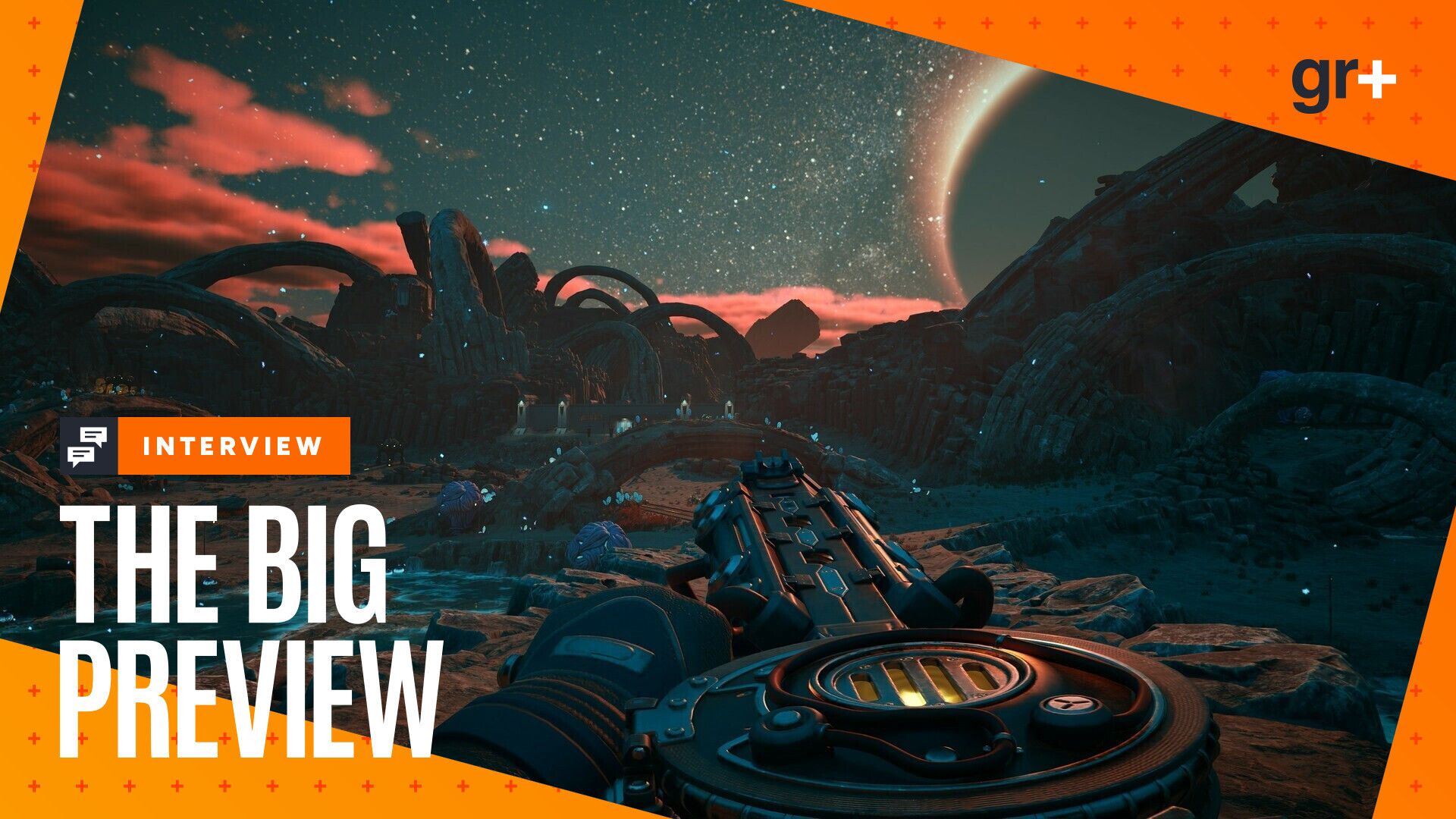

Former Bethesda artist Nathan Purkeypile says Starfield should have focused on a handful of bespoke planets, sharpening the debate over scale, repetition, and Bethesda RPG design.
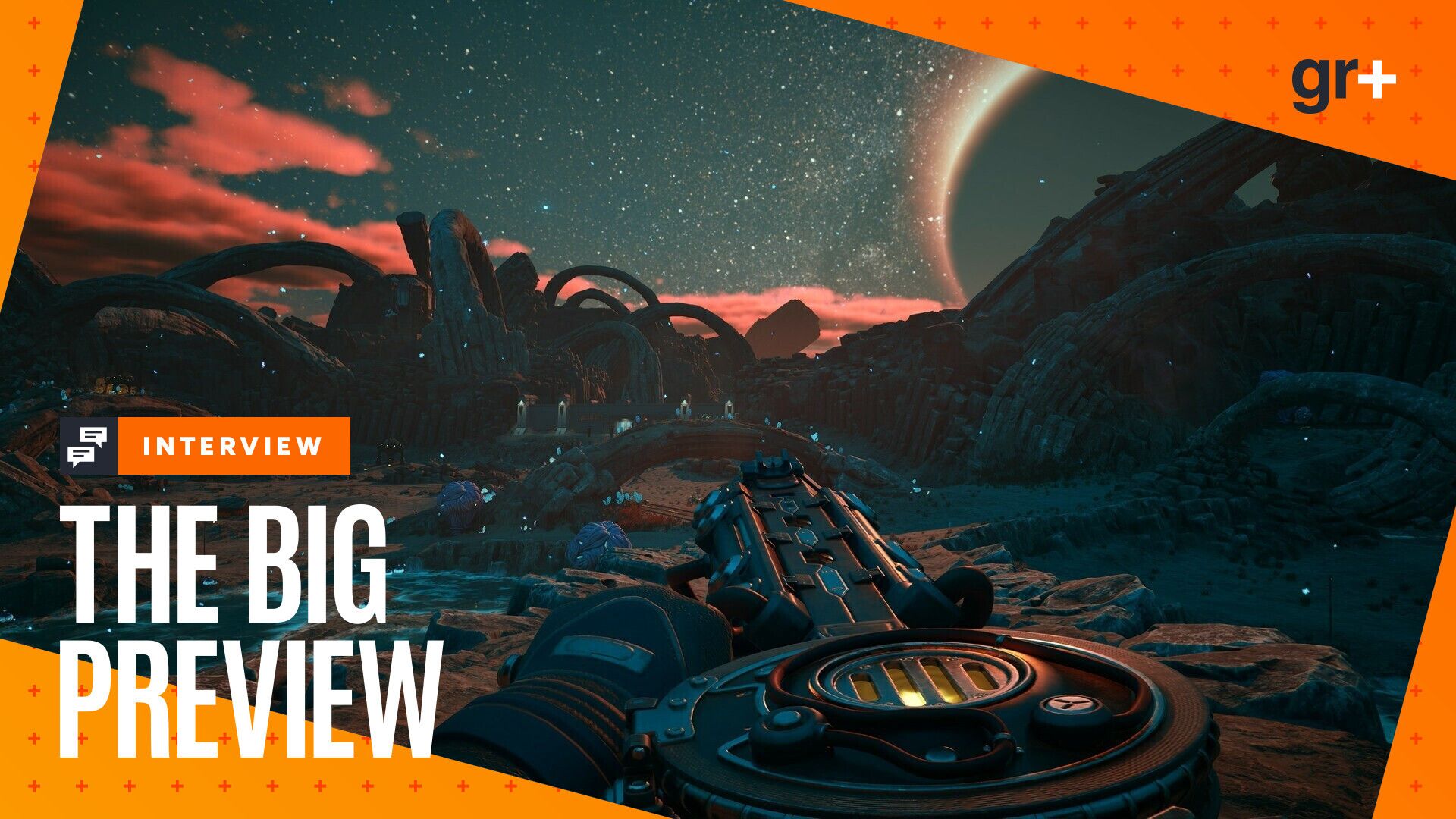
Image: gamesradar.com
A former Bethesda artist puts Starfield’s scale problem in plain terms
Nathan Purkeypile, a former Bethesda veteran who worked on Starfield early in development, says the RPG’s more than 1,000 planets were the wrong structural choice. In an interview with The Examined Game, reported by Video Games Chronicle, Purkeypile said that if he had been responsible for Starfield’s overall direction, he would have built “a handful of planets with bespoke layouts” instead.
That is the clearest new flashpoint in the long-running Starfield 1000 planets debate because Purkeypile is not speaking as an outside critic. According to VGC, he spent 14 years at Bethesda, worked as a world artist on Fallout 3, Fallout 4, and The Elder Scrolls 5: Skyrim, served as lead artist on Fallout 76 and Fallout 3 expansions The Pitt and Point Lookout, and was a lead lighting artist on Starfield in its early days. VGC also reports that he worked on Neon before leaving Bethesda two years before Starfield released.
His criticism lands directly on the design tension that has followed Starfield since launch: Bethesda built a galaxy-sized RPG around the promise of breadth, but its strongest tradition has been dense, authored spaces where exploration, quests, environmental storytelling, and progression systems collide in memorable ways. Purkeypile’s argument is not that Starfield contains no handmade work. It is that a Bethesda-scale production can only make so many handcrafted dungeons, cities, and quest spaces, and a thousand-plus-planet structure pushes those assets into repetition.
Purkeypile’s critique is about structure, not a single repeated room
Purkeypile told The Examined Game that he saw the issue while playing Starfield after release. VGC quotes him saying that during the main quest he was already running into repeated locations, which he connected to the practical limit on how many dungeons a team can build. “If you’re going to have a thousand planets you’re going to be repeating content,” he said.
That matters for Bethesda RPG design because repetition does different damage in an RPG than it does in a pure sandbox. A repeated combat outpost is not only a visual echo. It can flatten the sense that a faction quest, artifact hunt, or planet scan is taking the player somewhere authored for that moment. In Bethesda’s older worlds, the route between objectives often carried its own reward: a cave with a strange layout, a settlement with a local problem, a locked room that recontextualized the people who lived there. Starfield’s scale changes the player’s expectation. When the map is a galaxy, the game has to either make procedural surprise feel alive or make fewer destinations feel deliberately chosen.
Purkeypile’s preferred answer was the latter. He said he would have built a smaller number of Starfield bespoke planets. That does not mean smaller in ambition. It means a different production bet: fewer landable worlds, more unique layouts, and less pressure to distribute limited handmade dungeons across an enormous play space.
The “space quilts” complaint gets at Starfield’s procedural identity crisis
Purkeypile’s sharpest phrase is “space quilts,” his label for content that feels like built chunks rearranged rather than fully procedural generation. VGC quotes him saying Starfield is “not actually a procedural game” in the way No Man’s Sky is, because its dungeons are built rather than continuously generated. In his view, if a game wants thousands of planets, it needs to go closer to the No Man’s Sky route and generate unique content all the time, rather than stitching authored pieces together in slightly different configurations.
That distinction is important. Starfield’s world design debate is often reduced to handmade versus procedural, but Purkeypile is pointing to a third, riskier middle position. A studio can build bespoke RPG spaces, where the value comes from authored layout, quest context, and environmental detail. A studio can also build a systemic procedural exploration game, where the value comes from endless variation and player-driven discovery. Purkeypile’s criticism is that Starfield’s planet model sits between those philosophies: too large for Bethesda’s traditional handcrafted density to hold across the whole galaxy, but not generative enough to make repetition disappear.
He also drew a comparison to the first Mass Effect, saying he saw parallels early on with that game’s optional planet exploration and repeated dungeons. The comparison is useful because it separates the fantasy of space travel from the practical content pipeline. A galaxy map can imply limitless adventure, but if landings often resolve into familiar structures, the player begins reading the system instead of the world.
Neon shows the Bethesda game Starfield could be when it slows down
The criticism carries extra weight because Purkeypile worked on Neon, one of Starfield’s major city locations, according to VGC. PC Gamer’s headline also identifies him with Bethesda locations including Diamond City, Little Lamplight, and Neon, while VGC’s more detailed role summary describes him as a world artist across Fallout 3, Fallout 4, and Skyrim and a lead artist on several Fallout projects. Those role descriptions are not identical, so the safest reading is that Purkeypile’s career was deeply tied to Bethesda environment and world art, including some of the studio’s most recognizable spaces, rather than treating every outlet’s shorthand as a precise credit list.
That background frames his point. Neon is a good lens for this debate because city design is where Starfield most clearly resembles Bethesda’s older strengths: a concentrated hub, a specific mood, visible class divisions, named factions, and quest hooks that can be placed with intent. A dense hub can support progression choices because vendors, dialogue, stealth routes, combat spaces, and faction consequences sit near one another. A thousand-planet galaxy has a different burden. It must make the empty distances feel meaningful, or at least make the act of choosing where to land feel mechanically and narratively rewarding.
NeonLightsMedia’s write-up of the same interview says Purkeypile also criticized how Starfield’s major cities can feel detailed up close but thin once the player steps beyond their edges. That reading lines up with the broader Bethesda Starfield criticism: the studio can still build striking pockets of place, but the connective tissue between them is less convincing when the surrounding world is so vast.
Player reception has kept the scale debate alive
Starfield released in September 2023, according to Explosion’s summary, and the argument over its exploration loop has not gone away. Explosion reports a wide gap between critical and user reception, citing a Metacritic score of 88 and a Steam user score of 56% positive from 118,412 reviews, along with a current Steam player count of 3,760 at the time of its article. Those figures should be read as that outlet’s reported snapshot, not as a permanent measure, but they help explain why Purkeypile’s comments traveled quickly: they echo a complaint many players had already formed in less technical language.
The tension is not that every Starfield player wanted a smaller game. Many came to Bethesda’s space RPG wanting the fantasy of charting a massive settled systems map. The tension is that Bethesda’s traditional reward loop trains players to inspect corners. If a cave, space station, abandoned facility, or city alley can hide a quest, a build-defining weapon, a strange NPC, or a story told through clutter and layout, then players learn to treat exploration as trust. Repetition weakens that trust. Once the player recognizes a point of interest as a reused pattern, the decision to keep searching becomes more mechanical.
That is why the phrase Starfield 1000 planets remains so durable in search and community discussion. It is a number that promised abundance, but Purkeypile’s critique reframes it as a production constraint. Every additional planet increases the surface area the game must justify. If the same pool of authored spaces has to cover too much of that surface, scale can start competing against discovery.
The open question is whether updates can solve a structural choice
Bethesda has not publicly responded to Purkeypile’s remarks, according to Explosion. That leaves the conversation split between confirmed development history, a former developer’s stated design preference, and player interpretation of Starfield’s current direction.
There are confirmed signs that Bethesda has continued adding content. VGC reports that Starfield came to PlayStation 5 in April alongside two major content drops: Terran Armada, a paid story expansion with new characters, locations, enemies, quests, systems, and rewards, and Free Lanes, a free update with improvements to the game. Explosion also notes that Shattered Space launched in late 2024 with a more focused handcrafted world. Those additions are relevant because they suggest Bethesda can still use expansions and updates to emphasize authored quest spaces, but they do not retroactively change the original galaxy-wide structure Purkeypile is criticizing.
For players deciding whether to return, the practical question is what they bounced off. If your issue was a lack of quests, enemy variety, or handcrafted locations, paid expansions and major updates are the places to watch because VGC specifically describes Terran Armada as adding new quest and location content. If your issue was the basic rhythm of scanning planets, landing near repeated sites, and waiting for the galaxy to feel less modular, Purkeypile’s comments suggest that may be harder to patch away. It is a foundational world-design tradeoff rather than a missing feature toggle.
For Bethesda, the lesson reaches beyond Starfield. Purkeypile’s critique does not argue against ambition. It argues that ambition has to match the studio’s content grammar. Bethesda’s best RPG spaces tend to reward patient exploration, build experimentation, and curiosity about place. A smaller number of bespoke planets might have served that grammar more directly. Starfield chose the spectacle of breadth, and the debate now is whether that breadth gave players enough meaningful reasons to keep landing.