
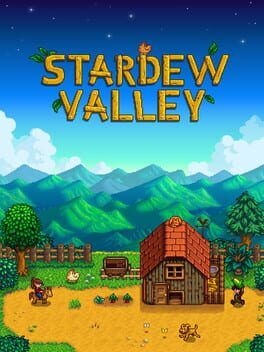

A breakdown of Stardew Valley’s Nintendo Switch 2 Edition and free upgrade, covering performance, resolution, controls, UI tweaks, save transfers, and how it stacks up against Steam Deck and other consoles for portable play.
The Nintendo Switch 2 Edition of Stardew Valley is more than a simple forward‑compatible build. ConcernedApe and Nintendo have taken the chance to tune performance for new hardware, clean up some lingering control quirks, and turn the hybrid handheld into a stronger home for your farm. If you already own the original Switch version, the upgrade is free, which makes the question less "Should I buy it?" and more "Is this the best way to play Stardew in 2025, especially on the go?"
What the Switch 2 Edition Actually Adds
On paper, the Nintendo Switch 2 Edition is the same Stardew Valley that has been patched and expanded for nearly a decade. The differences come from how it runs, how it feels with the new controls, and how easy it is to share the game with others.
Nintendo and multiple storefront listings highlight four big additions. First are the new mouse‑style controls. These mimic the precision of a cursor on PC without needing a separate accessory. A virtual pointer lets you quickly move across the grid to plant crops, rearrange furniture, or pick specific tiles in your inventory. This cuts down on the slightly clumsy tile‑by‑tile movement that older console builds relied on, especially in handheld mode.
Second is expanded local co‑op. Switch 2 can run four player split‑screen on one system, letting everyone manage their chores on a single farm without a network connection. This builds on the local co‑op that earlier console patches introduced but is tuned for Switch 2’s extra horsepower and memory. Menus open more smoothly in split screen, and transitions between areas feel closer to single‑player.
Third is beefed‑up online multiplayer. Up to eight players can share a farm online on Switch 2. The base Switch version tops out at four, so Switch 2 doubles that by leaning on the stronger CPU, faster storage, and improved networking stack. Combined with Nintendo’s new online infrastructure, sessions feel closer to the PC experience, where big communal farms have been common for years.
Last is the Game Share feature. With this, one copy of Stardew Valley can be used to host up to three additional players who do not own the game on their own consoles. Those friends join as temporary guests. It is a very Switch‑like convenience that makes multiplayer feel less like a paywall and more like a board game you can just pull out at gatherings.
Performance and Resolution on Switch 2
Stardew Valley is not a technical showcase, but it is surprisingly demanding once your farm fills with crops, machines, and animals. On the original Switch, very late game farms could produce small but noticeable frame dips, especially during heavy particle effects like storms or intense monster spawns in the Skull Cavern.
The Switch 2 Edition essentially brute‑forces those issues away. In handheld mode, the game targets full resolution on the new screen while holding a near locked frame rate, even during busy days with sprinklers, animals, and machines all ticking at once. Menus open instantly, auto saves resolve faster at the end of days, and loading when entering or exiting buildings is shorter and more consistent than on the first Switch.
Docked, the game renders at a higher internal resolution than the original Switch and cleans up the image on large TVs. Pixel art scales crisply with minimal shimmer on diagonals and fine details. The benefit is most visible in the town and forest, where overlapping tiles, fences, and foliage can otherwise blur together. While Nintendo has not issued a deep tech breakdown, both marketing materials and player impressions agree that Switch 2 runs Stardew with a small but tangible sharpness boost and more rock solid performance.
The hardware uplift also improves multiplayer stability. With four players on split screen or eight players online, frame pacing holds much steadier than on the base Switch. Auto‑saving, area transitions, and cutscenes no longer introduce the hitches that co‑op hosts sometimes saw on the older hardware, especially on giant year‑five and beyond farms.
Control Tweaks and UI Improvements
The standout control change is the mouse style input. Instead of nudging your farmer’s sprite over every individual tile, you can flick a cursor around the grid and confirm actions with a single button. This is especially helpful in three problem areas from older console ports.
The first is interior decorating. Placing or rotating furniture, rugs, and wall hangings used to be a chore with stick only controls, particularly in complex layouts like multistory houses or heavily optimized barns. The cursor system lets you quickly sweep over surfaces, snap to valid tiles, and place items with far fewer misclicks.
The second is inventory management. Picking items out of the backpack and chests benefits from the new input, since you can jump directly from slot to slot instead of scrolling linearly. If you have dozens of chests for crops, minerals, artisan goods, and tools, the speed increase is noticeable.
The third is farming and construction. Planting long rows of seeds, laying down paths, or arranging fences becomes smoother when you can drag across tiles in a straight line. The new control scheme is still optional, so purists who prefer the old console style can keep it.
UI tweaks are more subtle but helpful. Text and tile hitboxes are tuned for the sharper Switch 2 screen, cursor highlighting is clearer when selecting objects in cluttered areas, and minor menu transitions feel snappier thanks to higher frame rates and reduced input latency. None of this rewrites the interface in the way some PC mods do, but together they make Switch 2 feel closer to the PC baseline where mouse and keyboard were always the most natural fit.
Save Transfer and Upgrade Details
The Nintendo Switch 2 Edition is treated as an upgrade to the existing Switch version, not a separate ecosystem. If you owned Stardew Valley digitally or physically on Switch, you can claim the Switch 2 Edition at no extra cost on the same Nintendo Account.
Saves transfer over through the system level migration and cloud features. When you move your user profile from a Switch to a Switch 2, your Stardew Valley saves come with it and the Switch 2 Edition simply detects and loads them. There is no separate manual export or import process, and you do not lose progress or items by moving to the new hardware.
If you are using the same Nintendo Account on both systems, cloud save support through Nintendo’s online service also helps keep progression in sync. You can farm on your older Switch on a trip, come back, sync, and then pick up right where you left off on the Switch 2 Edition. Physical cartridge owners can slot their existing card into Switch 2 and download the performance patched build as an update.
The only real catch is that cross platform saves to non Nintendo systems are still unofficial. PC, PlayStation, Xbox, and mobile saves remain separate unless you manually tinker with files, so Switch 2 exists in the same closed ecosystem as the original Switch version.
Is Switch 2 the Definitive Portable Version?
The biggest question is how the Switch 2 Edition compares to the Steam Deck, other PC handhelds, and competing consoles.
Steam Deck still holds advantages if you want the most flexible and moddable Stardew Valley. On Deck, you can hit very high frame rates, apply extensive mods, and adjust control layouts down to the individual action. Long time PC players who rely on interface and automation mods will not find a substitute on Switch 2. The Deck also benefits from the full desktop version of the game, which typically receives patches and experimental builds first.
Where Switch 2 fights back is in simplicity and comfort. Docking and undocking are frictionless. Sleep and resume are instant and reliable, which is ideal for a game built around short in game days. You do not juggle launchers, Proton compatibility, or mod managers. For many players, the ability to close the lid, open it, and be right back on the farm in seconds is more valuable than raw horsepower or mod libraries.
Compared to other consoles like PS5 and Xbox Series, Switch 2’s main advantage is that it preserves the hybrid approach while now offering performance close to those systems for a 2D game like Stardew. Those platforms can offer quick resume and high resolution on big TVs, but they lack a native handheld mode without third party streaming solutions. For couch and travel play, Switch 2 is more natural.
Versus the original Switch, Switch OLED, and mobile, the Switch 2 Edition is clearly superior for long term farming. It holds a steadier frame rate, looks sharper, supports more players in co‑op, and smooths out inventory and building with the cursor control option. If portable play is your focus and you do not care about heavy modding, it stands out as the most refined dedicated handheld experience.
In the end, the definitive version of Stardew Valley depends on what you value. For maximal tinkering, mods, and raw flexibility, a good PC or Steam Deck still wins. For a clean, console first experience that you can play anywhere with effortless sleep, easy local and online co‑op, and a smart free upgrade path from the original Switch, the Nintendo Switch 2 Edition is arguably the best all around way to live your valley life in 2025.