
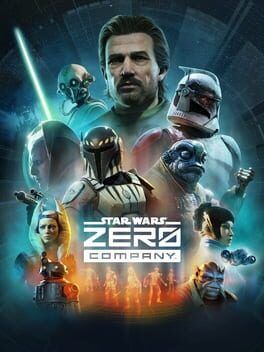

Critics are broadly praising Star Wars Zero Company as a strong XCOM-style tactics game, but camera quirks, UE5 performance notes, and patch cadence are the things strategy fans should check before buying.
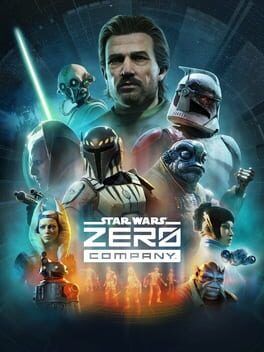
Image: IGDB
Store links: Star Wars Zero Company on Steam
A highly rated Star Wars tactics game with a technical asterisk
Star Wars Zero Company has landed with unusually strong critical momentum for a licensed tactics game. Metacritic lists Bit Reactor’s single-player turn-based strategy Star Wars release as “Generally Favorable,” with the page showing an 86 Metascore and a release date of Aug. 27, 2026. Polygon, in its review roundup, notes that the score places Zero Company among the highest-reviewed Star Wars games on Metacritic, tied in that accounting with Knights of the Old Republic 2 and trailing games such as Knights of the Old Republic, Jedi Knight: Dark Forces 2, Rogue Leader: Rogue Squadron 2, and Jedi Knight 2: Jedi Outcast.
That praise comes with a useful tension for anyone searching for a Star Wars Zero Company review before buying. Critics are not struggling to identify the pitch: this is the Star Wars tactics game many XCOM players have been expecting since Bit Reactor’s reveal. The argument across reviews is whether Zero Company escapes the feel of a licensed reskin through systems, pacing, characters, and campaign structure. On that point, the early consensus is positive. The caution is technical rather than conceptual, with several outlets flagging camera behavior, combat pauses, graphical oddities, bugs, or Unreal Engine 5 performance issues.
There is also a small data wrinkle in the public review picture. In the source material provided, Metacritic’s page lists the Metascore as based on 54 critic reviews in one module, while another module references 57 critic reviews across platform filters. The useful takeaway is not the exact count, which appears inconsistent across the listing, but the shape of the response: Metacritic’s critic breakdown shown in the source is 98 percent positive, 2 percent mixed, and 0 percent negative.
The XCOM comparison is the critical baseline
Reviewers are almost unanimous that the XCOM comparison is unavoidable, and the development history explains why. Game Developer identifies Bit Reactor as a studio founded by many former Firaxis employees who worked on XCOM: Enemy Unknown and XCOM 2, including CEO, co-founder, and creative director Greg Foertsch. Kotaku similarly points to Foertsch’s XCOM background and says there is “no debate” that Zero Company is built in the mold of an XCOM game set in the Star Wars universe.
Push Square’s PS5 review frames the connection in mechanical terms, saying the similarities are “clear and manifold” and describing Bit Reactor’s work as applying Star Wars to the robust turn-based tactical foundation associated with Firaxis’ series. GameSpot makes the same first-read comparison: an overhead squad tactics game about cover, flanking, maneuvering, and taking down larger forces. IGN goes a step further by tying the result to both halves of the development collaboration, describing Zero Company as a blend of XCOM 2 veterans at Bit Reactor and Star Wars Jedi: Survivor talent at Respawn.
For strategy readers, that framing matters because it sets realistic expectations. This is not being reviewed as a 4X game, a grand strategy title, or a real-time tactics experiment. The core loop described by Push Square is familiar squad tactics: usually four units, limited action points, movement and attacks in turn order, then an enemy phase. If you want a turn based strategy Star Wars game built around positioning, cover, class roles, and consequences, critics are saying Zero Company is operating directly in that lane.
Where critics say Zero Company creates its own tactical identity
The more interesting critical split is not whether Zero Company resembles XCOM, but where reviewers think it pushes away from that template. IGN praises a more aggressive playstyle and flexible characters, saying the game’s turn-based combat is instantly familiar to XCOM veterans while still finding its own identity through pace and squad construction. Polygon’s roundup quotes PC Gamer’s Ted Litchfield praising the amount of RPG buildcrafting, including synergies and multiclassing that arrive as the campaign opens up.
Push Square’s review points to a broad range of character classes, unique abilities, base upgrades, loadout management, and skill trees. It also highlights a relationship system in which bonds between characters improve when they fight together, unlocking mutual upgrades. That is a meaningful layer for tactics players because it makes roster management about more than raw stats. The game is asking you to think about who fights together, who survives together, and which pairings generate long-term value.
Permadeath is another key point. Push Square confirms that Zero Company includes permadeath, even for authored characters, while noting that the reviewer had not lost anyone beyond a tutorial death. That changes the strategic economy of the campaign. A named character is not only a bundle of combat abilities, but also a narrative presence and a relationship node. Losing one can mean losing build progress, bond upgrades, and story flavor. Push Square also says Normal difficulty felt a touch easy for someone with limited experience in the genre, although enemy numbers can still overwhelm careless play. For experienced XCOM players, that suggests the real purchase question may include difficulty selection as much as genre interest.
The story is carrying more weight than tactics games usually ask of it
Several reviewers emphasize that Zero Company puts a heavier load on characters and narrative than many squad tactics games. The confirmed setup across reviews is that the campaign takes place during the Clone Wars and follows Hawks, a customizable former Republic officer leading a mercenary crew. Metacritic’s publisher summary describes the game as a single-player turn-based tactics story set in the twilight of the Clone Wars, with Hawks recruited for an operation against an emerging threat.
The exact response to that story varies. Kotaku, after nearly 30 hours and a finished playthrough, says Zero Company tells a strong Star Wars story with effective pacing, character interaction, and meaningful cameos. IGN similarly calls it one of the better Star Wars stories since Rogue One, praising the characters, writing, music, and cinematic flair, while noting that Force powers and lightsabers take a back seat to blasters and thermal detonators. GameSpot praises well-rounded characters such as Bennic, Trick, and Kabb, though it finds the Mandalorian bounty hunter Cly thinner than the rest of the named cast.
Push Square is more reserved on the central plot. Its reviewer says the Coil, the cult threat involving a strange disease and hive-mind elements, is serviceable but did not fully hook them. At the same time, Push Square is warmer on the crew, calling several main characters well realized and saying even hired crew members interacted around the hub more than expected. That distinction is important: the review consensus is not that every critic is equally invested in the villain arc, but that the character work and between-mission structure give the campaign more personality than a purely procedural tactics layer would.
Performance notes are specific, even if they are not sinking the scores
The Star Wars Zero Company performance conversation is less glowing than the design conversation. Kotaku’s review praises the characters and combat, but warns players to expect “janky cameras, weird pauses during combat, and graphical oddities.” Those are practical complaints in a tactics game because camera reliability affects target reading, cover assessment, ability previews, and general mission flow. A cinematic camera can sell impact, but if it hesitates or frames action poorly, it can also make a turn feel less readable.
Metacritic’s critic excerpt from IGN Deutschland also flags “some small bugs” and “the usual UE5 performance issues,” while still recommending the game strongly for genre fans. That wording matters because it frames the issues as present but not deal-breaking for that reviewer. IGN, by contrast, emphasizes that Zero Company is great-looking and cinematic in the material provided, without the same performance warning in the quoted passage. Push Square’s supplied excerpt focuses on design, difficulty, characters, and systems rather than technical performance.
Taken together, the review picture is not a red alert, but it is a watchpoint. If you are sensitive to stutter, camera hiccups, or presentation bugs, you should look for platform-specific footage before buying. This is especially true because the source material includes PS5-specific coverage from Push Square, broad console and PC language from Kotaku, and Metacritic platform filters for PC, PlayStation 5, and Xbox Series X. The technical notes are real, but the provided sources do not establish a single worst platform or a definitive performance hierarchy.
The studio context adds another reason to watch patches closely
Game Developer’s podcast post includes a notable editor’s note: the interview with Greg Foertsch was recorded before it was confirmed that Bit Reactor furloughed approximately 80 percent of employees ahead of Star Wars Zero Company’s launch. The source material does not connect those furloughs to a specific patch plan, technical roadmap, or content schedule, so it would be wrong to assume what post-launch support will look like from that note alone.
Still, for a strategy game with reported camera issues, bugs, and UE5 performance concerns, patch cadence is a reasonable consumer question. Tactics games often live or die over time by small fixes: ability targeting clarity, enemy behavior corrections, crash fixes, animation speed adjustments, save reliability, difficulty tuning, and UI readability. Zero Company’s reviews suggest the design foundation is strong, but technical rough edges are exactly the category where post-launch support can materially improve the experience.
The safest reading is narrow. Confirmed: Game Developer reported the furlough context in an editor’s note, and multiple reviews note technical blemishes. Unconfirmed in the provided sources: how many patches are planned, whether performance fixes are imminent, whether any platform has priority, or whether staffing changes will affect support. If you are buying day one for the campaign, the reviews give you plenty of confidence. If you are waiting for the smoothest version, the next patch notes and platform-specific player reports are worth monitoring.
Buying guidance for strategy fans
Metacritic lists Star Wars Zero Company as developed by Bit Reactor and published under Electronic Arts’ listing, with buy options shown at $54.99 on GameStop and $58.62 on Amazon in the provided page text. The same listing shows the game across PC, PlayStation 5, and Xbox Series X review filters, while Kotaku describes it as out now on consoles and PC. The provided sources do not include PC system requirements, edition breakdowns, subscription availability, or upgrade-path details, so those should be checked directly on the relevant storefront before purchase.
For XCOM veterans, the strongest buy signal is that critics are not merely forgiving the familiar template because of the license. IGN, Kotaku, GameSpot, Push Square, and the PC Gamer comments cited by Polygon all frame Zero Company as a serious tactics entry, with buildcrafting, squad identity, character bonds, and a campaign structure that gives missions narrative weight. If your ideal Star Wars game centers on Jedi power fantasy, Zero Company may be a less obvious fit, since IGN specifically notes that lightsabers and Force powers sit behind the broader mercenary squad fantasy. If your interest is positioning, resourceful squads, and making hard campaign choices stick, the reviews point in your direction.
The main reason to wait is not uncertainty over the concept. It is tolerance for technical friction. Before buying, watch recent footage from your target platform, check whether camera complaints bother you in practice, and scan patch notes for fixes to pauses, bugs, and UE5 performance behavior. Star Wars Zero Company is being reviewed as one of the strongest Star Wars tactics game releases to date. The smartest purchase timing depends on whether you value getting into that campaign immediately or prefer to let the first wave of technical cleanup settle.