
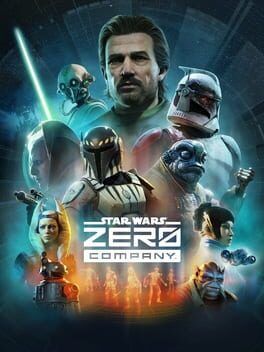

Early Star Wars Zero Company previews praise Bit Reactor's tactical combat, squad writing, customization, and presentation, while leaving launch questions around bugs, balance, permadeath, and long-term replayability.
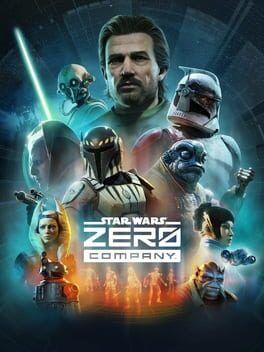
Image: IGDB
Store links: Star Wars Zero Company on Steam
The first hands-on wave puts tactics first
The strongest signal from the first Star Wars Zero Company preview wave is that Bit Reactor is being judged less as a Star Wars novelty and more as a tactics studio trying to prove its own identity before launch. Multiple outlets that played preview builds on August 11, 2026 describe a Clone Wars-era, single-player, turn-based tactics RPG built around a custom protagonist named Hawks, a mercenary unit, and a squad structure that openly invites XCOM comparisons.
That comparison is unavoidable, and Bit Reactor has not exactly tried to dodge it. Xbox Wire describes the game as the debut from Bit Reactor, a studio led by Firaxis XCOM veterans. Game Informer notes that co-founder and director Greg Foertsch spent 22 years at Firaxis and that several former Firaxis developers joined the Maryland-based studio after work on games including XCOM: Enemy Unknown, XCOM 2, and Marvel’s Midnight Suns. Wccftech’s Q&A with Foertsch, lead designer James Brawley, narrative director Aaron Contreras, and Lucasfilm Games executive producer Orion Kellogg also frames Star Wars Zero Company as a single-player turn-based tactics title.
The immediate tension is useful: Star Wars gives Bit Reactor instant audience reach, but the preview response is focusing on whether the studio can make a Star Wars tactics game with enough mechanical discipline to survive beyond the license. According to Wccftech, Foertsch told press that the team’s idea is that “depth shouldn’t cost you elegance,” pairing presentation, story, and gameplay rather than treating tactics as a niche wrapper. That is the pitch the previews are now testing.
Release timing is clear in the current public materials cited by the preview wave. Wccftech says Star Wars Zero Company is due August 27 for PC, PlayStation 5, and Xbox Series S and X. Xbox Wire says it arrives August 27, 2026 on Xbox Series X|S. Game Informer lists PlayStation 5, Xbox Series X/S, and PC, with Electronic Arts and Lucasfilm Games as publisher, Bit Reactor and Respawn Entertainment as developer, and a Teen rating. The practical reader question, then, is not whether this exists in some distant announcement fog. It is whether the version arriving on August 27 can turn these strong first impressions into a stable, balanced campaign.
Bit Reactor is trying to make squad identity do mechanical work
The most consistent praise across the Star Wars Zero Company gameplay previews is aimed at squad construction. Console Creatures says most missions allow a squad of four, while critical story missions require Hawks and some side missions require specific characters. That structure is important because it suggests Zero Company is not simply using party composition as flavor. It is making availability, story requirements, and class roles part of the campaign economy.
Console Creatures reports that Hawks can be customized by species, specialty, and weapon class, with examples including a human scoundrel or Twi’lek gunslinger. The outlet describes preview specializations with distinct combat jobs: a scoundrel that weakens enemies and takes extra assist shots, a soldier with heavy melee damage and a rocket launcher, and a sharpshooter that can guarantee shots. Four weapon classes were available in that preview. If those roles hold across the final game, Hawks is less a blank avatar in the usual RPG sense and more the first strategic commitment in a long campaign build.
That is where the previews start to show a real tactical identity. Console Creatures describes astromechs as capable of throwing grenades and allowing allied units to act again, while also calling out Jae as a character who can take extra shots to down enemies. PCGamesN similarly highlights the option to use bespoke story characters or recruit generated operatives, even joking about running an entire squad of R2 droids. Xbox Wire says players can recruit procedurally generated teammates, naming two sniper recruits from its preview and describing how those generated characters can slot into emergent relationships with authored characters.
From a strategy perspective, the interesting question is not whether an astromech grenade build is funny. It is whether the action economy survives contact with min-maxing. Any tactics game that lets units hand turns back to allies has to manage cooldowns, encounter density, enemy pressure, and fail states carefully. Early previews suggest Bit Reactor understands how attractive those combinations are. What remains unanswered is whether the late campaign will constrain dominant loops or whether certain squad packages will flatten mission variety.
Character writing is being treated as part of the campaign system
The preview wave is also spending unusual attention on character writing for a tactics game, partly because Zero Company seems designed around friction between authored drama and permadeath. Wccftech quotes narrative director Aaron Contreras saying it was a challenge to meld a Star Wars story with tactical gameplay, including permadeath. Contreras gives Tell Ray Volkov as an example of a character with “an incredible Jedi story” who can still be killed by a stray blaster bolt early in the game, after which the story continues without her.
Xbox Wire gives the clearest early explanation of how that risk works in its preview build: going down in combat gives a wound, and accumulating three wounds without resting is fatal. That is a more forgiving model than instant death, but it still creates a strategic calendar. Rest becomes a resource. Greed becomes a liability. A wounded favorite is no longer only a damaged unit; they are a story investment under threat.
PCGamesN’s preview adds another layer with the bond system. According to the outlet, characters who go on missions together form bonds that function like a joint experience bar, eventually unlocking passive bonuses and abilities. PCGamesN says those passives were powerful enough that the writer stuck with the same group to raise bonds, which in turn made that squad feel more personal. Xbox Wire also describes the bond system as tracking and rewarding characters who do a lot together.
That is promising design, but it creates a known tactical problem. When bond bonuses are strong, players can be pushed into a stable A-team, which fights against the fantasy of a broad mercenary company. When permadeath and wounds are meaningful, the game has to encourage rotation without making rotation feel like punishment. The previews indicate Bit Reactor has put the right systems on the board. The final test is whether mission design, injury timers, enemy scaling, and character availability keep the roster alive as a strategic puzzle rather than turning every campaign into four optimized favorites and a bench of insurance policies.
Customization includes representation, but the politics are mostly delegated to the player
Rock Paper Shotgun’s interview with Foertsch brings out a different part of the character conversation. In the outlet’s preview build, Hawks is a custom character referred to with they/them pronouns. The writer also notes that Zero Company supports expressions of gender beyond conventional male and female archetypes, at least enough to raise questions about queerness and transness in Star Wars character creation.
Foertsch told Rock Paper Shotgun that “there’s no canon Hawks, per se,” despite one version appearing on box art for marketing, and said the goal was to support a player’s ability to represent whatever they wanted as their version of Hawks. He described it as allowing players to explore Star Wars in the way they want, whether through a very unique combination of traits or a more predictable one. He closed by saying the thought behind the system was to let players express themselves however they want, framing it as “your Star Wars story.”
That is a confirmed developer stance, and it matters to how Zero Company is presenting its protagonist. It also has limits. Rock Paper Shotgun characterizes the rhetoric as mild and suggests the “it’s your story” framing can hand the politics of representation to the player. Based on the provided excerpt, Bit Reactor is clearly supporting broad player expression for Hawks, but there is not enough source material here to say how deeply queerness, gender, or identity are explored in authored quests, companion arcs, or the wider Clone Wars setting.
Rock Paper Shotgun also raised the business context around Electronic Arts after an investor consortium consisting of Saudi Arabia’s Public Investment Fund, Silver Lake, and Jared Kushner’s Affinity Partners completed a $55 billion acquisition of EA, taking the company private. The excerpt provided here sets up the question of how Bit Reactor feels about being published by that new incarnation of EA, but it does not include the studio’s answer. That distinction matters. The confirmed facts are the acquisition context as reported by Rock Paper Shotgun and Foertsch’s comments on player expression. Any stronger claim about Bit Reactor’s future relationship with EA would require the missing portion of that interview.
The Star Wars layer is presentation, setting, and permission space
The previews are positive partly because Star Wars Zero Company appears to be using the license as a ruleset for tactics, not only as visual dressing. Wccftech quotes Lucasfilm Games executive producer Orion Kellogg saying the game tells a story that could only happen in the “war beneath the war” of the Clone Wars, with players finding creative ways to use the Force or weaponize astromechs. Console Creatures describes the story premise as Hawks, a former Republic-aligned figure living on the fringes, being pulled back toward a threat from The Coil and its leader Fathom, who wield a deadly plague that can either enhance victims or kill them outright.
Xbox Wire’s preview places Hawks at the start of the game in debt to the Hutt crime syndicate, then approached by a displaced noble and a Republic Intelligence agent to investigate the Coil spreading through the outer reaches. That outlet says the early cast includes discharged clone trooper Trick, ex-convict boxer Kabb Uppercut, and Jae Mordant, whose mining citadel was stolen by Fathom. PCGamesN also singles out Kabb Uppercut, describing a special ability built around punching enemies off the map.
Those details point to a smart slice of Star Wars continuity for a tactics game. The Clone Wars era supplies droids, smugglers, Republic intelligence work, Jedi, Mandalorians, mercenaries, and fringe-world problems without requiring every mission to orbit a film character. Game Informer’s listing credits Electronic Arts and Lucasfilm Games as publisher and Bit Reactor and Respawn Entertainment as developer, which also explains why expectations are high for a polished Star Wars presentation rather than a smaller tactics experiment.
PCGamesN goes furthest on presentation, saying the game has customizable squads, “spot-on voiceover,” and a presentation that puts many strategy games to shame. The outlet also describes walking around a base in third person as Hawks, talking to squad members, using terminals, and playing an alien instrument in the office before battles shift into an isometric tactical view. That base layer could become a major differentiator if it supports meaningful preparation and character attachment. If it becomes mostly atmosphere between deployments, it still helps sell the fantasy, but the long-term strategic value will depend on how much those conversations, upgrades, and bonds change the next mission.
The unanswered launch questions are balance, bugs, and campaign durability
The first Star Wars Zero Company preview wave is broadly enthusiastic. Console Creatures says the first 18 cycles had engrossing combat, distinct unit roles, varied environments, and an interesting story. Xbox Wire says it played 15 hours over a week and came away calling the game polished, charming, and fun. Game Informer says it spent upwards of 10 hours with the game and found a licensed tactics experience hitting many of the notes that made XCOM compelling. PCGamesN says the game may be approachable enough to recommend a turn-based strategy game to players outside the usual tactics audience.
The caution is that previews are still previews. Bespin Bulletin characterized the new gameplay preview wave as very positive while also cautioning over bugs. The provided excerpt does not detail those bugs, so the responsible conclusion is narrow: at least one Star Wars-focused outlet is flagging technical caution around the preview build, but the severity, platforms affected, and likelihood of fixes before launch are not established in the supplied material.
The design questions are easier to identify because the previews expose the pressure points. How harsh is the wound economy across a full campaign? Do bond bonuses make roster rotation strategically viable or strategically foolish? Can generated recruits carry enough personality once authored characters start dying? Does the plague threat from The Coil produce enemy variety or mainly narrative stakes? Are Jedi and Mandalorians, which Console Creatures says take a while to be introduced, balanced as exciting specialists rather than late-game problem solvers that crowd out the rest of the roster?
For players searching Star Wars Zero Company 2026 purchase advice, the safest read is measured optimism. The confirmed launch plan from Wccftech, Xbox Wire, and Game Informer is August 27, 2026 for PC, PS5, and Xbox Series X|S. The preview consensus suggests Bit Reactor has a real tactical foundation, not merely a licensed skin. But anyone sensitive to bugs, campaign balance, or permadeath implementation should wait for final reviews that cover the release build, platform performance, and how the systems behave after the opening dozen hours. In a tactics game, the first act proves the rules are readable. The campaign proves whether those rules can sustain pressure.