
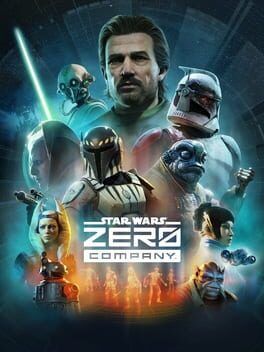

Bit Reactor has reportedly laid off some Star Wars Zero Company developers after bringing back part of its furloughed staff, leaving the tactics game's support plans uncertain despite strong reception.
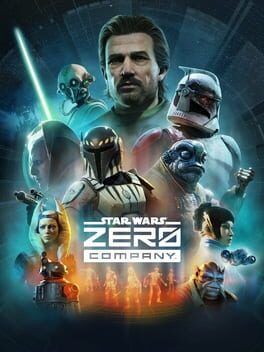
Image: IGDB
Store links: Star Wars Zero Company on Steam
Layoffs follow a partial furlough recall at Bit Reactor
Star Wars Zero Company developer Bit Reactor has reportedly laid off an unspecified number of staff after previously starting to bring some furloughed developers back to work. Rock Paper Shotgun, citing posts spotted by Star Wars outlet Bespin Bulletin, reported that multiple now former Bit Reactor workers shared news of their layoffs on LinkedIn. Bespin Bulletin described the cuts as affecting an unspecified amount of staff on Friday.
The immediate tension is that Bit Reactor's earlier recall of furloughed staff did not restore the studio to a stable, clearly defined production footing. Eurogamer reported last month that CEO Greg Foertsch said the studio had “started the process of returning more of our team back to work” and described that move as part of Bit Reactor's “continued support for Zero Company.” At the time, the studio did not specify how many developers were returning. Eurogamer cited Game File reporting that more than half of the studio's overall headcount was back on payroll, which still left a significant unknown around the rest of the team.
That unknown has now become sharper. Rock Paper Shotgun named producer Michael Blackard, senior QA analyst Ryan Mosher, environment artist Ryan Lopez, and UI engineer Tyler Eichten among developers who posted about layoffs. Lopez wrote that he had been laid off after a three-month furlough and said he was proud of what the team built, according to Rock Paper Shotgun's account of the post. Eichten similarly said his time at Bit Reactor had ended due to a layoff and praised the UI/UX team and broader studio. Bit Reactor had not commented at the time of Rock Paper Shotgun's report, and the total number of layoffs remains unconfirmed.
The production signal is mixed, not resolved
For players following the Star Wars tactics game from the outside, the easy but misleading read would be that bringing back some furloughed staff meant the danger had passed. The sequence reported across Eurogamer, Rock Paper Shotgun, and Bespin Bulletin suggests something narrower: Bit Reactor resumed work with part of its team, then some workers who were not brought back appear to have been formally cut.
That distinction matters for production outlook because tactics games live and die on post-launch iteration. Balance tuning, bug fixing, UI quality, encounter pacing, difficulty spikes, save stability, and performance cleanup all require continuity. A strategy team's institutional memory is valuable because small changes can ripple across an entire campaign. If a mission's reinforcement timing changes, that affects class value. If accuracy, overwatch, or action point interactions shift, the meta moves. If UI engineers or QA analysts leave, the work of finding and verifying those knock-on effects gets harder, even if the remaining team is talented.
The available reporting does not prove that a specific Star Wars Zero Company patch, feature, or content plan has been cancelled. It also does not confirm that development support has stopped. Foertsch's statement, as quoted by Eurogamer, explicitly framed the staff recall as part of ongoing support for Zero Company and said the studio expected to share more updates regarding Bit Reactor and the game. The uncertainty is about capacity, cadence, and scope. A smaller or reshuffled team can still support a game, but it may have to prioritize harsher: crash fixes before balance experiments, critical progression bugs before quality-of-life work, and platform compliance before ambitious new systems.
A successful launch did not prevent instability
The awkward part of the Star Wars Zero Company layoffs is that the game is not being described as a commercial or critical failure in the provided reporting. Bespin Bulletin said the game launched to rave reviews and had sold 1 million copies. Eurogamer likewise described Zero Company as acclaimed and reported that it quickly sold over 1 million copies. Wikipedia's entry for the game states that it received positive reviews from critics, with praise for the combat system and plot, while some criticism focused on technical issues. The same entry lists it as nominated for PC Game of the Year at the 44th Golden Joystick Awards.
That makes the Bit Reactor layoffs feel less like a simple market verdict and more like a studio-finance problem colliding with post-launch support. Eurogamer previously reported that most of Bit Reactor's staff had been furloughed before launch, describing the furlough as leave without pay or benefits. It also reported that the studio seemingly ran out of cash to pay workers after a legal battle between co-founders Alison Kelly and Greg Foertsch, who has sole ownership of the company. Bespin Bulletin reported that roughly 80% of staff were placed on furlough as the studio ran out of money in the weeks leading up to launch.
Those details are reported claims, not a full audited picture of Bit Reactor's finances. Still, they frame why strong player response alone may not instantly fix the studio's runway. Revenue timing, publishing arrangements, platform cuts, recoupment, payroll obligations, and corporate structure can all separate sales headlines from day-to-day staffing capacity. The sources do not provide the contract terms between Bit Reactor and Electronic Arts, which Wikipedia lists as the game's publisher, so any claim about how much money flowed to the studio would be speculation.
Zero Company's genre raises the stakes for post-launch staffing
Star Wars Zero Company is listed by Wikipedia as a turn-based tactics game developed by Bit Reactor and Respawn Entertainment and published by Electronic Arts. It released for PlayStation 5, Windows, and Xbox Series X/S on August 27, 2026. The game is set around the waning years of the Clone Wars and the beginning of the Galactic Empire, with players controlling Tesh Hawks and the misfit squad Zero Company against the Infinite Coil.
The genre context is important because Zero Company is built around systems that benefit from careful patch discipline. Wikipedia describes limited action points, top-down combat, role-playing elements, character customization, relationship management, and permadeath. Bit Reactor's staff includes former Firaxis developers connected to XCOM, according to the same entry, and that lineage comes with an audience trained to read patch notes like battlefield intelligence.
When a tactics game has permadeath and long campaign arcs, bugs and balance problems are not isolated annoyances. A broken ability can define a run. A technical issue can cost a soldier, invalidate a mission, or undermine confidence in Ironman-style play. Wikipedia notes that some critics criticized technical issues, which makes the health of the post-launch pipeline a practical concern rather than an abstract labor story. If QA, UI, environment, production, or engineering capacity is reduced, players may see it in slower fixes, narrower patches, or less communication, although none of those outcomes has been confirmed for Zero Company.
The unanswered questions are now the story
The confirmed facts are limited but consequential. Multiple outlets report layoffs at Bit Reactor after a partial return of furloughed workers. Several developers have publicly posted that they were laid off, according to Rock Paper Shotgun and Bespin Bulletin. Bit Reactor has not publicly specified the number of workers brought back, the number laid off, or the current size of the Zero Company team in the provided sources.
The open questions matter because they determine what kind of support players should expect. Is the active team large enough for regular patches across PC, PS5, and Xbox Series X/S? Are the returned developers working mainly on stability, balance, new content, or studio maintenance? Has Electronic Arts changed any support expectations? Are additional recalls possible, or was the recent layoff round the final shape of the studio? None of the source material answers those questions.
There is also a communication gap. Foertsch's earlier statement, quoted by Eurogamer, thanked fans for the game's response and said more updates would come. Since then, Rock Paper Shotgun reported that Bit Reactor had yet to comment on the apparent layoffs. Until the studio or publisher provides a clearer roadmap, players are left parsing employment posts, outlet reports, and patch timing. That is a poor substitute for a public production plan, especially for a tactics game whose community will want to know whether technical fixes and balance work remain on track.
Advice for players considering Zero Company now
Nothing in the provided reporting says Star Wars Zero Company has been pulled from sale, delayed on any announced platform, or abandoned. Wikipedia lists the released platforms as PlayStation 5, Windows, and Xbox Series X/S, with Electronic Arts as publisher. Players interested in the campaign, setting, and XCOM-style tactical structure can treat it as an available game rather than vaporware.
The risk is post-launch confidence. If you mainly want a complete single-player tactics campaign and are comfortable with the current state reported by critics, the layoffs do not automatically change the core product that shipped. If you are waiting for technical cleanup, balance passes, or a clearer long-term roadmap, the Bit Reactor furlough and layoff sequence is a reason to watch official channels before buying. The sources support the idea that Zero Company was well received and sold strongly, but they also show that successful reception has not removed staffing uncertainty at the developer.
For now, the most responsible read is cautious rather than catastrophic. The Star Wars Zero Company developer has brought back some furloughed staff and has spoken about continued support, but the subsequent Bit Reactor layoffs show that the studio's recovery is incomplete. Until Bit Reactor or EA explains the current team structure and update plans, players should assume the game can continue receiving support, while recognizing that the pace and scope of that support remain unsettled.