
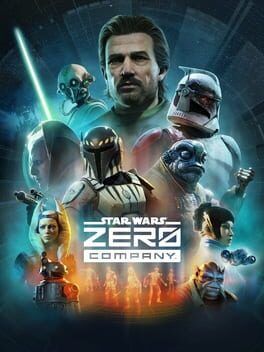
Star Wars Zero Company has passed one million copies sold, while Bit Reactor begins bringing back furloughed developers. For a Star Wars tactics game, the timing changes the conversation around support, patches, and confidence without confirming a bigger roadmap.
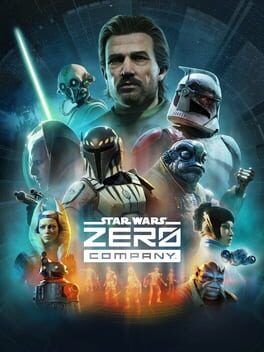
Image: IGDB
Store links: Star Wars Zero Company on Steam
A million copies changes the tone around Zero Company
Star Wars Zero Company has passed one million copies sold since launching on August 27, 2026, according to Electronic Arts’ official Star Wars account and reports from Console Creatures and Push Square. EA’s post thanked “over one million operators” and told players to “stay tuned for continued updates,” with Patch 1.2 scheduled for next week.
That would be a healthy number for many licensed games. For a turn-based tactics release, it carries a sharper signal. Star Wars Zero Company is not an open-world action game or a multiplayer live-service shooter riding the broadest possible pitch. It is a tactics-led Star Wars strategy game built around squad positioning, action points, customization, and the risk profile of a genre that often asks players to think several turns ahead. A million-copy milestone suggests the game found an audience beyond the most committed XCOM-adjacent crowd, while still validating the core tactical identity that Bit Reactor and Respawn put at the center of the project.
The tension is that this announcement arrives alongside a studio recovery story. Multiple outlets, including Polygon and PC Gamer, have reported that Bit Reactor furloughed a large portion of its staff around launch. Polygon, citing earlier reporting from Game File, said legal documents indicated that 80% of the team had been furloughed and contractors were terminated. Now Bit Reactor CEO Greg Foertsch says the studio is hiring back more of the development team, describing it in a post on X as “an important step forward” in continued support for Zero Company. The milestone does not erase the disruption, but it does reframe the game’s immediate future from uncertainty to cautious momentum.
The tactics audience is smaller, but the signal is cleaner
A one million figure lands differently in strategy than it does in a mass-market blockbuster category. The tactics audience is usually more deliberate, more systems-focused, and more sensitive to campaign structure, balance, and performance than a casual licensed-game crowd. That makes the Star Wars Zero Company one million milestone useful because it is tied to a specific design bet: a Star Wars tactics game can sell at scale when the license is paired with a recognizable tactical framework.
Push Square described the game as an “XCOM-but-Star Wars strategy game,” and Wikipedia’s summary of the release notes that Bit Reactor includes several former Firaxis developers connected to the modern XCOM lineage. The game itself is described as primarily turn-based tactics, with players spending limited action points to move, attack, and support squadmates. It also includes role-playing elements, character customization, relationship management, and permadeath, while using third-person exploration outside combat.
That combination matters commercially because it is approachable without abandoning the genre’s teeth. According to Wikipedia’s overview, Zero Company was designed as an accessible entry point to turn-based tactics, yet it still includes higher-stakes mechanics such as permadeath. In strategy terms, that is the equivalent of widening the opening build order without deleting the late-game economy. You can bring new players in through Star Wars fantasy, squad bonds, and cinematic presentation, then keep genre veterans engaged through consequence, positioning, and mission pressure.
The sales number does not prove long-term retention, completion rates, or DLC demand. EA has only announced the one million milestone and next week’s Patch 1.2. Still, the number is a concrete vote of confidence in a genre lane that publishers do not always treat as a sure thing, even when a powerful license is attached.
Bit Reactor rehiring is encouraging, but it is not a roadmap
The staffing update is the other half of the story, and it needs careful framing. Polygon reported that Bit Reactor CEO Greg Foertsch confirmed the studio is hiring back more of the development team. Foertsch wrote that asking team members to step away after “unexpected business developments outside of our control” so close to launch was an incredibly difficult decision, but one he said was necessary to help the studio eventually bring back as many people as possible.
Polygon also reported that Bit Reactor previously said the furloughs had nothing to do with publisher EA or Disney, and that the studio hoped to restore employee pay after a successful launch. The current rehiring news suggests that success is beginning to translate into staffing movement. Push Square separately characterized the rehiring as happening “off the back of Zero Company’s success.”
What is confirmed is narrower than what excited players may want to assume. Bit Reactor is bringing back some staff, EA has acknowledged continued updates, and Patch 1.2 is due next week. What remains unannounced is any expansion, sequel, season structure, or long-term content schedule. Polygon noted that Zero Company has mainly received bug fixes so far, including a September 9 Patch 1.1 that improved performance and addressed various gameplay issues. Foertsch said the studio looks forward to sharing more updates regarding Bit Reactor and Zero Company soon, but that is not a release window for major content.
For a tactics game, staffing depth affects more than raw content output. Balance passes, mission scripting, AI behavior, save stability, performance optimization, and edge-case bug fixing all depend on designers, engineers, QA support, and production capacity. Rehiring some furloughed developers makes ongoing support more believable. It does not guarantee the size, timing, or ambition of that support.
Patch 1.2 arrives with attention on rough edges
EA’s official post says Patch 1.2 will release next week, but neither EA nor Bit Reactor has detailed its contents in the source material provided. Push Square said it is not known exactly what the patch will do, while expressing hope that it addresses some of the game’s rougher edges. Polygon’s coverage gives the clearest precedent: Patch 1.1, released on September 9, improved performance and addressed various gameplay issues.
That pattern gives players a reasonable expectation that Patch 1.2 may continue the stabilization work, but it should remain an expectation rather than a confirmed feature list. The distinction matters for a strategy game because even small fixes can change the feel of a campaign. A resolved soft lock, a tuned encounter, an AI correction, or a performance improvement during dense combat sequences can have a bigger impact on player trust than a cosmetic addition.
Zero Company’s critical reception, as summarized by Wikipedia, was positive overall, with praise for the combat system and plot alongside criticism of technical issues. That makes the next patch strategically important. The first million players are already in the ecosystem. The next wave may include people waiting for a sale, waiting for patches, or waiting to see whether Bit Reactor can keep improving the campaign after a difficult launch-period staffing situation.
The practical read is simple: if you already own Star Wars Zero Company, next week’s update is worth watching before starting a new run or pushing into harder difficulty. If you have been waiting because of technical concerns, Patch 1.2’s notes will matter more than the celebratory milestone post. If you are waiting for DLC, no source currently confirms it.
A Star Wars strategy game with a specific lane
Star Wars Zero Company is available on PlayStation 5, Xbox Series X/S, and PC, according to Console Creatures and Wikipedia. It was developed by Bit Reactor with Respawn Entertainment credited in Wikipedia’s listing, and published by Electronic Arts. The game is set around the waning years of the Clone Wars and the beginning of the Galactic Empire, with players controlling Tesh Hawks, the leader of a group of misfits and mercenaries trying to stop the Infinite Coil.
Console Creatures’ summary identifies Hawks as a fully customizable character who once fought for the Republic before retreating to the galaxy’s fringes after a mission went wrong. In the current story setup, Hawks is pulled back into danger as The Coil and its leader, Fathom, emerge as a threat. Wikipedia names the group as the Infinite Coil, which creates a small terminology difference across summaries, but both point to the same broad antagonist structure surrounding Zero Company’s campaign.
The game’s appeal is tied to that mix of authored Star Wars stakes and player-built squad identity. In tactics terms, this is where the license can do real work. A lightsaber or blaster fantasy gets a player through the door, but attachment comes from whether a wounded specialist, a risky flank, or a permanent loss sticks in memory. The reported one million copies sold suggests enough players were willing to meet Star Wars on those terms.
That is an important contrast with the way licensed games are often judged. A Star Wars action game can lean on spectacle. A Star Wars strategy game has to survive contact with pacing, readability, mission variety, and consequence. Zero Company reaching this threshold indicates the format has commercial life when it is packaged with the right accessibility and production values.
Confidence has improved, certainty has not
The best reading of this week’s news is neither doom nor victory lap. EA has a tangible sales milestone to point to. Bit Reactor has begun bringing some furloughed developers back. Patch 1.2 is imminent. Those are all confirmed developments, and together they make Zero Company look sturdier than it did when reports of furloughs dominated the launch conversation.
The unanswered questions are still meaningful. We do not know how many staff members have returned. We do not know the full scope of Patch 1.2. We do not know whether Zero Company will receive expansions, new campaigns, additional classes, balance overhauls, or a sequel. Polygon also reported an internal legal dispute involving Bit Reactor co-founders Greg Foertsch and Alison Kelly, with Kelly suing for $20 million in damages after allegedly being forced out of the company, while Foertsch says he is the sole owner. That dispute sits in the background of the studio’s business picture, separate from the game’s immediate patch cadence.
For players, the guidance is to treat the one million announcement as a real sign of demand, and the Bit Reactor rehiring news as a positive sign for support capacity, without converting either into promises that have not been made. If you want a Star Wars strategy game now, the game is already available on current consoles and PC. If you are patch-sensitive, wait for Patch 1.2 notes next week. If you are deciding based on future content, the honest answer is that EA and Bit Reactor have not announced the next major step beyond continued updates.
From a strategy perspective, Zero Company has cleared the first and hardest check: proving that a premium Star Wars tactics game can pull a million buyers quickly enough to change the conversation. The next test is less flashy but just as important. Bit Reactor now has to turn that confidence into stable support, clearer communication, and updates that make the campaign stronger for the players already commanding squads in the field.