
Bit Reactor’s Star Wars tactics game is a success story with a complicated production shadow: reported furloughs, a Titanfall-universe origin, and a crisis system that shows where its scope really sits.
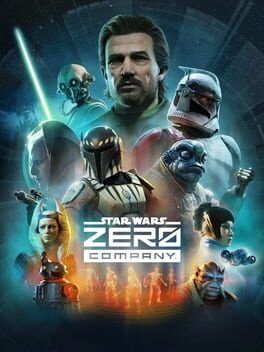
Image: IGDB
Store links: Star Wars Zero Company on Steam
A strong launch now has a studio-capacity question attached
Star Wars Zero Company launched on August 27, 2026 for PC, PS5, and Xbox Series X|S, according to Console Creatures, but the cleanest success narrative around Bit Reactor’s tactics game has been complicated by reporting that most of the studio was furloughed before players ever got their hands on it.
Console Creatures, citing Stephen Totilo’s Game File reporting, says a Bit Reactor representative confirmed that furloughs happened weeks before launch. That representative did not confirm the number of affected employees, but described the move as a “difficult decision” and emphasized that it was Bit Reactor’s decision rather than one made by EA, the game’s publisher, or Disney, which owns Star Wars.
The scale remains reported rather than officially confirmed. Console Creatures says one Game File source put the impact at up to 80 percent of the team, with only a skeleton crew left to handle post-launch updates and bug fixes. The same report says the studio, founded in 2021, ran out of money before its first game released.
That timing is the tension around Star Wars Zero Company right now. On the player-facing side, the game appears to have landed well: Console Creatures describes it as a top-selling game on Steam and points to an 85 Metacritic score, while IGN reports that the game peaked at 77,889 concurrent players on Steam over the weekend. On the production side, the studio behind it may have reached launch with limited ability to immediately capitalize on that momentum.
The Titanfall pitch changes how to read the game’s DNA
The other major detail from Game File’s reporting, summarized by IGN, is that Star Wars Zero Company was not originally conceived as a Star Wars project. IGN reports that legal documents tied to a lawsuit between Bit Reactor leadership show director Greg Foertsch working with studio co-founder Alison Kelly on tactics-game pitches that eventually led to a meeting with Respawn Entertainment co-founder Vince Zampella.
According to IGN’s account of the Game File report, Zampella asked Foertsch to pitch a tactics game using Respawn’s own IP. Game File reportedly says that pitch was directly linked to Apex Legends, which sits in the Titanfall universe. Zampella rejected that version and told the team to try again using the Star Wars IP instead.
There are limits to what can be concluded from that history. IGN notes that it is unclear whether the proposed Titanfall-universe tactics game would have included Titanfall’s signature mechs or leaned more toward Apex Legends-style hero characters. So the safe takeaway is not that Star Wars Zero Company is a reskinned Titanfall project. The supported takeaway is sharper: the project’s foundation was a tactics-game pitch first, and the Star Wars identity came after Respawn redirected the team toward a license it already had a major role in through the Star Wars Jedi games.
That matters for expectations around scope. Star Wars Zero Company’s most discussed systems do not sound like a game built primarily around franchise tourism. The reporting points toward a studio with Firaxis veterans and tactics ambitions that found its eventual setting through Respawn’s Star Wars pipeline.
Crisis Missions show where the scope is concentrated
Polygon’s account of Star Wars Zero Company’s Crisis Missions helps explain why the game is drawing attention beyond its license. The system appears when players select missions at the holotable and see a red warning that a crisis is happening somewhere in the galaxy. Polygon describes those crises as moments when enemy forces are close to learning new combat techniques, such as sniping droids gaining an evasion perk or learning to bypass part of a squad’s defenses.
The key design twist is player agency. Polygon says a crisis presents two possible enemy perks, then asks the player to choose one to disrupt. The other evolution remains in play, meaning the player is not simply stopping difficulty growth. They are curating the form that difficulty takes across the campaign.
As a strategy design choice, that is a strong signal about Bit Reactor’s priorities. Star Wars Zero Company crisis missions turn difficulty scaling into a campaign-layer problem rather than a simple increase in enemy count or health. If your squad leans on long-range overwatch and movement denial, letting enemy melee improve may be less dangerous than allowing ranged units to become harder to hit. If your company is built around defensive mitigation, armor-piercing enemy upgrades become a different kind of threat.
That is the kind of system that creates perceived scope without requiring endless map churn. It gives the campaign a meta layer where the enemy army feels like it is developing around you. In XCOM-like tactics, that layer often decides whether a campaign has legs after the first dozen missions. Polygon’s praise suggests Star Wars Zero Company is using its limited pieces in a way that makes the strategic economy feel alive.
The furloughs make post-launch ambition harder to read
The practical question is not whether Star Wars Zero Company launched with a complete tactical identity. The reporting and early reception suggest it did. The harder question is how much support players should expect after launch.
Console Creatures says one Game File source described a skeleton crew remaining to roll out post-launch updates and fix bugs. That is a narrower claim than saying expansions, balance seasons, or major content updates are canceled. None of the provided source material includes an announced DLC roadmap, season plan, mod plan, or long-term patch schedule from Bit Reactor or EA.
For a tactics game, post-launch support can matter in several different ways. Balance patches can reshape class viability, enemy tuning, difficulty spikes, and campaign pacing. Bug fixes can be especially important when a game has layered mission rules and persistent squad progression. New content, if it ever comes, would demand a larger production commitment than routine stability work.
The reported Bit Reactor furloughs therefore should not be read as a verdict on the shipped campaign. They should be read as uncertainty around velocity and scope after release. If you are buying Star Wars Zero Company for the campaign that reviewers and outlets are already discussing, the available evidence is encouraging. If you are buying because you expect an expanding tactics platform, the responsible move is to wait for Bit Reactor or EA to say what comes next.
EA, Disney, and Respawn sit around the story, but Bit Reactor is central
The publisher and license-holder distinction is important because it prevents the story from becoming too neat. Console Creatures says Bit Reactor’s representative emphasized that the furlough decision was made by the developer, not EA or Disney. That does not answer every business question, but it does place the confirmed personnel action at the studio level.
IGN’s reporting also puts Respawn near the project’s origin. Zampella’s rejection of the Titanfall-universe pitch and redirection toward Star Wars, as reported through Game File, fits with Respawn’s existing role in EA’s Star Wars portfolio. IGN notes that Respawn created the Star Wars Jedi games and worked on a scrapped Star Wars FPS.
That context helps explain how a tactics game could move from a Titanfall-related pitch into Star Wars without implying that every design element maps directly from one universe to the other. A turn-based command structure can fit Apex-style specialists, Titanfall-style military fiction, or Star Wars mercenaries and soldiers. The final product’s identity depends on how those systems are framed, tuned, and sustained.
For players, the origin story should temper two opposite assumptions. It is too strong to say the game is secretly a Titanfall tactics game with Star Wars assets, because the sources do not establish that. It is also too shallow to treat the Star Wars branding as the whole story, because the reported pitch history shows a tactics concept searching for the right IP wrapper before launch.
How to set expectations before jumping in
The current reader takeaway is a split one. Star Wars Zero Company is available now on PC, PS5, and Xbox Series X|S, and multiple outlets describe a strong tactical package. Polygon praises its XCOM-like tactics and Crisis Missions. Console Creatures cites an 85 Metacritic score. IGN reports a weekend Steam peak of 77,889 concurrent players and strong word of mouth on social media.
At the same time, the reported studio situation argues for caution if your interest depends on long-term expansion. A skeleton crew focused on post-launch updates and bug fixes, as described by Console Creatures’ summary of Game File’s reporting, is not the same thing as a full live team. Until Bit Reactor or EA lays out a roadmap, expectations should stay anchored to the shipped game rather than imagined future campaigns.
For tactics players, the most promising signal is the Crisis Missions structure. It suggests that Bit Reactor invested in systems that let campaign difficulty evolve through choices rather than simple stat inflation. That kind of design tends to reward replay, experimentation, and squad specialization.
For Star Wars fans, the Titanfall pitch origin is an interesting alternate-history note rather than evidence of missing content. The sources say the earlier pitch was linked to Apex Legends and the Titanfall universe, but they do not confirm mechs, pilots, or any specific cut feature. Treat it as development context, not a checklist of what Star Wars Zero Company was supposed to be.
The result is a rare post-launch picture: a well-received Star Wars tactics game with unusually compelling strategy systems, surrounded by real uncertainty about the studio’s immediate capacity. The safest expectation is to judge Star Wars Zero Company on the campaign in front of players now, while waiting for official word before assuming a larger future.