
A leaked Star Wars Orca gameplay concept clip appears to show EA Vancouver’s canceled open-world project, its Ragtag roots, and the action-adventure design questions EA left behind.
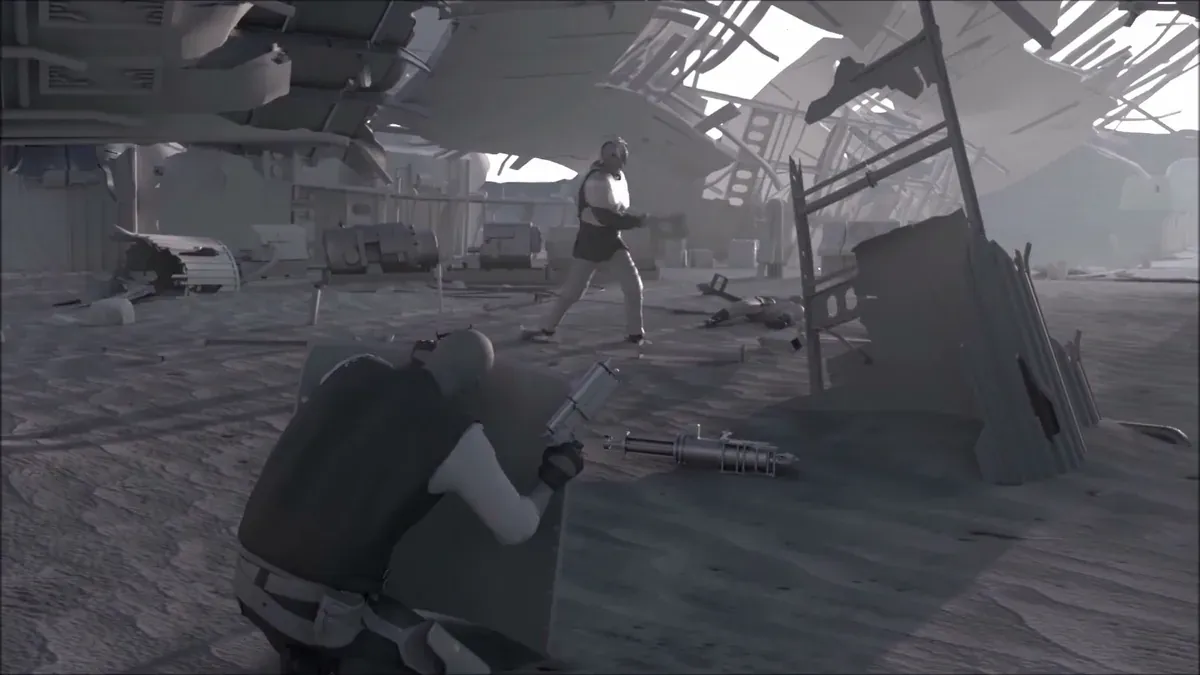
Image: pro-gamer.gg
Leaked Orca footage surfaces with a major caveat
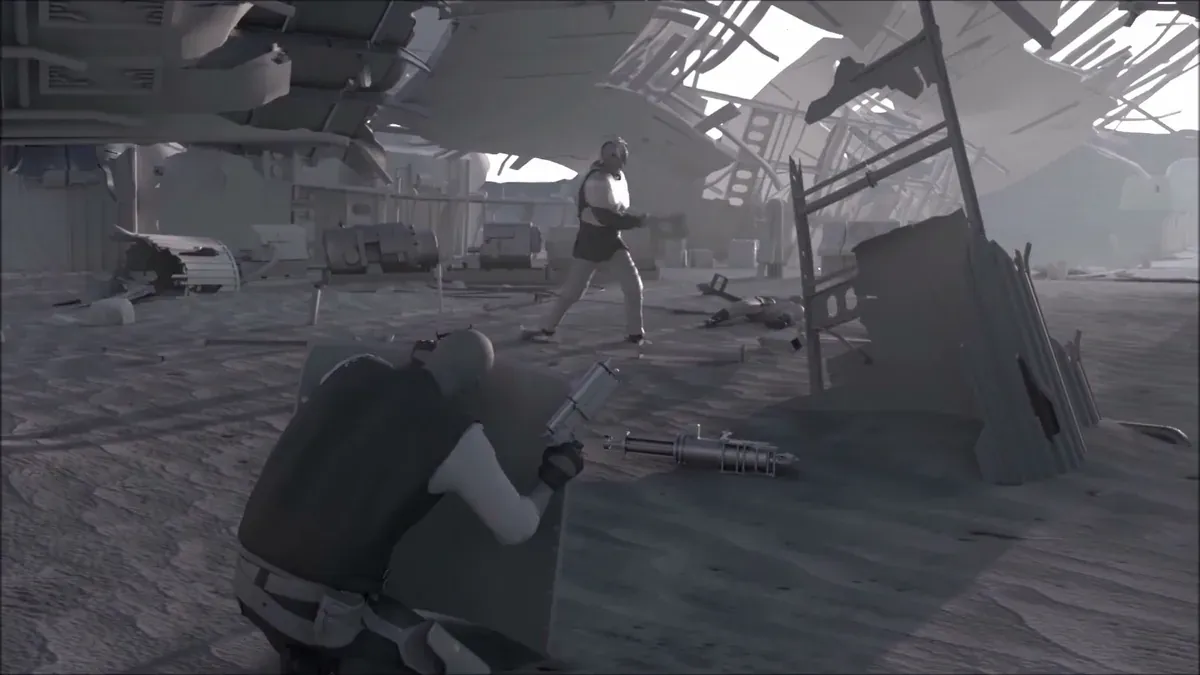
A roughly three-minute gameplay concept clip that appears to show Star Wars: Orca, EA Vancouver’s canceled Star Wars project, has resurfaced online via the Gaming Leaks and Rumours subreddit, according to Eurogamer and PC Gamer. The tension is immediate: the footage offers one of the clearest looks yet at a game EA never released, but EA has not commented on the clip, and Eurogamer notes that its authenticity has not been confirmed.
That distinction matters. What is public right now is a leaked video described by multiple outlets as Orca gameplay concept footage. What remains unconfirmed is whether the clip represents a playable slice, an internal target mock-up, a vertical slice, or another form of pre-production proof of concept. Twisted Voxel describes the material as a 2019 proof of concept, while Eurogamer calls it a gameplay concept clip. Either way, the footage is best treated as an early design artifact rather than evidence of a near-finished game.
The appeal is easy to understand. This is canceled Star Wars game footage from one of EA’s most discussed lost projects, tied to the wreckage of Visceral Games’ earlier Star Wars effort, Project Ragtag. For action-adventure fans, the clip is less valuable as a promise of what could still happen and more valuable as a window into the kind of scoundrel-led Star Wars game EA once tried to build.
What the footage appears to show
Eurogamer reports that the leaked footage shows a Star Wars scoundrel moving through third-person cover shooting and melee combat, with grey-and-white placeholder character models standing in for finished art. Twisted Voxel describes a bald playable character that appears to be a temporary model, exchanging blaster fire with enemies including Stormtroopers while moving between cover positions.
The most telling moment, as described by Twisted Voxel, is a sequence where the protagonist grabs a broken piece of debris and uses it as a makeshift shield while firing a blaster. That is a small interaction, but it says a lot about the imagined combat rhythm. Orca, at least in this slice, appears to have been testing a scrappy improvisational fantasy rather than a pure Jedi power fantasy. The player is not cutting through droids with a lightsaber. They are surviving the room, ducking behind cover, returning fire, and turning wreckage into a temporary advantage.
Eurogamer also reports that the clip includes melee combat, full voice work, and a score that sounds unmistakably in the Star Wars register. PC Gamer’s read, cited by Eurogamer, is that the footage looks very Han Solo, with a dose of Nathan Drake. That comparison tracks with what the reported footage emphasizes: a charming outlaw archetype, blaster-forward encounters, physical movement through dangerous spaces, and set-piece energy built around close calls rather than Force abilities.
Twisted Voxel adds that the footage shows environmental destruction, including blaster shots scattering sand across the battlefield. Again, this should not be read as a shipping feature list. In a concept clip, sand spray, debris, cover transitions, and dramatic voice work can all be part of a target feel. But as action-adventure language, the direction is clear. Orca appears to have been chasing tactile danger: firefights with staging, combat beats that react to the room, and the fantasy of a scoundrel scraping through trouble by inches.
How Orca grew out of Ragtag’s remains
Orca’s significance comes from its connection to Project Ragtag, the Visceral Star Wars project led by Amy Hennig before EA shut that path down. Eurogamer reports that EA Vancouver was tasked with turning Ragtag, described as a linear Star Wars game from Visceral under Hennig, into an open-world project that reused much of Ragtag’s existing work. PC Gamer similarly reports that Orca would have reused assets from the previously canceled Ragtag.
That lineage is the story behind the story. Ragtag has long been discussed as the lost cinematic Star Wars adventure, in part because of Hennig’s association with the Uncharted series. Orca, by contrast, appears to have represented EA’s attempt to take existing material and rebuild the design around a broader open-world structure. According to Twisted Voxel, the project would have allowed players to explore multiple planets as a scoundrel or bounty hunter, taking jobs from criminal factions.
Those details frame Orca as a pivot, not a clean restart. If Ragtag was built around a more linear action-adventure template, Orca reportedly tried to stretch that DNA across an open-world format. That is a difficult transformation for any studio. Linear action-adventure pacing thrives on authored escalation: the chase, the firefight, the narrow escape, the quiet character beat, then the next set-piece. Open-world design asks for repeatable activities, systemic travel, progression loops, and content that can survive being played out of order.
The leaked footage, if representative of Orca’s internal goals, sits at the crossroads of those demands. Its strongest apparent qualities are cinematic and immediate: cover, banter, impact, improvisation, and peril. The harder unanswered question is how that would have scaled across planets, factions, jobs, and open exploration without losing the snap of a tightly directed Star Wars adventure.
EA’s canceled Star Wars chain did not end with Orca
The Orca leak lands harder because it is part of a wider pattern in EA’s Star Wars pipeline. Eurogamer reports that EA canceled Orca after moving beyond Ragtag, then shifted EA Vancouver toward another Star Wars project, a Battlefront spin-off codenamed Viking, which was also canceled when it looked unlikely to make the late 2020 launch window for PlayStation 5 and Xbox Series X/S.
Twisted Voxel reports that EA canceled Project Orca in January 2019 after determining that its ambitious scope would take too long to complete, and that EA Vancouver was then directed toward a smaller Star Wars project. Eurogamer’s account lines up with that general sequence, adding that EA reportedly wanted something smaller that could be ready for the new console launch window.
The result is a striking chain: Visceral’s Ragtag was canceled, EA Vancouver’s Orca repurposed some of that work into a broader open-world concept, and then Orca was canceled in favor of a smaller Star Wars game that also did not make it to release. The sources do not provide EA’s full internal rationale beyond reported timing and scope concerns, and EA has not commented on the newly surfaced footage. Still, the pattern points to a production problem familiar across big-budget action games: cinematic ambition, licensed expectations, open-world scope, and calendar pressure do not always fit inside the same box.
For players, that history can look like a trail of vanished promises. For studios, it is likely messier. Reusing assets from one canceled project can preserve work, but it can also carry design assumptions into a game with different structural needs. A linear heist-like adventure and an open-world scoundrel simulator may share blasters, ships, animation sets, or characters, but they do not share the same pacing spine.
The scoundrel fantasy eventually reached players elsewhere
Eurogamer notes that many fans in the Reddit thread saw similarities between the leaked Orca footage and Ubisoft’s Star Wars Outlaws, which gave players a scoundrel-led open-world Star Wars adventure in 2024. That comparison is natural, but it should be kept in bounds. The sources do not say Outlaws uses Orca’s technology, design, assets, or story material. The overlap is thematic: a Star Wars game built around underworld survival rather than Jedi heroics.
That overlap is still useful for understanding why Orca continues to draw attention. Star Wars action-adventure has often been pulled toward the clean readability of Jedi combat: parries, Force powers, duels, and mythic escalation. Orca, based on the reported footage, seemed interested in a dirtier tempo. Cover shooting, debris shields, criminal jobs, and blaster exchanges all suggest a game about momentum under pressure, where the fantasy comes from staying alive long enough to talk, shoot, or sprint your way out.
From an action-adventure perspective, that is a compelling lane because it changes the shape of a set-piece. A Jedi encounter often asks how powerful the player can become. A scoundrel encounter asks how badly the plan has collapsed and whether the player can improvise. That difference affects level design, combat readability, encounter spacing, and even dialogue timing. A good scoundrel game needs the player to feel slightly outmatched without feeling underpowered, lucky without feeling passive, cinematic without losing control.
The leaked Star Wars Orca footage appears to capture that tonal target in miniature. It does not prove the open-world version would have worked. It does show why the idea remains sticky for fans who want Star Wars action built around blaster grit, criminal factions, and authored chaos rather than another march up the Jedi power ladder.
What is confirmed, what is not, and what fans can take from it
The confirmed public picture is narrow. Multiple outlets report that a roughly three-minute clip has been shared online and appears to show Orca, EA’s canceled Star Wars project from EA Vancouver. Eurogamer reports that EA has not commented and that authenticity has not been confirmed. PC Gamer and Eurogamer connect Orca to Ragtag through reused work from Visceral’s canceled project under Amy Hennig. Twisted Voxel reports additional context about a 2019 proof of concept, multiple planets, criminal factions, and EA canceling Orca in January 2019 because of scope and timing concerns.
What is not confirmed is equally important. There is no release date because Orca was canceled. There are no current platforms, price, system requirements, upgrade paths, or availability details. The footage does not indicate that EA is reviving the project. It also does not establish how complete Orca was, how much of Ragtag survived inside it, or whether the mechanics shown would have remained in a final build.
For action-adventure fans, the practical takeaway is to treat the leak as historical evidence, not a buying signal. It is a glimpse at a direction EA explored during a turbulent Star Wars period: cinematic scoundrel action moving from Ragtag’s reported linear roots toward Orca’s reported open-world ambitions, then being overtaken by scope and schedule realities. The footage matters because it preserves a design question that has not gone away. How do you make a Star Wars game feel authored, dangerous, funny, and reactive when the player is not a Jedi and the galaxy is supposed to be open?
That question still sits at the center of many modern licensed action-adventure games. Orca did not ship, and the leaked clip should not be inflated into a lost masterpiece. But as canceled Star Wars game footage, it shows enough texture to explain why players keep looking back at EA’s unfinished pipeline. Somewhere between Ragtag’s cinematic promise and Orca’s open-world reach was a scoundrel game built around rhythm, cover, damage, and escape. For now, all that remains is the concept, the cancellations, and the lingering sense of a set-piece cut before the chase could begin.