
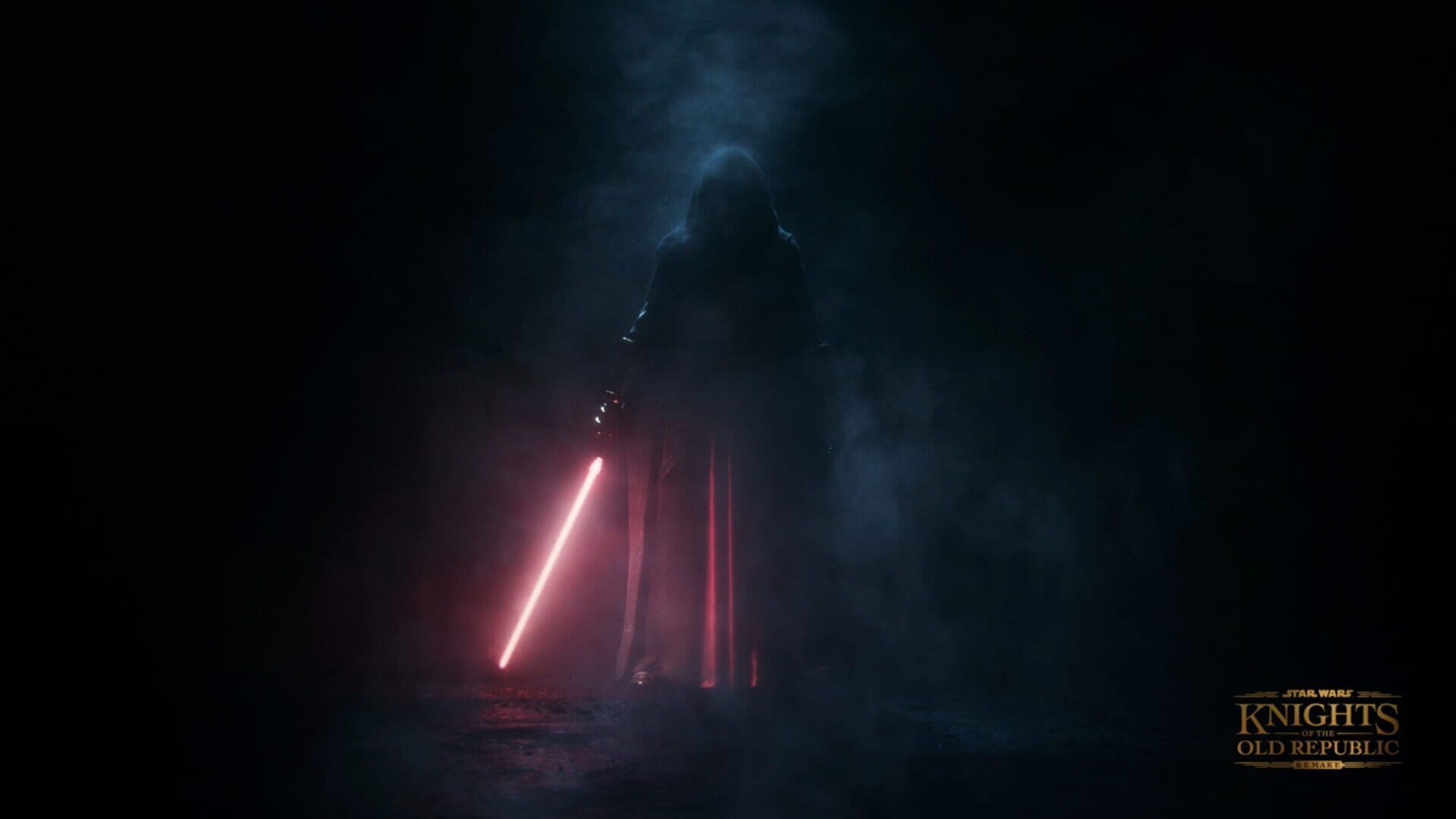

After Saber’s brief update, the KOTOR Remake is alive again in headlines but invisible as a game. Here’s where the project actually stands, why fans still care after years of silence, and what needs to happen before it feels real.
Five Years Later, KOTOR Remake Is Back To A Familiar Status: Schrödinger’s RPG
Star Wars: Knights of the Old Republic Remake is officially “still in development.” That is the entire message Saber Interactive chief creative officer Tim Willits was willing to share in a recent IGN interview, five years after the game’s 2021 reveal.
For a normal project, that line would be a non-story. For KOTOR Remake, it lands like a flare in a dark sky. After an indefinite delay, a studio switch, removed trailers, and long stretches of radio silence, even a flat confirmation that it has not been canceled is enough to send the community into another round of hopeful analysis.
So where does that actually leave the remake, and what would it take for the project to move from vapor to visible reality?
A Quick Refresher On A Very Long Road
KOTOR Remake’s trajectory has become almost as famous as the original game. Announced during the September 2021 PlayStation Showcase as a timed PS5 console exclusive, it was initially positioned as a “remake from the ground up” of BioWare’s 2003 classic.
Aspyr Media, long known for handling Star Wars ports, was leading development under the Embracer Group umbrella. Early messaging leaned on reverence for the source material: same core story, modern visuals and systems, and a chance to bring one of the most beloved Star Wars RPGs to a new audience.
Then the stories started to shift. In 2022, reports surfaced that an internal demo shown to partners did not land well. The project was delayed indefinitely. Key leads reportedly left or were removed. By late 2022 and into 2023, Saber Interactive had quietly taken over primary development responsibilities.
Publicly, things only looked worse. Sony delisted the original teaser trailer. PlayStation social posts that once hyped the game disappeared. Outside of a handful of corporate comments that the game was “alive and well,” there were no fresh assets, no updated description of scope, and no reassurance from Disney or Lucasfilm Games.
In practice, the remake existed mostly in two places: investor calls and fan memory.
Saber’s Update: A Small Line With Big Implications
That is the context in which Willits’ 11 word update arrives: “It is still in development, that’s all I can say.”
From a visibility standpoint, this does three things.
First, it reaffirms ownership. Saber is still working on it, despite its own corporate turbulence and Embracer’s restructuring. In an era where projects can quietly die during cost-cutting, that matters.
Second, it confirms that no hard reset has been announced. There is no language about concept phase, no suggestion that the team is back to preproduction. The phrasing implies ongoing work, not a restart, though it leaves all details deliberately vague.
Third, it establishes a communication pattern. Between Embracer comments in 2024 about the project being “alive and well” and this 2026 confirmation, KOTOR Remake has become an annual check in headline. Once a year, someone at Saber or Embracer says some version of “yes, it still exists,” and then the project vanishes again.
For players, that cadence is both comforting and frustrating. It suggests there is something on the other side of the curtain, but also that nobody is ready, or able, to pull it back.
What “Still In Development” Usually Means At This Stage
If you strip away the Star Wars branding and nostalgia, KOTOR Remake looks like a classic big budget problem project. Long incubation, leadership changes, publisher restructuring and no public milestones all point to a production that has struggled to find stable footing.
“Still in development” in that context can cover a wide spectrum.
At one end, it might mean active, full scale production on a solid plan, with Saber and any co-developers quietly iterating on combat, narrative pacing, and modern presentation. The silence, in that optimistic version, is strategic. Everyone wants to avoid overpromising until the game is closer to shipping.
At the other end, it might mean the project is in what developers sometimes half jokingly call suspended animation. A small core team keeps the build compiling, experiments with different directions, and prepares materials for internal reviews while executives decide how much budget they are willing to commit. On paper, work is ongoing. In reality, it moves only when greenlights and restructurings allow.
The truth likely sits somewhere between those extremes. The key takeaway for players is this: “still in development” is not the same as “actively being marketed,” and it is not the same as “on track for release in the near future.” It means the project has not crossed the invisible cancellation line inside a publisher’s spreadsheets, but it does not guarantee when, or in what form, it will arrive.
Why Fans Stay Invested Anyway
Despite that uncertainty, KOTOR Remake continues to command attention in a way many troubled projects do not. There are a few reasons for that.
The first is the strength of the original game. Knights of the Old Republic is more than a nostalgic favorite. It is a formative RPG for an entire generation, one that defined how Star Wars could work as a player driven narrative. The Revan twist, the moral choices, and the sense of inhabiting an Old Republic era that felt distinct from the films still resonate.
The second is scarcity. While the original KOTOR and its sequel are playable today on PC, Xbox, Switch and mobile, they have never been modernized at the level of a full remake. Players who discovered Mass Effect Legendary Edition or Resident Evil 2’s remake have a reference point for what a thoughtful, big budget reimagining can do. The idea of seeing Taris, Dantooine, and the Star Forge rebuilt with current tech remains incredibly enticing.
The third is that Star Wars itself is an expectation machine. Every new film, show, comic, and game invites speculation about how it will connect to the larger universe. The Old Republic era in particular occupies a sweet spot: familiar enough to feel like classic Star Wars, distant enough from current continuity debates that it can carve out its own identity. A successful KOTOR Remake could reestablish that corner of the galaxy in a more visible way than any MMO expansion.
Finally, there is a psychological factor. The longer a project like this stays in limbo, the more it becomes a shared saga. Fans trade yearly updates, joke about the “still alive” headlines, and watch every trademark filing or LinkedIn blurb for clues. At a certain point, following the development becomes its own meta game.
The Visibility Problem: A Game Without A Shape
For all that investment, there is a hard limit to how long a project can live on atmosphere alone. KOTOR Remake’s central problem right now is not simply that it is delayed. It is that players have no concrete idea what it actually is in 2026.
Key questions remain unanswered.
Is this a one to one remake with updated combat and visuals, or a broader reimagining that restructures quests and characters? How closely is it aligned with current Lucasfilm canon? Has the PS5 timed exclusivity arrangement changed after years of delays and shifting publisher priorities?
Without answers, it is difficult for anyone to calibrate expectations. The original teaser trailer framed the remake as a prestige PlayStation showcase title. The years since have sounded more like a survival story inside a volatile corporate landscape.
That disconnect feeds skepticism. Some players now treat any KOTOR news as background noise until proven otherwise. Others worry that even if it does release, it will arrive as a compromised version of what was once pitched.
The Milestones That Would Make KOTOR Remake Feel Real Again
Visibility is not just about volume of communication. It is about specific, trust building moments. For KOTOR Remake to move from rumor status back to “real game people can plan around,” several key milestones need to happen.
The first is a proper re reveal. That does not need to be a blowout stage demo, but it does need to show real in engine footage, demonstrate the visual direction, and restate the project’s core pitch. Is this still the same remake announced in 2021, or has the design changed significantly under Saber’s stewardship?
Alongside that, the developers need to clarify platforms and partnerships. If the original PlayStation arrangement is still in place, saying so would reset expectations and give Sony a reason to put marketing weight behind the game again. If the deal has shifted, a fresh announcement can create a new narrative around the project rather than leaving players to piece it together from store listings and social media archives.
The third milestone is some form of hands on or in depth preview from press or creators. A controlled gameplay demo at an industry event, or a behind closed doors session where trusted outlets can speak concretely about combat pacing, dialogue presentation, and how the remake handles iconic moments, would go a long way toward cutting through years of vague reassurances.
Beyond that, a release window, even a broad one, would signal internal confidence. It does not need to be a specific date, and in fact probably should not be until production is stable. A target year, backed by visible progress, tells players that the publisher sees a path to the finish line rather than just keeping the project on life support.
Managing Player Expectations In The Meantime
Until those milestones arrive, expectations around KOTOR Remake are best framed in cautious terms.
On the optimistic side, Saber’s repeated confirmations suggest that someone, somewhere, believes in the project enough to keep it funded through a brutal stretch of industry cutbacks. The original game’s design is a known quantity, which reduces some risk compared to a brand new IP. Modernizing a beloved classic can be more predictable than inventing a world from scratch, provided the team is given enough time and clarity to do it right.
On the cautious side, every additional year without footage raises the bar KOTOR Remake will have to clear. Players are not just expecting a functional remake. They are expecting something that justifies this long and public journey, squares fan memories with modern standards, and fits comfortably beside the strongest remakes of the last decade.
The healthiest expectation, for now, may be to treat the project as a long term possibility rather than an imminent release. Enjoy the original games, keep an eye on official channels, but resist building a specific mental picture the remake must match. The more rigid the fantasy becomes, the harder it will be for any real version to satisfy it.
The State Of The Galaxy Right Now
After Saber’s latest briefing, the status of Star Wars: Knights of the Old Republic Remake is paradoxically simple and complicated at once. On paper, it is alive, funded, and in some form of development. In practice, it remains invisible to players, its true scope and timeline known only to the people working on it.
For fans, the project currently exists in a familiar Star Wars space: a hopeful limbo between what is and what might be. Until Saber and its partners are ready to show the game in motion, “still in development” is both all we have and all we are likely to get.
The next time KOTOR Remake makes headlines, it needs to bring more than that. Real footage, clear messaging, and concrete milestones will be the difference between another yearly check in and the moment this long awaited return to the Old Republic finally feels real again.