
A practical, source-grounded guide to Star Wars Galactic Racer tips, favor combinations, in-race crashing, and the Biddy Blas moment driving new-player attention.
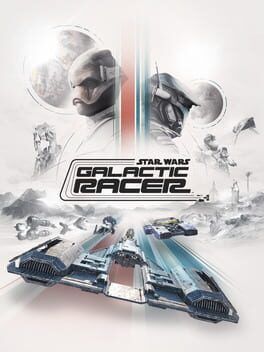
Image: IGDB
Store links: Star Wars: Galactic Racer on Steam
The guide rush is really about survival, not lap time
The clearest development around Star Wars: Galactic Racer this week is the sudden clustering of new-player help: Operation Sports published separate Oct. 9 guides on avoiding crashes and building favor loadouts, while GamesRadar has also framed its own tips and favors coverage around a brutal, runs-based arcade racer. That says plenty about where new players are getting stuck. The game is fast, flashy, and Star Wars-branded, but the early pain point is mechanical: players are trying to finish tours without turning every aggressive move into wreckage.
That distinction matters because “Star Wars Galactic Racer crashing” can mean two very different things. The provided sources discuss in-race crashes, vehicle explosions, hazard contact, and bad overtakes. They do not document a technical crash-to-desktop problem, a console stability issue, a patch, or a developer workaround. If your issue is the game application closing or freezing, the source material here does not support any fix beyond the usual platform-level troubleshooting. If your issue is slamming into walls, clipping rivals, accepting a suspicious gift from Biddy Blas, or running out of allowed crashes on higher difficulty, the current guide demand makes sense.
The common thread across the coverage is that Galactic Racer punishes loose driving harder than a conventional arcade racer. Operation Sports says the game may look straightforward at first, but that it takes “a couple of crashes” to understand that it is not like most arcade racing games, particularly once podracing enters the picture. GamesRadar similarly describes its racing as chaotic and potentially brutal for players who are not used to arcade racing in the Burnout and Need for Speed mold. For new players, the priority is not style. It is building a repeatable run that survives contact, bad traffic, and the game’s harsher risk economy.
Favors are the hidden setup screen new players cannot ignore
The most important Star Wars Galactic Racer tips are not all on the track. The favor system appears to be where many runs are won before the start lights go out. GamesRadar describes favors as perks that can increase Part slots or grant Credits from taking down rivals, and notes that they improve as you use them and complete planets. Operation Sports goes further with specific Star Wars Galactic Racer favor combinations, arguing that the right loadout is essential if you plan to win the league and beat Kestar Bool.
According to Operation Sports, one recommended non-Champion setup pairs Deeper Pockets with Bloody Bounty and Hibi’s Mad Genius. The logic is mechanical rather than cosmetic: Operation Sports says Deeper Pockets adds a plus 35 percent rarity chance, while Bloody Bounty removes its minus-one reward pack debuff. Mad Genius then fills the third slot as a safety-oriented pick, with the outlet specifically framing its extra crashes as valuable even for confident players.
For Champion difficulty, Operation Sports recommends a different philosophy: Gadgeteer, Bloody Bounty, and either Mad Genius or Second Chance. Gadgeteer is the anchor because, according to the guide, it provides two extra part slots and, when maxed, adds options to Hibi’s Shop. Operation Sports says it avoids Deeper Pockets in this setup because the debuff cannot be countered without sacrifices, and the rarity boost is not worth losing longer-term options. That is a useful lesson for new players: the best favor is not always the one with the loudest upside. On harder runs, your setup needs to protect the run state, not chase theoretical reward quality.
The progression rules also explain why players are searching for favor combinations early. Operation Sports reports that favors level up by completing planets with them equipped, with rank two requiring two planets and rank three requiring four more after that. The same guide says favors can only rank up once per act. In practical terms, a bad favor choice is not instantly fatal, but it does cost development time inside a run. Treat favors like a race engineer treats setup direction: pick a package, understand its compromises, and commit long enough to let it mature.
Perfect starts and ramjet control are your first anti-crash tools
Operation Sports’ crash-avoidance advice starts before turn one. Its guide says perfect starts are achieved by revving with R2 or RT and keeping the rev bar within a sweet spot at the end of the countdown. The outlet’s recommended method is to max the bar, then release based on where the sweet spot sits, using the final sound cue as a timing reference when the target is near the front of the bar. It also notes that bar speed varies by vehicle.
That last detail is the important one for racers who keep missing launches. A perfect start is not a universal rhythm test. It is vehicle-specific. If you swap craft and keep the same trigger habit, you are bringing the wrong muscle memory to the grid. Spend the first few starts learning how quickly your chosen vehicle sheds revs, then adjust release timing around the sweet spot rather than stabbing the trigger late.
The same guide encourages heavy use of the Ramjet, even redlining when the situation demands it, and says many new players miss that they can perform controllable drifts while keeping Ramjet boost active. Operation Sports recommends investing in Ramjet, Cornering, and Drift while keeping overall stats high. From a handling perspective, that advice is about maintaining drive through the corner rather than coasting into safety. If you lift every time the track bends, you surrender position, invite contact, and give rivals more time to target you. If you boost without building enough cornering and drift support, you convert speed into impact. The middle ground is sustained momentum with enough rotation to keep the nose pointed where the track is going.
Shields reduce damage, but they do not excuse bad lines
Operation Sports identifies Shield as the first ability and says it helps avoid damage from hazards and clips, including contact from rivals or the environment. It also calls Shield a necessity against Kestar and on harder difficulties. That is straightforward advice, but the same guide adds the limit that new players need to internalize: a head-on collision will still blow you up no matter how strong the shield is.
That makes Shield a margin tool, not an invulnerability button. Use it to survive glancing contact, messy packs, and hazard-heavy sections. Do not use it as permission to point the vehicle directly at traffic or scenery. In racing terms, Shield widens the acceptable error window. It does not change the physics of a bad approach.
There is also a buildcraft angle. Operation Sports says Shield can appear as a passive effect from various parts. Combined with the favor advice around Gadgeteer and extra part slots, that gives players a practical route toward safer runs: increase the number of meaningful parts you can carry, then look for passive safety effects that reduce the cost of ordinary mistakes. The goal is not to remove risk from Galactic Racer. The goal is to stop one clip, one hazard, or one rival nudge from ending a promising tour.
Champion difficulty changes the goal from domination to risk management
The hardest runs appear to punish ego more than hesitation. Operation Sports’ Champion-specific advice is to avoid high-risk overtakes or gambits because Shade becomes the prime target regardless of opposition. The guide also recommends low-risk side bets to improve Credits balance and points players toward the right Eliminator races, while warning that Champion has a limited crash allowance through its favor recommendation context.
That is a different rhythm from lower-difficulty arcade racing, where contact often becomes part of the spectacle. In Galactic Racer, the higher-difficulty question is whether an overtake is worth the run damage it might create. If a move requires threading between a wall, a rival, and a hazard while the pack is still bunched, the mathematically correct play may be to wait for a cleaner exit, then use Ramjet on a straighter section.
Favor combinations reinforce that restraint. Operation Sports’ Champion loadout leans toward Gadgeteer for parts depth, Bloody Bounty for reward structure, and Mad Genius or Second Chance for survivability. That is a setup philosophy built around completing the run, not topping every split. New players chasing the cleanest route through Champion should think in terms of risk budget. Spend it on moves with clear exits. Do not spend it on revenge hits, panic overtakes, or gifts from a suspiciously charismatic rival.
Biddy Blas turned a tutorial problem into a viral character moment
IGN reports that Biddy Blas has gone viral on gaming Twitter after a player interaction in Star Wars: Galactic Racer circulated widely. The line driving the attention is Blas introducing himself in Huttese, translated by IGN as: “Here’s a name for you, amateur! Biddy Blas. Write it down. Tattoo it on your arm, and someday your arm will be worth millions!” IGN highlights the delivery of “Biddy Blas! Scrib doon!” as the phrase that stuck with players.
Lucasfilm Games producer Craig Derrick publicly acknowledged the reaction on X, according to IGN. Derrick wrote that it was amazing to see so many people loving Galactic Racer and joked that the algorithm was properly prioritizing “Mister Biddy Blas.” That is the confirmed public response from the Lucasfilm Games side in the supplied material. It is not, by itself, an announcement of new content, a balance change, or a Biddy Blas event.
The practical twist is that Biddy Blas is also tied directly to the crash problem. IGN says Blas is a Crocin who will do whatever it takes to win, including giving the player a “gift” that is actually a bomb. If accepted, IGN reports, it explodes your ship and gives opponents a major head start. That is the perfect example of Galactic Racer’s design personality: the memorable character beat is also a mechanical trap. The viral clip brings players in, then the game asks whether they are paying enough attention to survive the joke.
Where Galactic Racer fits among Star Wars and anti-grav racers
Polygon places Galactic Racer in a lineage that includes Star Wars Episode I: Racer, Burnout, and F-Zero-style sci-fi racing. The outlet describes Fuse Games’ title as a Star Wars racer with a roguelite campaign structure and multiplayer, and notes that Fuse’s founders and many staff previously worked at Criterion Games, the studio associated with Burnout. That context helps explain why the game’s advice ecosystem looks different from a normal kart racer or a traditional time-trial-focused simcade release.
Polygon points to Star Wars Episode I: Racer as the obvious antecedent, noting that the 1999 LucasArts game was released alongside The Phantom Menace and is playable today through a 2020 port on Nintendo Switch, PlayStation 4, and Xbox One. Polygon also compares Episode I: Racer’s afterburner boost that can overheat and destroy your craft with Galactic Racer’s ramjet. That comparison is useful for anyone searching for the best Star Wars racing games after seeing Biddy Blas Galactic Racer clips: the old podracing classic is still relevant because it teaches the same basic lesson about speed as a resource with consequences.
The unanswered questions are also worth stating clearly. The supplied sources do not provide a complete platform list, price, PC requirements, official performance targets, or a technical patch roadmap for Galactic Racer. IGN mentions its own 8 out of 10 review and says the game has been a hit with fans and critics, but that remains outlet framing rather than hard sales data in the material provided. For now, the reliable buying and playing guidance is narrower: if you are already in, focus on favor synergy, Ramjet control, Shield discipline, and suspicious character interactions. If you are still deciding, understand that Galactic Racer’s appeal appears tied to high-speed anti-grav handling, roguelite run pressure, and Star Wars personality, with a learning curve sharp enough to send players straight to tip guides.