
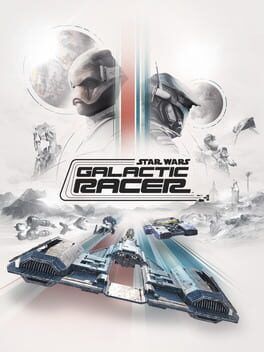

Fuse Games’ debut is finally dated, with three editions, a $160 collector’s box, and a pitch for high-octane arcade racing in the Outer Rim. Here’s how the October launch stacks up, what each version includes, and which preorder makes sense for different players.
Star Wars finally has a new racing game on the calendar. Star Wars: Galactic Racer launches on October 6, 2026 for PS5, Xbox Series X|S, and PC, marking the debut of Fuse Games, a studio founded by former Criterion veterans with a history in high-speed arcade racing.
In an era where the brand has leaned heavily into action adventures and live-service shooters, Galactic Racer is a pointed attempt to bring the fantasy of Star Wars vehicles screaming across the desert back into focus. With a firm date, a full edition breakdown, and preorders live, the question is no longer if this game is happening, but whether it can become the breakout Star Wars racer this generation has been missing.
The October 6 release date and why that timing matters
Galactic Racer is set to arrive on October 6, 2026. That timing positions it squarely in the early holiday window, just before the annual crush of shooters and open world launches begins to dominate November.
For Secret Mode and Fuse Games, October has a few advantages. It gives the game room to breathe before the late-year tentpoles arrive, but it is still close enough to holiday spending to benefit from gift buyers and big platform promotions. It also drops after the sports-heavy September period, which has traditionally been crowded with licensed competition.
From a racing niche perspective, that early October slot is smart. The last few years have seen relatively few big-budget arcade racers, and even fewer with a license as broad as Star Wars. If Galactic Racer can land solid reviews and strong word of mouth at launch, it has a realistic shot at becoming the default “fun couch co-op racer” pick on new consoles for the rest of the year.
Editions and pricing breakdown
Galactic Racer is coming in three tiers: Standard, Deluxe, and a premium physical Collector’s Edition. All three share the same October 6 release date.
The Standard Edition is set at $59.99 / £49.99 / €59.99 on PS5, Xbox Series X|S, and PC. This is the expected current baseline for a full-featured new-gen release, and it includes the complete campaign and multiplayer suite without any content restrictions.
Above that is the Deluxe Edition at $79.99 / £64.99 / €79.99. This version layers on a set of digital extras designed to expand both the garage and the arcade side of the game. Deluxe buyers get three bonus vehicles available from day one, three additional Arcade events, a Deluxe Livery Pack, a Deluxe Player Banner Pack, and a digital art book that digs into vehicles, pilots, and track concepts. The pricing puts it in line with other modern Deluxe bundles that blend cosmetic upgrades with early access to curated side content.
At the top end is the $159.99 / £139.99 / €159.99 Collector’s Edition, a physical-only release for PS5, Xbox Series X|S, and PC. This version includes everything in the Deluxe digital package and adds a slate of tangible collectibles: a model of the Kor Sarun: Darc X landspeeder, a physical banner reminiscent of in-universe racing promos, two embroidered pilot patches, a physical art book, and a custom slip cover paired with a steel case. For players who still value display pieces alongside their game library, this is a very traditional collector’s box with a clear focus on celebrating the game’s fictional racing culture.
Across all versions, the base game content remains the same. The higher tiers represent a choice between a lightly expanded version of the game with more race scenarios and customization, or a large physical set aimed at fans who want to commemorate a new entry in the Star Wars racing lineage.
What Galactic Racer is promising as an arcade racing fantasy
On paper, Galactic Racer is very much a spiritual successor to the fast, weapon-free arcade racers that Criterion helped popularize. Fuse Games describes it as a runs-based, high-stakes reinvention of racing, translated into the lawless Outer Rim after the fall of the Empire.
The central hook is the Galactic League, an illegal racing circuit bankrolled by syndicates where reputations are built across dangerous, improvised tracks. You play as Shade, a pilot with a personal stake in this underworld competition, navigating rivalries, alliances, and old grudges as you climb the circuit. It is a single-player campaign first, with narrative structure wrapped around each series of events rather than a barebones tournament ladder.
Vehicles cover the spectrum of Star Wars ground and low-atmo craft: landspeeders for low-slung, high-speed skims across sand and scrap, speeder bikes for twitchy technical racing through tighter spaces, and skim speeders that hint at more flexible handling on uneven or partially submerged terrain. The selection leans into recognizably Star Wars silhouettes without being limited to any one era or film.
Tracks are drawn from across the galaxy, with confirmed locations including Jakku and Ando Prime. That mix suggests an emphasis on both familiar film-adjacent sandscapes and deeper cuts that give Fuse room to experiment with layout and set pieces. In practice, that should mean dense environmental storytelling alongside the usual jumps, shortcuts, and near-miss spaces that arcade racers thrive on.
Moment-to-moment, Galactic Racer is pitched as pure speed and precision rather than a kart-style combat racer. The runs-based framing implies repeatable events tuned to reward mastery, with higher difficulties, better payouts, or time challenges encouraging players to learn every line and hazard. Paired with the Star Wars aesthetic and soundtrack treatment, the goal is to deliver the fantasy of skimming just meters above desert rock at dangerous speeds with blaster fire and starfighters relegated to the background.
Does this finally have breakout potential for a Star Wars racing game?
Star Wars racing has a nostalgic legacy, but the brand has not had a true genre leader in years. Star Wars Episode I: Racer became a cult favorite thanks to its clear identity and sense of speed, yet subsequent experiments never truly took over the broader racing conversation.
Galactic Racer arrives at a moment where arcade racers are relatively rare compared to sim-leaning franchises. That scarcity can be an advantage. With former Criterion talent at the helm, there is at least a credible claim that the team understands what makes a good high-speed racer tick: readable track design, responsive but expressive handling, and tension that ramps up over each lap rather than simply escalating spectacle.
The decision to avoid weapons and lean into outlaw league flavor could also help the game carve out its own identity. A grounded ruleset built around boosting, draft lines, risk-reward shortcuts, and clean-but-aggressive piloting is something the market does not currently have in a Star Wars skin. If Fuse can deliver on content variety and tight controls, Galactic Racer has a plausible runway to become not just a nostalgia purchase but a fixture for fans who want a pick-up-and-play racing option on new hardware.
That said, breakout potential will still hinge on execution in a few key areas: frame rate consistency at high speeds, online stability for multiplayer, and track variety across what sounds like a focused set of planets. October gives it a strong launch window, but the real test will be whether it can hold attention heading into the holiday season when larger franchises arrive.
Buyer’s guide: which edition is worth it?
With three tiers and preorder bonuses in play, Galactic Racer is positioned like a modern blockbuster. The trick is working out what you actually get and whether it is worth the extra spend.
All preorders, regardless of platform or edition, include a bonus livery that can be applied across several vehicle types. In practice this is cosmetic flavor. It will let early adopters stand out online and during local play, but it does not materially change progression or performance. If you only care about racing and do not place a lot of value on exclusive skins, you will not be missing core content by waiting to buy later at a discount.
For most players, the Standard Edition will likely be the safest choice. You get the full campaign, the Outerrim racing fantasy, all essential vehicles and tracks, and access to future updates without any upfront premium. Unless you are certain you will be pouring dozens of hours into the game at launch, the $20 difference up to Deluxe is best considered an optional luxury.
The Deluxe Edition starts to make sense if you are invested in having more races and more toys to experiment with on day one. The three bonus vehicles broaden your garage and might offer different handling archetypes that speedrunning or competitive players gravitate toward, depending on how balanced the roster is. The three additional Arcade events are the biggest substantive get, adding bespoke scenarios that could effectively function as high-score or time-attack challenges. The livery and banner packs, plus the digital art book, are largely for fans who appreciate lore and customization.
The Collector’s Edition is clearly targeted at physical collectors and Star Wars memorabilia fans rather than anyone purely focused on the game. At $159.99, you are paying a heavy premium over Standard for the Kor Sarun: Darc X landspeeder model and associated physical goods. The inclusion of a full art book, banner, patches, and steel case will look strong on a shelf, but none of that translates to extra in-game content. If you do not routinely keep or display collector’s statues and books, this tier will be hard to justify.
A practical way to think about it is to match your purchase to your relationship with Star Wars and racers. If you are primarily a racing fan who just wants tight controls and good tracks, start with Standard and upgrade later only if post-launch support impresses you. If you are a Star Wars devotee planning to be there on day one, with a long history of buying Blu-rays and figures, Deluxe offers a nice middle ground. Reserve the Collector’s Edition for situations where the physical landspeeder and art book have intrinsic value to you beyond the game itself.
Preorder strategy and physical vs digital value
Preorders are often a delicate recommendation, and Galactic Racer is no exception. The single cosmetic livery is not a strong enough incentive on its own to justify locking in money early unless you are already confident about the game or need the Collector’s Edition before it sells out.
If you prefer physical ownership, the Standard and Collector’s editions both give you a disc and a box, with the latter elevating that into a centerpiece for a collection. Digital-only players get a cleaner experience with the same content and no storage concerns, but they miss the tactile side that this game is clearly trying to lean into through its Outer Rim racing aesthetic and memorabilia.
The safest route for cautious buyers is to wait for launch reviews and impressions. If Fuse Games delivers the kind of tight, replayable campaign that its pedigree suggests, Galactic Racer will still be there a week or a month later, and the loss of a preorder-only livery will not matter. On the other hand, if you already know that a new Star Wars racing game from ex-Criterion staff is a must-play for you, locking in a Standard or Deluxe preorder now is reasonable, with the understanding that the bonus is purely cosmetic and the real value lies in the underlying racing experience.
However you approach it, October 6 now marks a clear return for high-speed Star Wars racing. If Galactic Racer can turn its Outer Rim outlaw fantasy into consistent, satisfying track design and handling, this could be the moment the series finally finds a modern racing identity again.