
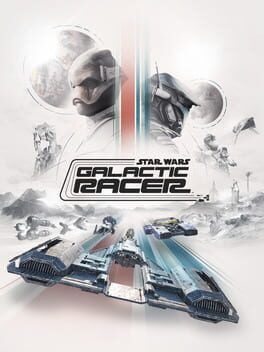
How Fuse’s ex-Burnout team is using tight circuits, volatile boost systems, and a character-driven campaign to turn Star Wars: Galactic Racer into a high-risk racing adventure instead of an open-world toybox.
Star Wars: Galactic Racer is not trying to be the next open world where you meander between icons for hours. Fuse Games, a studio built by former Burnout and Need for Speed leads, is returning to the discipline that made its name: brutally focused track racing where every corner, shortcut and crash is a deliberate part of the design. Only this time it is wrapped around an officially canon Galactic Racing League set after the Battle of Jakku.
This is a systems-first racer from a team that understands how to turn speed into tension. Its track constraints, double-layer boost, and spectacular crashes all speak to the Burnout lineage, but those ideas are being retooled for the particular physics, geography, and character expectations of Star Wars.
Burnout heritage in a Star Wars chassis
Fuse’s roots are all over Galactic Racer. The studio is packed with Criterion veterans who built Burnout’s chains of near misses, Takedowns and white-knuckle traffic weaving, then carried that knowledge into modern Need for Speed and even Battlefront’s Endor speeder bikes and Rogue One X‑Wing VR.
You can feel that background in how Galactic Racer defines risk. Burnout made danger the quickest way to go fast and that same principle underpins Galactic Racer’s skimmers. High speed is not a reward for driving safely, it is something you earn by flirting with disaster. The team talks about racing as a constant management of cognitive load, so they are not layering in complicated input schemes. Instead they take something simple like boost and twist its consequences until the whole race is about how much you are willing to gamble.
The result is a game that wants to be immediately readable and spectacular like Burnout, but with tactical depth that comes from its circuits and planetary surfaces rather than street traffic and takedown angles.
Why tracks, not an open world
On paper, Star Wars seems perfect for an open-world racer. There are iconic planets, sprawling cityscapes and endless deserts that could be stitched into a single galactic playground. Fuse walked away from that option on purpose.
The team argues that open worlds naturally push you toward a toybox mentality where the fun comes from whatever you bump into next. Galactic Racer is instead framed as a professionalized Galactic Racing League. That fantasy is closer to Formula 1 or podracing than to street cruising, and in that context tracks make more sense than a map full of side activities.
Design wise, tracks also let Fuse sharpen the replay loop in ways an open world cannot. A fixed circuit can be tuned so that every lap asks you to push a little further, take one more risk, alter your line by a meter to squeeze extra heat out of the boost system or dive through a cooling shortcut. If you crash, you know exactly where you overreached, which is crucial when the game is trying to sell mastery over chaos rather than pure spectacle.
Fuse has also talked about modern players being underserved by pure high quality track racers on current hardware. Galactic Racer targets a slick 4K and high frame rate presentation, and they would rather pour detail into dense, authored routes on Hoth, Jakku or a new lava soaked world like Lantaana than spread that effort across empty connecting space. The bet is that restraint will actually expand replayability, because running a great track ten times and discovering a new line on the tenth is a different kind of longevity than ticking off map markers.
The two phase boost and the art of controlled explosions
At the heart of Galactic Racer is its boost system, which wears Burnout’s influence openly but introduces a second layer that Star Wars makes uniquely dangerous.
Every skimmer has a conventional boost phase that behaves like the nitro you expect. Hold it and your machine surges forward, draining a resource. It is straightforward, legible and the baseline for arcade racers. Fuse did not stop there. Push further and you enter ramjet, a second phase where power spikes, your field of view narrows into a Star Wars streak, and heat becomes your enemy.
Ramjet is the Burnout Takedown moment translated for a circuit sport. Stay in it too long and your craft does not just slow down. It overheats and explodes, pitching you into one of those high energy wrecks this team knows how to frame. The key is that this is not just a punishment state. It is the core risk reward system the entire race is wrapped around.
Where Burnout used oncoming traffic and rival cars as the primary source of danger, Galactic Racer uses environmental thermodynamics. Planets are laid out as heat and cooling puzzles that interact directly with your ramjet gauge. The new volcanic rainforest world of Lantaana is the clearest example. Rivers of lava rapidly spike your heat, throwing you into ramjet’s sweet spot almost instantly but threatening to blow you up if you hold it. Sheets of water, waterfalls and mist filled canyons act as natural radiators that bleed heat and let you sustain ramjet far longer than you should.
This means the classic concept of an ideal racing line becomes much more fluid. One lap you might slice as close to lava flows as you dare to gain quick access to ramjet, then cut across spray filled rock to cool your engines. Another lap you might stay conservative on the outer edge, banking boost for a final straight. Your vehicle build, current heat level, and the state of the race all shift which of those lines is truly optimal. The game is not about memorizing one golden path so much as understanding how the track, weather and your systems talk to each other.
Crucially, this complexity sits on top of simple controls. You still steer, brake and boost rather than manage a cockpit full of dials. The extra depth comes from timing. When do you commit to ramjet, knowing one more second might win you the race or blow you out of it. That is very Burnout, yet the interaction with Star Wars geography gives it a fresh identity.
Crashes as pacing, not punishment
With a boost system that can literally self destruct your vehicle, Galactic Racer needs crashes to feel satisfying rather than purely punitive. That again leans on Burnout’s legacy. Fuse understands that spectacular failure can be part of the power fantasy if the recovery is fast enough and the presentation is strong.
They also use crashes as a way to shape the emotional rhythm of a race. Fusion of speed, heat and track hazards can push players into a heightened focus state for long stretches. When something goes wrong, the explosion, camera work and quick reset provide a jolt that resets your mental pacing and almost dares you to try something riskier on the next lap.
Outside of the race, the studio builds in deliberate decompression by pulling you out of the cockpit entirely.
A
Story campaign as a racing adventure
Galactic Racer is built as what Fuse calls a racing adventure. Instead of an anonymous driver and a menu full of events, you play Shade, a brand new canonical Star Wars character carving a path through the newly formed Galactic Racing League after the fall of the Empire.
The single player structure hinges on a paddock hub that you explore between events. Here Shade is on foot, walking around massive skimmers that finally read as the seven to eight meter long machines they are, trading jabs with rivals, talking to shady backers and engineers, and tuning the craft that will head back onto the circuit.
This paddock is doing several jobs at once. It is the narrative spine that contextualizes why you are racing on Jakku wreck fields one moment and jungle canopies the next. It is the Star Wars immersion layer, dense with recognizable ships, droids, and cultural details that would get lost in a blur at 400 miles per hour. It is also a structural counterweight to the intensity of the racing itself. The team has talked about lessons from Burnout regarding player fatigue. Constant maximal focus leads to burnout in the literal sense, so they wanted a slower, character driven space where you can recover between razor edge runs.
Campaign events look set to mix straightforward league races with more bespoke scenarios built around Shade’s relationships and the politics of an unsanctioned circuit bankrolled by syndicates. That creates room to foreground individual rivals or factions without needing an open world map to justify their presence. The story is less about roaming the galaxy and more about climbing a very specific ladder that happens to cross a wide slice of Star Wars canon.
Roster design: balancing icons and newcomers
A Star Wars racing game lives and dies by its cast as much as its handling. Fuse is acutely aware that players expect to see familiar faces on the starting grid, but they also need room to define the Galactic Racing League as its own thing rather than a nostalgia parade.
So the roster pairs icons like Sebulba and Ben Quadinaros with an array of new racers and teams. Sebulba is older now, complete with a beard, a visual shorthand for the time jump from The Phantom Menace to the post Jakku era the game is set in. Quadinaros’ return leans into deep cut fan recognition. Around them are entirely new characters that represent different corners of the galaxy, filling in how racing culture has evolved into a legitimate sport once the Galactic Civil War is over.
This mix solves several design problems. Well known characters anchor the game in Star Wars history and give Lucasfilm sanctioned context to the league. At the same time, new faces let Fuse write rivalries and arcs specifically tuned to racing drama. Shade’s own journey works best when they are not constantly overshadowed by Saga protagonists, so the emphasis is on the racing scene itself rather than folding in mainline heroes.
On the systems side, a diverse roster lets Fuse push meaningful differences in handling, boost behavior and resilience. A grizzled veteran podracer might run hotter and take bigger ramjet risks, while a newer skimmer from another world might emphasize cooling efficiency or stability over raw speed. The point is not simulation authenticity, but expressing personality through how each craft behaves under pressure.
Tracks as replayable Star Wars vignettes
Avoiding an open world does more than tighten the racing line. It turns each circuit into a focused Star Wars vignette where mechanics, art and lore are all pulling in the same direction.
Jakku’s track is not just sand and wreckage as background dressing. The graveyard of Star Destroyers is a practical playground for heat management, with sun baked hulls and shaded interiors changing how you run ramjet down a straight. Hoth’s ice fields and carved trenches can be tuned for low traction slides and sudden grip changes that matter when your boost is seconds away from critical. Endor’s forests, familiar from speeder bike chases, become tight, line driven courses where clipping bark at ramjet speed is a catastrophic but entertaining mistake.
Because these tracks are part of a league tour, you will see them repeatedly over the campaign and in arcade and multiplayer modes. Fuse wants that repetition to be a feature. The depth comes from discovering on your fifth run that a high risk lava skim on Lantaana is viable with a certain skimmer build, or realizing in multiplayer that opponents are using cooling pools you have ignored.
In that sense, Galactic Racer’s structure echoes Burnout’s best events, where revisiting the same roads yielded new possibilities as you got braver. The difference here is that Star Wars fiction is not just a coat of paint but a systemic ingredient in how those roads work.
Closing thoughts
Star Wars: Galactic Racer is not trying to out map contemporary open world racers. Instead it is leaning on the Burnout school of disciplined track design and explosive risk taking, then wiring that into a Star Wars specific set of systems and expectations. The two phase boost and its heat management hooks into planetary features. Crashes are thrilling punctuation instead of hard stops. A character driven paddock and campaign add narrative texture without bloating the structure.
Most importantly, the decision to avoid an open world frees Fuse to chase replayability through mastery rather than sheer size. If the team can land that balance of spectacle, tactical depth and Star Wars authenticity, Galactic Racer could finally give fans a modern, track focused answer to the podracing fantasy that has been waiting since the days of Burnout and Boonta Eve.