
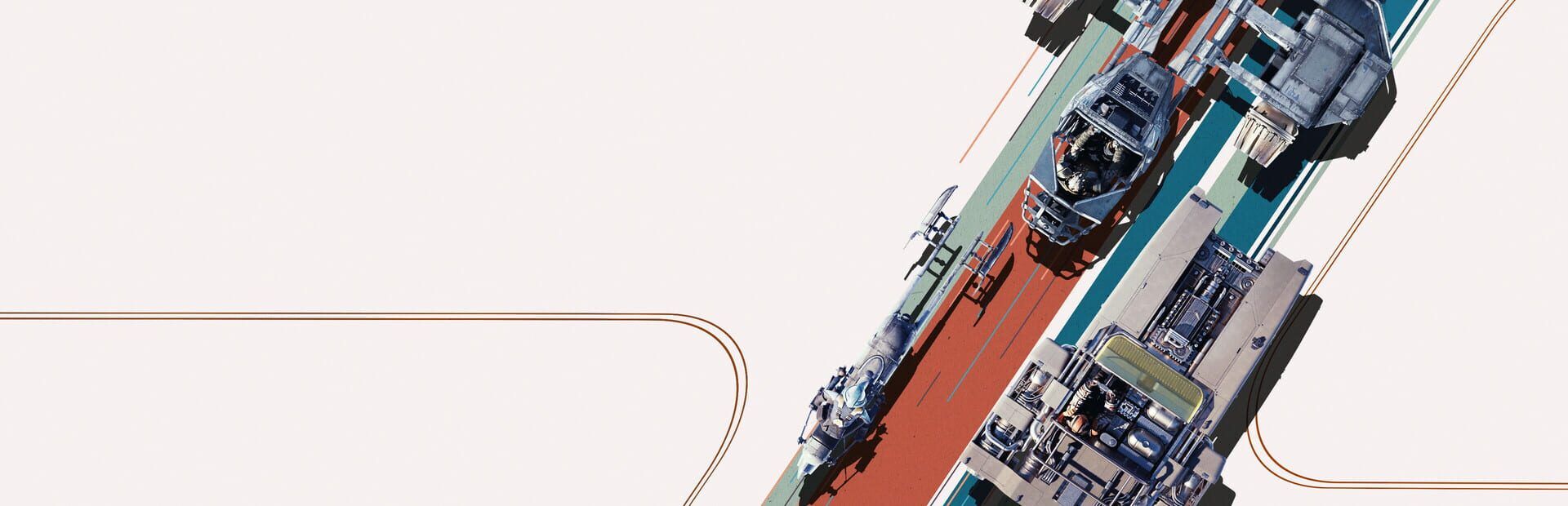

Ex‑Criterion veterans at Fuse Games are turning Star Wars’ underground Galactic League into a blistering, MotorStorm‑meets‑Episode I: Racer revival for 2026.
Star Wars racing is finally back in the spotlight. Star Wars: Galactic Racer is the new high‑speed racer from Fuse Games, a studio founded by ex‑Criterion developers who helped define arcade racing with Burnout and Need for Speed. Announced at The Game Awards, Galactic Racer pitches itself as a high‑stakes, runs‑based reinvention of Star Wars racing that openly nods to Episode I: Racer while adding the physical chaos of something closer to MotorStorm.
The Galactic League: Star Wars racing goes underground
Instead of a clean, sanctioned championship, Galactic Racer leans into an illegal, Outer Rim racing scene known as the Galactic League. The Empire has fallen, the galaxy is rebuilding, and syndicates have stepped in to bankroll a brutal circuit where racers risk everything for credits, reputation, and survival.
You play as Shade, described as a lone racer fuelled by a mix of ambition and revenge. Shade’s core rivalry is with Kestar, a ruthless champion who embodies the worst excesses of the League. The campaign is built around this feud, with each run through the League framed as another attempt to climb past Kestar and prove yourself in an ecosystem that does not care if you live to see the finish line.
This underground setup is key to Galactic Racer’s identity. The League is meant to feel dangerous and barely controlled, full of shortcuts that can collapse, environmental traps that can turn races upside down, and spectators who are there to see ships and bodies collide. It is a striking contrast to the clean circuits of traditional sim racers and gives Fuse license to push spectacle, destruction, and improvisation to the front.
Vehicles: more than just podracers
Galactic Racer clearly inherits the visual language of podracing, but Fuse is not just recreating podracers from The Phantom Menace. The vehicles shown so far are a hybrid of Star Wars starfighters, industrial haulers, and cobbled‑together street machines, all refitted for the Galactic League.
You still sit behind screaming engines and ride just off the ground, but the silhouettes vary wildly. Some racers look like elongated pods bristling with exposed turbines, tuned for maximum speed across open straights. Others are heavier, multi‑thruster bruisers built to survive collisions, storms, and debris fields. The focus is on builds. Each craft is a platform for systems that can be tuned toward aggression, survival, or raw pace.
Fuse and Lucasfilm describe Galactic Racer as a runs‑based, high‑stakes racer, which suggests that builds will evolve over a season of races rather than being static. The developers have confirmed that players can unlock new abilities and customize their racer’s loadout, implying that a craft that begins as a fragile speedster might eventually be transformed into a tanky brawler with emergency boosts and recovery tools. It is less about collecting a vast garage and more about deeply investing in the craft that best fits your style.
Tracks across the Outer Rim
The Galactic League does its business in the lawless fringe of the Outer Rim, and the early footage leans hard on that variety. The tracks we have seen are not polished circuits tucked away in arenas, but sprawling routes carved through active Star Wars locations.
One sequence shows a race cutting through a canyon scarred by abandoned Imperial machinery, with rusted AT‑AT remains forming hazardous tunnels. Another track appears to wind through a dense urban sprawl under permanent night, its neon advertising reflecting off metal and rain‑slick platforms while ships and speeders cut overhead. There is also a dust‑choked desert route that could sit comfortably alongside classic podrace locales, full of rock arches, sudden drops, and sandstorms that slash visibility mid‑race.
Fuse is positioning these tracks as dynamic spaces rather than fixed lines. Their rhetoric around risk and reward suggests a web of shortcuts, collapsing terrain, destructible obstacles, and multiple viable racing lines. It is easy to imagine a canyon shortcut that can save seconds if you thread a tiny gap, or an industrial detour that is faster only if you dare skim close to live machinery. The world is not just decoration, it is a tool you learn to exploit.
Risk, reward, and Burnout DNA
The pedigree behind Galactic Racer is important. Fuse Games is made up of veterans who previously worked on Burnout and Need for Speed at Criterion. That heritage matters because Galactic Racer is not chasing precision sim handling. It is about weighty, aggressive racing that feels dangerous every time you dive into a corner.
The developers talk about each race being a fresh run filled with consequential decisions. How long do you hold a risky line before backing off. When do you push your engines to the edge for a desperate overtake. Do you gamble on a fragile high‑speed build knowing one collision could end your run. Those are the kinds of trade‑offs that made Burnout’s crash‑or‑win loop so exciting, and transplanting that mentality into Star Wars’ out‑of‑control racing imagery could be a potent combination.
Unlike Burnout’s focus on asphalt, Galactic Racer draws parallels to the layered routes of MotorStorm. Tracks are wide, filled with alternate paths, and the environment is constantly trying to throw you off your rhythm. The difference is the Star Wars flavor. Instead of mud and trucks, you are threading a jury‑rigged craft through blaster‑scarred ruins and treacherous canyons under the gaze of syndicate bosses.
How it stacks up against Episode I: Racer
Inevitably, any Star Wars racing game will be measured against Star Wars Episode I: Racer. That Nintendo 64 and Dreamcast era classic distilled podracing into a razor‑focused experience, prioritizing straight‑line speed, tight reaction windows, and a relatively simple loop of buying upgrades between races to squeeze a little more power from your engines.
Galactic Racer is chasing a broader fantasy. Where Episode I: Racer was about mastering fixed circuits, Galactic Racer stresses dynamic choice. Tracks seem wider and more unpredictable, vehicles are more customizable, and the underground League structure allows for a tone that is seedier, rougher, and more in line with post‑Imperial criminal factions than with the clean spectacle of Boonta Eve.
Mechanically, Episode I: Racer’s tension came from managing your engines while flirting with catastrophic crashes. Galactic Racer appears to layer that kind of risk management into a richer progression system. Unlockable abilities, build‑defining upgrades, and the runs‑based campaign hint at roguelite sensibilities, where every sequence of races can play out differently depending on the gambles you take and the routes you favor.
That does not mean it forgets its roots. The trailers lean into the same ultra‑low‑to‑the‑ground perspective and bone‑rattling sense of speed that made Episode I: Racer so beloved. It feels like a spiritual successor that is less interested in direct imitation and more focused on expanding what Star Wars racing can be.
The promise of multiplayer grudge matches
Beyond the solo campaign, Galactic Racer is also built for head‑to‑head competition. Online PvP races are pitched as grudge matches in the Galactic League, where your crafted build takes on others in chaotic showdowns.
Because the game is tied so closely to progression and customization, multiplayer could become an extension of the story rather than a separate mode. Your Shade is defined not only by cutscenes, but by the way your racer handles, the shortcuts you favor, and the reputation you build across returning lobbies. If Fuse can translate their risk‑reward design into human‑driven chaos, those online races could provide the long‑term glue that earlier Star Wars racers often lacked.
Why 2026 could be the year Star Wars racing returns
Star Wars has flirted with racing for decades, but the genre has been quiet since the days of Episode I: Racer and its follow‑ups. As Star Wars games have increasingly leaned into action adventures and shooters, the idea of a dedicated, modern racing title has felt like a missing pillar.
Galactic Racer has the components needed to change that. It has a clear fantasy rooted in the lawless Outer Rim and an unsanctioned Galactic League that explains why races are so violent and spectacular. It is built by a team with proven expertise in high‑impact arcade racing. It modernizes the formula with runs‑based structure, deep vehicle builds, and an emphasis on online competition.
Most importantly, it understands why Star Wars and racing fit together so well. The universe is full of improvised machines, dangerous terrain, and people willing to risk everything for a faster line through chaos. If Fuse delivers on its promise of a MotorStorm‑like sense of danger, Burnout’s love of collisions, and Episode I: Racer’s velocity, 2026 could finally mark a real revival of Star Wars racing games rather than another nostalgic cameo.