
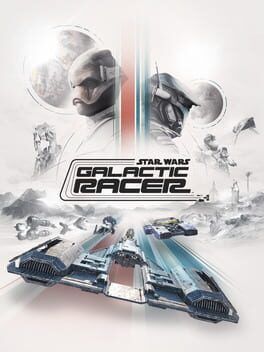
A technical breakdown of Star Wars Galactic Racer multiplayer, from six-race Tours and vehicle classes to the handling and track-design questions still open before launch.
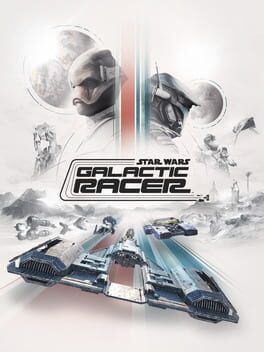
Image: IGDB
Store links: Star Wars: Galactic Racer on Steam
Galactic Racer’s multiplayer pitch is built around the Tour, not a single race
The clearest new detail from the Star Wars Galactic Racer multiplayer rollout is structural: Fuse Games is presenting online play around a Tour format where a race is part of a longer competitive arc. GameSpot’s exclusive Star Wars Galactic Racer multiplayer overview trailer is framed around Matt Webster, founder and CEO of Fuse Games, breaking down Multiplayer Tour, Podracing Tour, vehicles, customization, and related systems. CBR, which attended an exclusive preview event, adds the practical shape of that setup: Multiplayer Tour is a six-race sequence where the first five contests are used to improve the vehicle before a finale.
That is the important distinction for racing fans. Galactic Racer is not being described only as a lobby-to-lobby arcade racer where the fastest launch and cleanest final lap decide everything in isolation. According to CBR’s preview, the mode asks players to build momentum across a sequence, earn upgrades, and arrive at the last event with a machine shaped by earlier choices. The result sounds closer to a tournament run than a standard playlist.
Quick Match is still present for players who want to jump directly into a race, according to CBR. Wikipedia’s public entry also lists a multiplayer mode alongside single-player campaign, arcade-style quick play, and scenario-style events such as time trials and objective races. The tension before launch is whether Tour becomes the real competitive identity of Star Wars Galactic Racer multiplayer, or whether Quick Match and ranking systems carry equal weight for players who want repeatable, easily readable racing competition.
Player counts depend on what you drive
The headline number for online play is 12 racers, but the sources narrow that in a way players should notice. Wikipedia states that online multiplayer is planned for up to 12 players in a race and that a ranking system is planned. CBR’s hands-on multiplayer preview gives the more granular version: podracer multiplayer matches go up to eight players, while landspeeders, speeder bikes, and skim speeders go up to twelve.
That split matters because player count changes the texture of an arcade racing game. Eight vehicles can leave more room for line selection and recovery, especially if the vehicles are wide, fast, or fragile. Twelve vehicles increase traffic density, contact risk, and the value of awareness through choke points. If Galactic Racer is leaning into high speed and hazardous courses, the difference between an eight-player pod event and a twelve-player speeder event could feel like a different discipline rather than a cosmetic class swap.
The vehicle roster is also broader than podracing nostalgia. Wikipedia lists selectable classes including podracers, landspeeders, speeder bikes, and a new vehicle class introduced to Star Wars, while CBR names skim speeders as one of the twelve-player categories. GameSpot’s trailer description says Webster discusses the vehicles players can use and customize. What remains unconfirmed in the provided material is the exact upgrade tree, whether customization affects performance in ranked contexts, and how tightly each vehicle class is balanced across Tour play.
The Tour format turns upgrades into racecraft pressure
CBR describes Multiplayer Tour as a run where the objective of the first five races is to improve the vehicle as much as possible for the finale. That phrasing suggests a different skill test from a conventional best-lap format. Players may need to decide whether to chase immediate placement, pursue rewards, protect a damaged or heat-stressed vehicle, or set up a stronger final event.
The single-player campaign provides useful context. Wikipedia describes Galactic Racer’s solo campaign as a roguelite racing adventure where level order and story progression can vary depending on playstyle and achievements, with players selecting missions, tracks, and challenges that influence the story path. CBR says the single-player mode uses a map with nodes containing races and events with different prizes. Multiplayer Tour appears to take that run-based thinking and compress it into online competition.
For competitive players, the question is how much agency exists between races. The sources confirm vehicle improvement across the Tour, but they do not specify whether upgrades are drafted, purchased with earned credits, awarded by finishing position, tied to side objectives, or randomized. That gap is critical. A Tour racer can be brilliant if upgrades create counterplay and strategic risk. It can also become frustrating if early losses snowball too hard or if upgrade luck overwhelms driving quality. Until Fuse Games explains the reward economy in detail, the trailer tells us the shape of the mode but not its competitive fairness.
Handling and track design are the real tests behind the Star Wars skin
For a Star Wars racing game, recognizable planets and vehicle silhouettes will sell the first look. Long-term racing appeal will come from how the vehicles load up, recover, and negotiate track space at speed. CBR’s preview describes high-speed contests across vast stages that narrow into deadly passages where a single wrong move can cause a crash. It also notes environmental effects, including extreme temperatures that can make engines heat up faster.
That is where Galactic Racer could separate itself from a simple boost-and-bump arcade model. Heat pressure, narrow passages, and class-specific handling can force players to manage risk before the final corner. A pod that carries speed well through open sections may become a liability if engine heat or traffic makes the next canyon entry unstable. A speeder bike or skim speeder may benefit from agility, but twelve-player density can punish overconfidence if the track funnels everyone into the same gap.
Wikipedia attributes an especially important design claim to the developers: there is no single ideal racing line on the tracks. If that holds in practice, Galactic Racer’s courses should reward route reading rather than memorizing one perfect groove. Multiple viable lines are valuable in multiplayer because they give trailing players a way to attack without relying entirely on catch-up systems or chaos. The caveat is that “no single ideal racing line” is a design promise, not proof of balance. Racing fans should watch future gameplay for whether alternate paths carry meaningful tradeoffs in speed, heat, hazard exposure, and passing opportunity.
Planets, finales, and Star Wars context shape the playlist
The confirmed setting and track list details point to a game trying to span multiple Star Wars racing fantasies. Wikipedia says Galactic Racer is set in the New Republic era after the events of Return of the Jedi and features racers from The Phantom Menace, including Ben Quadinaros and Sebulba. It also lists locations including Tatooine, Lantaana, Jakku, Ando Prime, and Sentinel One. CBR’s preview mentions Jakku’s deserts and ruined ships, plus Lantaana’s volatile volcanoes.
CBR also reports that Multiplayer Tours take place across random worlds, except for the finale. According to that preview, the standard Tour finale always concludes with Dervon Acos, while the podracing tournament always ends on Tatooine. That distinction is useful because it suggests the Podracing Tour is being treated as a separate ceremonial format, likely meant to evoke The Phantom Menace’s most famous racing imagery, while the wider Multiplayer Tour leans on the new broader vehicle suite.
There is still a design risk here. Randomized world selection can keep Tours fresh, but competitive racing also depends on learnable track identity. If the finale is fixed and earlier rounds rotate, players may optimize for the last course while treating the opening races as upgrade harvesting. If every environment changes vehicle behavior differently, the game needs clear communication so drivers understand whether they lost time because of poor inputs, a bad setup choice, heat buildup, or a track-specific hazard.
Release details are mostly aligned, but key launch questions remain
The release window is consistent across the provided sources. GameSpot’s listing gives Star Wars: Galactic Racer a first release date of October 6, 2026, on PC, PS5, and Xbox Series X/S. CBR also refers to an October 6 launch on PC, PlayStation 5, and Xbox Series X/S. Wikipedia lists an October 2026 release for PlayStation 5, Windows, and Xbox Series X/S, and names Fuse Games as developer and Secret Mode as publisher.
Those platform details leave several practical questions unanswered in the source material. There is no confirmed price in the provided sources. There are no PC system requirements here, no console performance targets, no statement on cross-play, no netcode explanation, no ranked rule set, and no clarity on whether Tour progression carries persistent advantages between sessions or resets every run. Wikipedia says a ranking system is planned, but the sources do not define placement matches, seasonal ladders, penalties, party restrictions, or how vehicle upgrades are handled in ranked play.
For buyers, that means the Galactic Racer trailer and previews are enough to identify the game’s multiplayer concept, but not enough to judge its long-term online health. If you are coming for single-player, the publicly described roguelite racing adventure may be the safer known quantity. If you are coming for Star Wars Galactic Racer multiplayer, the smart move is to watch for Fuse Games to clarify cross-play, ranked balancing, matchmaking size by class, and whether performance customization is separated from cosmetics in competitive modes.
The promising part is also the part that needs the most proof
The strongest read on Galactic Racer right now is that Fuse Games is trying to fuse arcade racing speed with run-based decision making. GameSpot’s trailer framing, CBR’s Tour description, and Wikipedia’s campaign summary all point in the same direction: races are meant to feed into larger structures, whether that is a six-event multiplayer Tour or a roguelite solo campaign with shifting nodes and rewards.
That is a promising fit for Star Wars, because the fiction supports dangerous tracks, unstable machines, and wildly different vehicle classes. It is also a demanding fit for racing design. The handling model has to be readable at speed. Track hazards have to feel punishing without becoming arbitrary. Upgrades have to create expression without turning early leads into automatic wins. Player counts have to suit vehicle scale and course width. A multiplayer racing game can survive chaos, but it cannot survive players feeling that the wheel, route, or upgrade table mattered less than noise.
For now, the Galactic Racer trailer gives racing fans a concrete reason to pay attention: Multiplayer Tour is a defined format with vehicle-building stakes across six races, not an afterthought beside the campaign. The unresolved questions are the ones that will decide whether it becomes a serious online arcade racer: balance, networking, ranked rules, cross-play, performance targets, and how Fuse Games translates its “no single ideal racing line” track philosophy into repeatable competitive racing.