
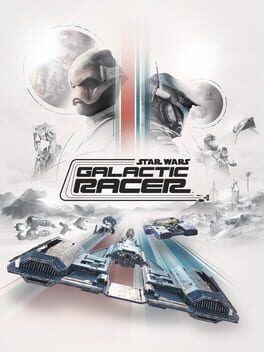
Fuse Games is tuning Star Wars Galactic Racer around pressure, survival, and permanent progression, a risky balance for a licensed racing game that needs both accessibility and staying power.
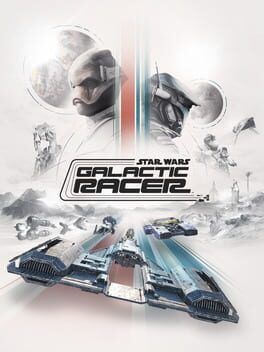
Image: IGDB
Store links: Star Wars: Galactic Racer on Steam
Fuse Games wants fifth place to feel earned
Fuse Games CEO Matt Webster has made the studio’s tuning philosophy for Star Wars Galactic Racer unusually explicit: the Star Wars racing game is meant to push back. In comments reported by GamingBolt from an interview with GamesRadar, Webster said games should challenge players and argued that constant reward delivery can flatten player attention over time. His comparison point was Burnout, a series associated with frequent unlocks and high-impact arcade pacing. Webster’s concern, as quoted by GamingBolt, is that if a game keeps handing out “dopamine hits of reward, reward, car, car, car,” players eventually “start to tune it out.”
That is a notable position for a licensed arcade racer. Star Wars Galactic Racer carries a brand with a broad audience, which usually creates pressure to be instantly readable, approachable, and generous. Fuse Games appears to be taking a different route. Webster told GamesRadar that the team wanted the game to create moments where “a hard-fought fifth place” still feels acceptable. That line says a lot about the design target. The goal is not only to let skilled players dominate, but to make survival, damage limitation, and mid-pack recovery feel like valid outcomes inside a run.
The tension is obvious. A licensed racing game cannot afford to feel hostile to newcomers, especially when players arrive for the fantasy of Star Wars speed rather than for a demanding systems racer. At the same time, arcade racers often struggle to hold players once the novelty of speed, vehicles, and spectacle has worn off. Webster’s public argument is that challenge is part of retention. If every race pays out emotionally the same way, there is no racing rhythm, only noise.
That philosophy puts Star Wars Galactic Racer difficulty at the center of the game’s long-term appeal. The question is not whether it is hard. The sharper question is whether its difficulty creates enough pressure to keep races meaningful while giving less experienced players enough room to stay in the tour.
The challenge comes from workload, not only faster AI
Webster’s earlier comments, also reported by GamingBolt, frame Star Wars Galactic Racer challenge as a workload problem. He said modern players can manage “a greater amount of cognitive load” than before, and described Galactic Racer as asking more of players than he believes Fuse has previously asked in a racing game. The systems he named include Afterburner, Ramjet, ability cooldowns, and the need to react quickly to potential malfunctions. He also described players thinking strategically and tactically while traveling at 700 kilometers an hour.
For a racing specialist, that distinction matters. Difficulty in arcade racing can be crude if it only means rubber-banding opponents, tighter time gates, or a punishing collision model. Galactic Racer, based on Webster’s comments and the guides published around launch, appears to distribute difficulty across decision layers. A player is not only choosing a racing line. They are deciding when to commit boost, when to conserve resources, when to use abilities, and when the vehicle’s condition makes a podium chase too expensive.
That is where accessibility becomes more complicated than a single easy mode. A game with multiple speed systems can be learnable if each layer produces understandable feedback. It can also become exhausting if those layers stack without relief. Webster told GamesRadar, as relayed by GamingBolt, that the team wanted “light and shade” between high-intensity racing and lower-intensity Star Wars immersion. The phrasing suggests Fuse is aware that sustained intensity has a cost. Even strong racers need a lift-and-coast phase, not in the literal motorsport sense, but in cognitive terms.
This is the axis on which Star Wars Galactic Racer’s tuning will be judged by many players. The studio is betting that players can handle simultaneous inputs and overlapping cooldowns as long as the game gives them moments to breathe. If that pacing holds, the game can feel demanding without turning every race into a stress test. If it does not, the same features that create mastery can become the reason casual Star Wars fans back out after a few punishing tours.
Difficulty settings are tied to the tour structure
The clearest accessibility information comes from guide coverage rather than a broad publisher breakdown. GamerBlurb reports that Campaign difficulty can be changed when starting a new Tour, but not during an active one. According to that guide, players choose difficulty during Tour setup and can select again when beginning another Tour, so the choice is not permanent across the whole Campaign.
GamerBlurb lists four Campaign difficulties: Cadet as the easiest option, Pilot as the recommended or default experience, Ace as a harder setting, and Champion as the hardest setting. The same guide says Champion is unlocked after completing all three Campaign Acts. That matters because it keeps the harshest version of the game behind demonstrated familiarity. The player has to learn the tracks, vehicles, systems, and tour economy before the game opens its most severe ruleset.
According to GamerBlurb, changing difficulty affects more than opponent speed. Higher settings make rivals faster and more aggressive while reducing how forgiving the crash system is during a Tour. The guide gives Pilot as an example, saying players normally have three Crashes available during an event before another Crash costs a League Entry Token. It also reports that Champion changes how Crashes refresh across a Tour, making damage management a larger part of the challenge.
That structure is a smart place to put the accessibility lever because it preserves the integrity of a run. If a player could soften the rules mid-race or mid-tour, the survival economy would lose teeth. If the game locked a player into a bad difficulty choice forever, the licensed-racer audience would be punished for experimenting. The reported setup sits between those extremes: finish or abandon the current attempt, then recalibrate before the next Tour.
There is one reporting caution. A community wiki page describes difficulty using different names such as Story/Easy, Medium, Hard, and Extreme, and frames some values as based on community reports and early player feedback. GamerBlurb’s naming appears more specific to the game’s menu language. Until Fuse publishes a definitive public table, the safest confirmed takeaway is that difficulty is selected at Tour start, Champion is locked behind Campaign completion according to GamerBlurb, and higher settings reduce the margin for mistakes.
Progression softens failure without erasing it
The long-term accessibility layer in Star Wars Galactic Racer appears to come from progression rather than from removing consequences. NoobFeed reports that Tuning Points are the main currency for permanent progression and that upgrades purchased with them permanently change a vehicle. That distinction is important because other rewards can be temporary. G2A’s beginner guide says players should understand which progression survives between runs, and NoobFeed’s FAQ states that temporary upgrades or parts bought with Hibi’s Shop Credits return to normal when a tour ends. Only Tuning Point upgrades remain permanent, according to NoobFeed.
The earning rates reported by NoobFeed show how challenge and accessibility are being balanced through route planning. Finishing standard Race events in the top three awards one Tuning Point. Eliminator events, identified by a skull icon on the roadmap, award four Tuning Points for a top-three finish. Scenarios grant ten Tuning Points, but NoobFeed describes them as longer challenges made of five sequential races followed by a final Eliminator round that must be won. The same guide says Scenarios exist outside the main Campaign, so failing one does not hurt Campaign progress.
This creates a useful risk ladder. Safer standard races pay less. Eliminators pay more but imply higher pressure. Scenarios offer the largest payout listed in the source material, but demand a longer chain of execution. That is classic arcade progression design with roguelite pressure: the player is always choosing between survival and acceleration of growth.
Spending those points is also constrained. NoobFeed reports that players cannot spend Tuning Points at any time. The upgrade screen is available on the Vehicle Select screen after being knocked out of a Campaign tour or when starting a new one. The guide also says players can reset spent points by selecting a vehicle on the setup screen and holding L2, which costs two Tuning Points and refunds previously invested points.
That reset cost is small enough to encourage correction, but it is still a cost. It tells players that builds are flexible, not disposable. For a difficult arcade racer, that is a valuable compromise. The game can punish a bad tour, then let the player return with a better machine, a revised build, and a clearer plan.
The safest route is sometimes the fastest way to improve
Several launch guides converge on the same practical reading of Galactic Racer: beginners should stop treating every event like a conventional championship race. G2A’s guide says players do not need to win every Standard Race and argues that keeping the machine alive can matter more than forcing a desperate podium. It also summarizes early priorities as protecting the Tour before chasing podiums, learning which progression survives between runs, and building for the planet and vehicle at hand rather than dumping everything into speed.
That advice matches the studio’s stated philosophy. If fifth place can be meaningful, then a race result has to be judged against the condition of the run. A reckless first-place attempt that burns through crashes and tokens may be worse than a controlled mid-pack finish that preserves the Tour. This is especially important in a game where, according to GamerBlurb, difficulty interacts with Crashes and League Entry Tokens rather than only with AI pace.
From a handling perspective, this is where many arcade racers lose new players. Speed upgrades are tempting because their benefit is easy to imagine. Higher top speed feels like progress before the race even starts. But in a run-based racer with hazards, cooldowns, and damage pressure, the fastest build on paper may be the least stable build in practice. G2A specifically warns players not to arrive on hazard-heavy planets with a pure speed build and recommends investing in Resilience when planet hazards keep ruining races.
That makes Star Wars Galactic Racer difficulty partly self-tuned. A player struggling to control the vehicle may get more value from handling, resilience, or a build that supports one speed system cleanly than from dropping difficulty immediately. GamerBlurb makes a similar point, saying that if the problem comes primarily from controlling the vehicle rather than opponents, setup changes may help more than lowering the difficulty.
The best accessibility systems in racing games do not only make the field slower. They help players diagnose the source of failure. Galactic Racer’s reported structure gives players several explanations to test: the difficulty may be too high, the route may be too risky, the build may be too fragile, or the player may be overdriving the vehicle.
Licensed racers need challenge that survives the first weekend
GamingBolt frames Webster’s comments against a thinner modern market for big arcade racers, noting that the genre was more common in the 1990s and 2000s and that the field is now less crowded, with Forza Horizon cited as a dominant modern reference point. GamingBolt also notes that Fuse Games includes industry veterans who worked on major franchises such as Burnout, while the last main Burnout entry was 2008’s Burnout Paradise, followed by a 2018 remaster.
That history gives Webster’s reward comments extra weight. Burnout’s influence is valuable because it represents speed, crashes, aggression, and immediate feedback. But Galactic Racer seems to be trying to avoid copying only the reward cadence. The studio’s public stance is that challenge creates contrast. In a party-friendly arcade racer, that contrast is essential because the same game has to satisfy different kinds of players around the same screen, stream, or friend group. Newer players need visible progress and a way back after failure. Better players need races that do not collapse into automatic wins once the systems click.
The Star Wars license raises the stakes. A Star Wars racing game attracts players who may care less about lapcraft than about planets, vehicles, creatures, and the fantasy of speed. PC Gamer’s coverage, from the available source text, highlights the game’s creature appeal and credits Fuse Games, while GamesRadar’s tips page describes the racing as chaotic and “brutal at first,” especially for players not used to arcade racers such as Burnout and Need for Speed. Those two reactions can coexist. The game can be charming and punishing at once, but the tuning has to make both qualities feed each other rather than compete.
That is the core bet behind Star Wars Galactic Racer challenge. If every race is generous, the license may carry the opening hours but the racing risks fading into routine. If the game is too severe, the same broad audience that the license brings in may never reach the satisfying part of mastery. Fuse’s reported answer is to combine adjustable Tour difficulty, permanent progression, resettable builds, high workload racing, and lower-intensity breathing space between events.
Star Wars Galactic Racer is reported by GamingBolt as recently available on PC, PS5, and Xbox Series X/S. The provided sources do not include price, detailed performance data, or a publisher technical breakdown, so those remain practical questions for buyers to verify on their platform storefronts. Based on the available reporting, the most useful guidance is simple: start on Pilot if you are comfortable with arcade racers, use Cadet if the crash economy is blocking learning, and treat build tuning as part of the difficulty system. Fuse Games is not hiding that Galactic Racer is meant to challenge you. The test is whether that challenge keeps a full grid of players coming back after the Star Wars spectacle has become familiar.