
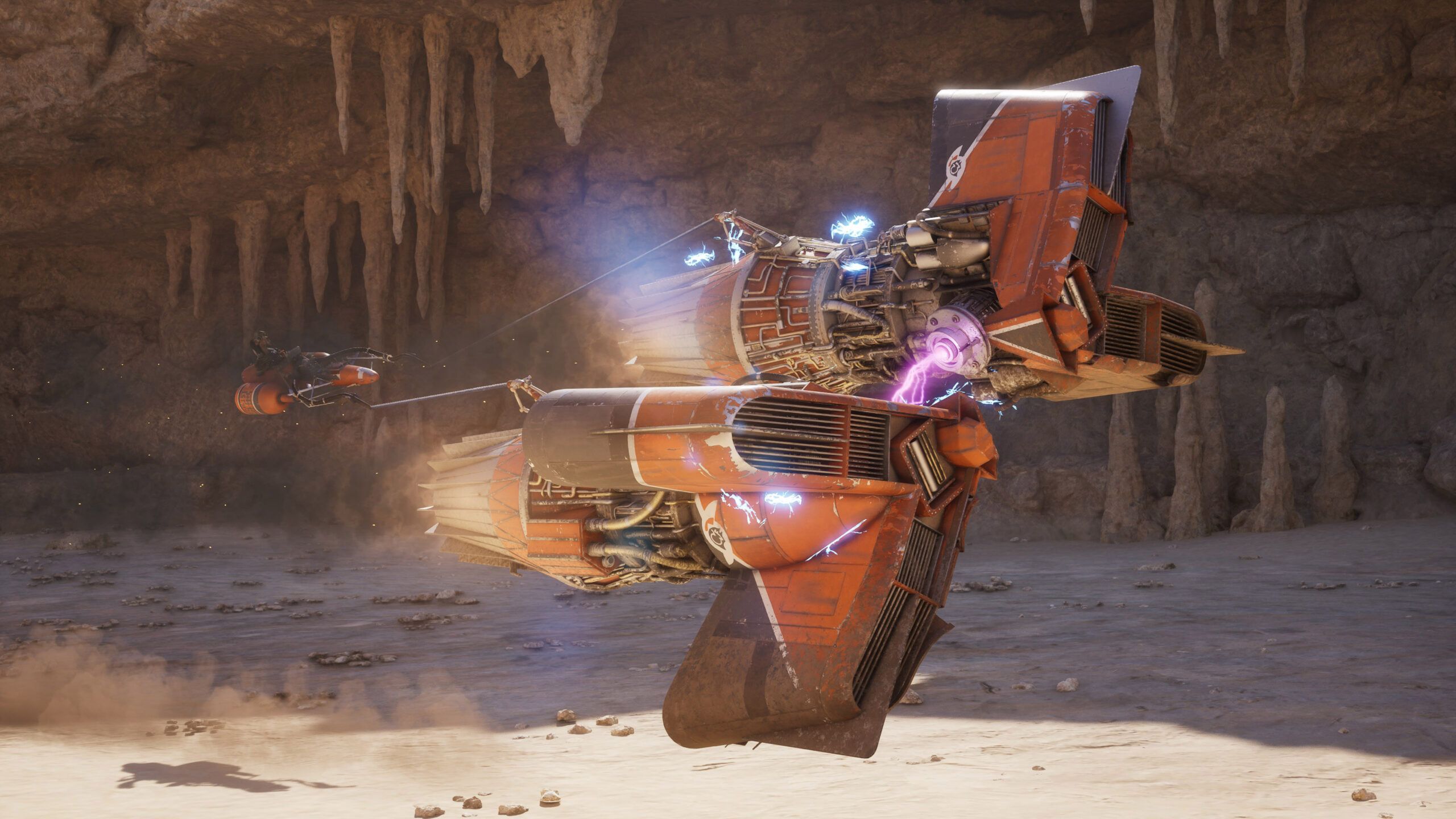
Fuse Games is using Sebulba and podracing nostalgia to sell a modern Star Wars racing game with betting, builds, multiple vehicle classes, and a broader arcade structure.
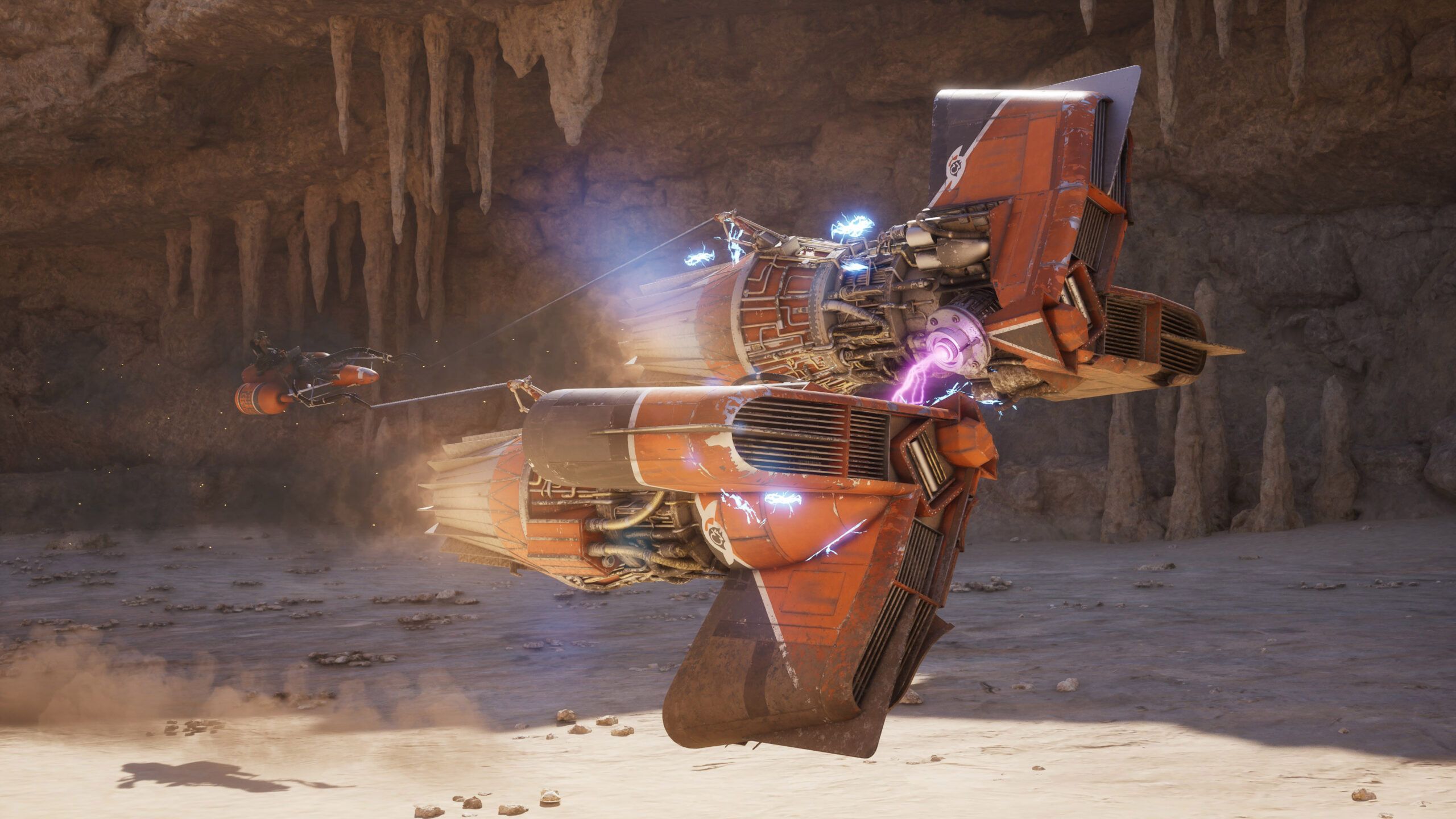
Image: news.xbox.com
Fuse is turning Sebulba’s bad reputation into a design statement
The clearest signal yet for Star Wars Galactic Racer is not a track list, a vehicle roster, or a release date. It is Fuse Games publicly arguing, with a straight enough face to be useful, that Sebulba’s infamous approach to racing is “gamesmanship.”
At Gamescom, GameSpot asked Fuse Games about Sebulba and cheating. CEO Matt Webster pushed back on the word, saying Sebulba would “probably take issue” with that characterization. Narrative director Nat Daw added, “So long as you don’t get caught, it’s gamesmanship.” Webster then agreed: “He’s doing what he can to win.”
That exchange is obviously playful, but it also frames the racing game Fuse is building. Sebulba is not being treated only as a familiar Dug from The Phantom Menace. He is a shorthand for a specific kind of Star Wars racing fantasy: dirty, opportunistic, high-contact, and less concerned with clean apexes than with survival at impossible speed. For players searching “Sebulba did nothing wrong” as a meme, Fuse has found a way to make the joke point toward mechanics rather than sit on top of them.
The tension is that Star Wars racing fans have spent decades asking for a modern podracing game, while Fuse appears to be making a broader arcade racer that uses podracing nostalgia as its ignition point. The studio can benefit from the memory of Star Wars Episode I: Racer, but the sources around Galactic Racer suggest the developers are trying to avoid being trapped by it.
The nostalgia is real, but Fuse is not pitching a straight Episode I: Racer revival
Metro described Star Wars: Galactic Racer as the first Star Wars racer in over 20 years and placed it in direct conversation with the older prequel-era racing games, especially 1999’s Star Wars Episode I: Racer and 2002’s Star Wars: Racer Revenge. That comparison is unavoidable. The most enduring image of Star Wars racing remains Anakin Skywalker and Sebulba tearing through Tatooine, and Metro’s preview argues that Galactic Racer is positioned to satisfy players who have been carrying that fantasy forward since the Nintendo 64, Dreamcast, arcade, and PlayStation 2 era.
But the same preview makes clear that Galactic Racer is not being presented as a one-class podracing game. Metro reported that the game combines landspeeders, speeder bikes, skim speeders, and podracers in one package. Wikipedia’s public listing likewise describes selectable vehicle classes including podracers, landspeeders, speeder bikes, and another class introduced to the Star Wars universe. The sources align on the larger point: podracing is present, but it is part of a wider racing framework.
That is the business and design needle Fuse is trying to thread. A pure nostalgia product would be simpler to explain, easier to market, and safer for lapsed players who only want the roar of twin engines across Tatooine. Galactic Racer instead has to teach players that its Star Wars racing game identity stretches beyond the old pod grid. Nostalgia gets people to look. The handling model, race structure, and progression systems have to keep them there.
Sebulba is useful because Galactic Racer rewards controlled aggression
Metro’s hands-on account gives the Sebulba defense some mechanical backing. The outlet reported that Galactic Racer revolves around managing turbo thrusters and a ramjet. Both function as boosts, but Metro described the ramjet as a more aggressive tool designed to knock opponents into walls or hazards, with the added risk of overheating if used too long.
That is a meaningful distinction for arcade racing fans. A basic boost system is about timing exits, preserving speed, and converting meter into forward momentum. A contact-focused boost changes the decision tree. The driver is not simply asking when to go faster, but whether the overtake is worth the temperature risk, the line compromise, and the possibility of turning a race into a demolition contest.
Metro also reported class distinctions that point toward a handling spread rather than cosmetic vehicle swaps. Landspeeders were described as durable all-rounders. Skim speeders were said to use a vertical “knife-edge” drift for tight corners. Speeder bikes reportedly gain a small boost when launching from drifts, which Metro compared to kart-racer logic. Those details matter because a modern podracing game cannot rely on speed sensation alone. It needs readable handling identities, repeatable recovery tools, and enough vehicle personality that each class feels like a different discipline.
Podracers, according to Metro, are separated into their own modes rather than mixed directly with the other three vehicle types. Creative director Kieran Crimmins explained that separation in Metro’s interview, with the outlet saying the choice made sense from a canon perspective and for gameplay variety. That separation may disappoint anyone hoping every vehicle type would share one chaotic grid, but it also suggests Fuse understands that pods are not just faster cars. Their silhouette, acceleration fantasy, track scale, and hazard profile demand different rules.
The online tour structure turns losing into a build problem
The most interesting confirmed multiplayer detail from GameSpot’s interview is not Sebulba’s reputation. It is Fuse’s attempt to solve one of arcade racing’s oldest online problems: the player who falls out of contention early and mentally quits the event.
Webster told GameSpot that speeder tours support 12 players and podracing tours support eight. Both tour types follow the same six-event structure. The first five events are a “build chase,” where finishing position determines rewards and what parts become available. Before each event, players bet on their expected finishing position. A confident player might bet on a top-three result and earn an epic reward if they hit that target. A less confident player can hedge with a lower placement target, such as top nine, and still secure a useful part drop if the prediction lands.
Webster said this structure gives players a way to progress even when they are not winning every race. The final event is the showdown, where the built vehicle is put on the line and players bet on who will win. That system is thematically perfect for a Sebulba-led conversation because it makes racing feel like a shady paddock economy: read the field, judge your own pace, gamble on your execution, and claw back performance through parts.
For competitive racing design, the risk is obvious. If rewards swing too hard, the best driver may feel punished by an unlucky build path. If rewards are too mild, the betting layer becomes flavor text. The promise, based on Webster’s comments to GameSpot, is that Galactic Racer wants the middle of the pack to stay invested across a tour instead of treating first place in race one as the whole event. That is a smart target for online arcade racing, where retention often depends on giving eighth place something meaningful to fight for.
The single-player pitch is closer to racing adventure than retro cup ladder
The public listings and preview coverage point to a campaign structure that is more ambitious than a traditional set of cups. Wikipedia describes Star Wars: Galactic Racer as an upcoming racing video game with adventure elements developed by Fuse Games and published by Secret Mode. The listing says the game includes a single-player campaign, multiplayer, arcade mode, and a scenario mode with time trials and objective-based races.
According to that listing, the solo campaign has roguelite elements, with level sequence and story progression varying based on playstyle and achievements. It also says difficulty can be set or adjusted, and that off-track elements controlled through the player character are part of the campaign. The developer description quoted there is “racing adventure.”
SWTORStrategies, in an early preview based on newly released single-player material and other outlets’ footage and impressions, similarly argued that Galactic Racer is built around landspeeders, speeder bikes, skim speeders, vehicle builds, branching campaign runs, permanent progression, environmental hazards, rival racers, and a substantial single-player structure. That outlet’s interpretation is that Fuse chose a riskier design path than simply remaking Episode I: Racer with modern visuals.
The practical consequence is that players waiting for a pure podracing game should calibrate expectations. Galactic Racer appears to be using podracing as one pillar inside a wider structure that includes builds, mission selection, and multiple race formats. That may be stronger for long-term play, especially if the vehicle classes and campaign branches create meaningful replayability. It also means the game has more systems that need tuning, more UI burden, and more chances for progression to interfere with clean racing.
Legacy racers are being folded into the story, not dropped in as trophies
Sebulba’s return could have been simple fan service, but the provided sources suggest Fuse and Lucasfilm are trying to justify legacy characters inside Galactic Racer’s fiction. SWTORStrategies reported that Lucasfilm Games executive producer Craig Derrick said returning Star Wars characters are not being added only because players recognize them, and that legacy characters need a meaningful reason to appear within the story. The same report identifies Sebulba and fellow Episode I racer Ben Quadinaros as returning names.
Wikipedia’s listing also says Galactic Racer features racers from Star Wars: Episode I: The Phantom Menace, including Ben Quadinaros and Sebulba, and places the game in the New Republic era. It lists locations including Tatooine, Lantaana, Jakku, Ando Prime, and Sentinel One, while noting that the developers say there is no single ideal racing line on the tracks.
That last detail is important for how nostalgia gets modernized. Old podracing memories are often about threading narrow canyon routes at high speed. A modern arcade racer with no single ideal line can push the player toward route choice, hazard reading, and opportunistic passing rather than memorizing one optimal groove. If Fuse’s tracks support multiple viable approaches, Sebulba’s “do what you can to win” attitude becomes a racing language: block, boost, gamble, ram, recover, and choose the line that suits the build rather than the one dictated by a time-trial ghost.
There is also a lighter side to the character’s return. SWTORStrategies, citing a TechRadar exchange, reported that creative director Kieran Crimmins joked about whether players would be doing Sebulba justice if they did not try to control the game with their feet, referencing the character’s unusual driving style in The Phantom Menace. That is not setup advice, and nobody should treat it as an accessibility recommendation. It is another sign that Fuse understands the meme value around Sebulba, while still using him to steer attention toward a more aggressive arcade identity.
Release date, platforms, and the questions arcade racing fans still need answered
GameSpot reported that Star Wars Galactic Racer is releasing on October 6 for PC, PlayStation 5, and Xbox Series X|S. Wikipedia’s listing gives the date as October 6, 2026 and lists PlayStation 5, Windows, and Xbox Series X/S, with Secret Mode as publisher and Fuse Games as developer. The provided source material does not include a price, PC system requirements, console performance targets, cross-play details, wheel support, split-screen confirmation, or post-launch plan.
For racing fans, those missing details matter. Galactic Racer’s concept depends heavily on speed perception, hit feedback, cooldown readability, and stable online race flow. A ramjet-heavy contact model needs consistent collision behavior. Podracing tours with eight players and speeder tours with 12 need networking that can handle close-quarters impacts without turning every wall tap into a desync argument. If the campaign uses roguelite progression and vehicle parts, the balance between driver skill and build strength will be central to whether the game feels fair.
Based on the reported material, the cleanest expectation is this: Star Wars Galactic Racer is aimed at players who want a modern Star Wars racing game with podracing energy, but who are open to a broader arcade structure. If your only request is a faithful Episode I: Racer successor, the separated pod modes and multi-class design are worth watching closely before buying. If you miss futuristic racers with boost management, combat-adjacent contact, class-specific handling, and risk-reward progression, Fuse’s Sebulba defense is more than a joke. It is the studio telling you what kind of racing culture this game wants to encourage.