
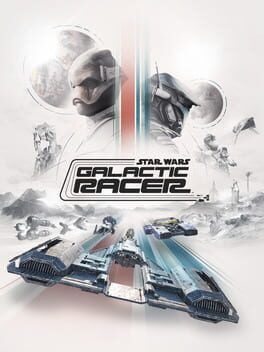
Fuse Games CEO Matt Webster will discuss Star Wars Galactic Racer at Game Republic New Horizons after launch, as the roguelite racer draws attention for its Star Wars vehicle fantasy, arcade pedigree, and unanswered questions.
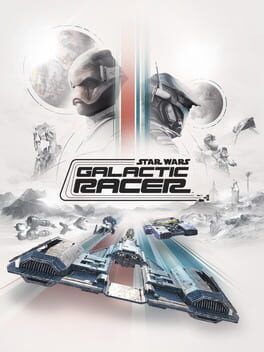
Image: IGDB
Store links: Star Wars: Galactic Racer on Steam
Fuse Games gets a post-launch spotlight in Middlesbrough
Fuse Games CEO Matt Webster is set to discuss Star Wars: Galactic Racer at Game Republic New Horizons, the Middlesbrough games industry event taking place at Riverside Stadium, with the main conference day scheduled for October 15. Video Games Chronicle reports that Webster will be interviewed by VGC’s Andy Robinson in a session focused on the development of the racing game, which VGC says is due to release on October 6 with Secret Mode publishing.
That timing gives the appearance an unusual edge. This is not a conventional pre-release stage slot where a studio can stay safely inside broad marketing language. If Star Wars: Galactic Racer launches as dated, Webster will be speaking after players and reviewers have already put time into Fuse Games’ debut title. For a new studio founded in 2023 by former Criterion leads, according to VGC, the session becomes a chance to explain how a small UK team turned racing-game experience into a licensed Star Wars project, and to answer the practical questions that remain around the game’s structure, multiplayer, and longevity.
Webster framed the event as a development story in VGC’s report, saying Fuse is “so excited to share our development journey” with attendees. He also called Star Wars: Galactic Racer “very much a passion project for Fuse Games.” Secret Mode chief publishing officer James Schall added that the publisher is proud of what Fuse has achieved “in the Star Wars universe” and is looking forward to the game being discussed on stage at Game Republic New Horizons.
The buzz is coming from pedigree, timing, and a strange pitch that appears to work
The attention around Star Wars Galactic Racer is not hard to locate. VGC identifies the game as Fuse Games’ debut and says the studio was set up by former Criterion leads. That matters because Criterion’s name is closely associated with arcade racing, especially the kind of high-speed, collision-heavy design that players still connect with Burnout and Need for Speed. A new Star Wars racing game from that lineage naturally invites a specific question: can that old arcade-racing fluency survive inside a licensed, modern, run-based structure?
Early critical reaction, as gathered by Pure Xbox, suggests reviewers have been receptive. Pure Xbox reported that review scores ahead of launch were commonly landing from 8/10 to 10/10, citing outlets including VGC, Giant Bomb, Push Square, GameSpot, Game Informer, IGN, and GamesRadar. Pure Xbox also cited an initial Metacritic average of 88. Those numbers should be treated as a snapshot of early review coverage, not a final consensus, but they explain why the racer has moved from curiosity to genuine conversation.
The praise is not uniform in its details. Pure Xbox’s roundup quotes IGN calling Galactic Racer a “fabulous looking and frantically fast anti-grav racer” while also saying it becomes “a little repetitive” because of repeated visits to a “slim selection of planets.” GamesRadar, in the same roundup, praised the run-based format and roguelike elements but said it wanted more planets and tracks for a wider galactic feel. The tension is clear: Fuse appears to have found speed and structure, but the long-term question is whether the track and planet pool can carry repeated runs.
How the roguelite campaign changes the Star Wars vehicle fantasy
Star Wars racing usually sells a clean fantasy: climb into a famous machine, hit impossible speeds, and survive chaos by reflex. Galactic Racer changes that rhythm by making the campaign run-based. Wikipedia’s public game page describes the solo campaign as a roguelite where level sequence and story progression vary depending on playstyle and achievements, while players can select missions, tracks, and challenges that influence the course of the story. That listing also says the game includes single-player, multiplayer, arcade, and scenario modes.
Reviews describe the same design from the driver’s seat. Console Creatures says the player joins the Galactic League, an unsanctioned racing circuit in the Outer Rim, and competes across vehicles including speeders and bikes. Its review describes a campaign where track hazards, vehicle durability, Ram Jet management, and build choice can determine whether a run survives. GamingBolt likewise describes vehicle classes called repulsocraft, including landspeeders, speeder bikes, skim speeders, and podracers, each with different handling and drifting behavior.
That is a significant shift for a Star Wars racing game. In a standard arcade racer, the ideal loop is often mastery through repetition: learn the racing line, memorize the shortcut, perfect the boost window. In a roguelite racer, the player is also managing probability, route choice, upgrades, and risk exposure across a run. Based on the review descriptions, Galactic Racer asks players to think like a racer and a crew chief at the same time. The fastest line may be worthless if the vehicle cannot survive the next hazard, or if an overcooked Ram Jet turns a lead into a wreck.
From a handling perspective, that can be powerful if the fundamentals are sharp. GamingBolt praises the game’s sense of speed, drifting, and moment-to-moment feel, while Console Creatures describes early mistakes caused by overextending the Ram Jet, misreading corners, and failing to respect environmental danger. Those accounts point to a racer where acceleration and survival are intentionally in conflict. The fantasy is still speed, but the campaign adds consequence to throttle discipline.
The vehicle classes are doing more than serving nostalgia
The familiar hook is podracing, but the reported vehicle spread is broader than a single Phantom Menace callback. GamingBolt says Galactic Racer includes four types of repulsocraft: landspeeders, speeder bikes, skim speeders, and podracers. Console Creatures describes landspeeders as a simpler, balanced option and speeder bikes as stronger in acceleration while giving up tighter handling. GamingBolt singles out skim speeders for tight, high-speed, high-risk cornering once the player learns them.
For racing players, that distinction is important. A class-based racer only works if the vehicles ask for different habits at corner entry, mid-corner correction, and boost exit. If every machine feels like the same chassis with different Star Wars bodywork, the license carries the first hour and the driving model runs out of grip soon after. The available review material suggests Fuse is leaning into class identity, especially through drifting behavior and Ram Jet risk.
The Ram Jet mechanic is the clearest example. GamingBolt says non-podracer vehicles can prime and activate a ramjet engine for sustained higher speed, but the player has to disengage before overheating or risk exploding. Console Creatures describes learning that lesson the hard way in an early race. That is a classic arcade-racing pressure valve: the system gives players enough speed to make poor decisions quickly, then asks whether they can keep control once the track tightens.
There is still a caveat. GamingBolt says it would have liked greater variety within each vehicle class, even though campaign customization helps offset that limitation. That is one of the areas where the UK Games Conference session could be useful. Fuse can explain whether vehicle identity was prioritized over a large garage, whether balance concerns limited the roster, and whether future support could add more machines or variants.
The Star Wars setting gives the campaign structure room to breathe
VGC describes Galactic Racer’s setup as The Galactic League, an underground, unsanctioned circuit where syndicates bankroll chaos, fortunes are won and lost quickly, and champions are forged. Console Creatures places the game in the New Republic Era after Return of the Jedi and says it features racers from The Phantom Menace, including Ben Quadinaros and Sebulba. The same review names several locations, including Tatooine, Lantaana, Jakku, Ando Prime, and Sentinel One.
That setup is well suited to a roguelite campaign because an unsanctioned league can plausibly explain shifting routes, escalating hazards, rival interference, and oddball vehicle builds. It also sidesteps the problem that many licensed racers face, where recognizable locations become static sightseeing loops. If the league is built around danger and syndicate-backed spectacle, then repeated runs can be framed as a career of gambles rather than a menu of disconnected cups.
The practical risk is repetition. The same review roundup that shows strong scores also includes IGN and GamesRadar comments about limited planets or a desire for more locations. That does not negate the praise, but it identifies the ceiling. Roguelite structure can make familiar content feel different through modifiers, builds, and route choices, yet racing games are especially sensitive to track reuse because players memorize geometry quickly. Once a player knows braking points, hazard placement, and shortcut rhythm, variation has to come from meaningful modifiers rather than shuffled presentation.
That is where Fuse’s Criterion background becomes relevant without guaranteeing the result. Arcade racing lives on readable chaos. If a track is too predictable, it becomes routine. If it is too random, clean driving feels devalued. The sources indicate reviewers are responding strongly to the feel and speed, but the post-launch conversation will likely settle on whether Galactic Racer’s run structure has enough trackcraft to sustain repeated play.
What Webster and Fuse can clarify at Game Republic New Horizons
The confirmed conference details are narrow. VGC says Webster will appear in conversation with Andy Robinson at Game Republic New Horizons, and that the session will delve into the development of Star Wars: Galactic Racer. VGC also notes other event programming, including a Ken Kutaragi keynote, an IO Interactive session with Hakan Abrak about 007 First Light, and investment-focused sessions involving Games London, The Games Angels, Ansible, Flick Games, the BFI, Arts Council, and Innovate UK.
What is not confirmed in VGC’s report is just as important for players. The report does not lay out whether Fuse will discuss post-launch updates, downloadable content, pricing, technical performance targets, platform-specific features, or the precise multiplayer roadmap. Wikipedia’s public listing says the game is planned for PlayStation 5, Windows, and Xbox Series X/S, and also says online multiplayer supports up to 12 players with a ranking system planned. Because that information comes from a public listing rather than a fresh publisher breakdown in the supplied material, players should wait for Fuse, Secret Mode, or platform storefronts for final details on cross-play, ranked timing, and launch-day feature parity.
The most useful version of Webster’s session would address three things directly. First, how Fuse balanced roguelite unpredictability against competitive racing fairness. Second, how the studio built distinct handling across vehicle classes while keeping the game approachable for Star Wars fans who may not live inside racing games. Third, what the team learned from review concerns around repeated planets and track volume.
There is also a business question beneath the design talk. A licensed Star Wars game from a three-year-old UK studio is a major swing, especially for a debut. VGC’s report positions Secret Mode as publisher and Fuse as the developer behind the project, but the conference could provide rare detail on how that partnership functioned, how the Lucasfilm approval process shaped production, and how much freedom Fuse had to make a Star Wars racing game with roguelite bones rather than a safer nostalgia exercise.
Should racing fans wait or jump in at launch?
Based on the supplied sources, the confirmed release date from VGC is October 6, with the Game Republic New Horizons discussion following on October 15. Platform availability is listed by Wikipedia as PlayStation 5, Windows, and Xbox Series X/S, while Pure Xbox is naturally focused on the Xbox release. The provided material does not include confirmed pricing, PC requirements, frame-rate targets, demo availability, Game Pass status, or cross-play support.
For players deciding whether to buy early, the review picture is encouraging but specific. The strongest praise centers on speed, handling, campaign compulsion, vehicle feel, and the way roguelite decisions feed the racing. The cautions center on repetition, planet count, and, in GamingBolt’s review, a desire for more granular vehicle variety within classes. If your main interest is a pure time-trial platform with a large fixed track list, waiting for fuller post-launch coverage may be sensible. If you want an arcade racer built around dangerous speed, buildcrafting, and run-to-run pressure, the early critical response suggests Galactic Racer is landing close to that brief.
The UK Games Conference appearance arrives at the right moment because Star Wars Galactic Racer has already answered the first question: people are paying attention. Now Fuse Games has to explain the machinery under the bodywork. For a roguelite racer, the launch lap is only part of the race. The longer test is whether its systems, multiplayer, and content cadence can keep players returning after the novelty of a new Star Wars racing game wears off.