
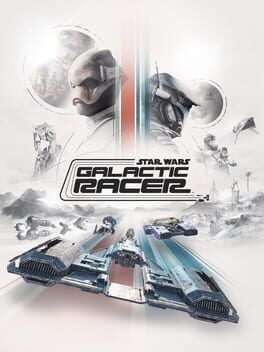
Fuse Games is using its Burnout heritage to build Star Wars: Galactic Racer as a high-risk, high-thrill, track-based "racing adventure" that speaks to both hardcore arcade racing fans and Star Wars diehards. Here is how its track design, crash systems and story mode all tie together.
Star Wars: Galactic Racer might look like a simple pitch on paper: Burnout-style, track-based racing in a galaxy far, far away. In practice, Fuse Games is trying to do something trickier. It has to satisfy two hungry audiences at once: racing fans who have not had a true Burnout successor in over a decade, and Star Wars fans who expect a sense of place, character and canon from anything with that logo on the box.
Talking to outlets like Eurogamer, IGN and Rock Paper Shotgun, the studio’s leads describe Galactic Racer as a “racing adventure” rather than just another licensed spin-off. That distinction runs through everything, from the decision to avoid an open world to the way crashes, boost and story all pull from the team’s Burnout past.
Why Galactic Racer Is Tracks, Not Open Roads
Fuse Games is built out of Criterion veterans who helped define the modern open-world racer with Burnout Paradise and multiple Need for Speed entries. That is why it is so notable that they chose a return to fixed circuits instead of a free-roam Outer Rim.
Creative director Kieran Crimmins and studio head Matt Webster repeatedly describe a gap in the current market for what they call “HD players” who want pure, high-intensity, track-based arcade racing. Open worlds give you toys and freedom, but they also dilute the razor-sharp rhythm that made something like Burnout 3 or Revenge so replayable. A closed circuit, on the other hand, can be learned, mastered and attacked again and again from different angles.
That mastery loop is central to Galactic Racer. Tracks are designed as repeatable challenges rather than disposable backdrops. You learn corners, discover shortcuts and slowly layer in knowledge about how your chosen machine reacts under pressure. In interviews, the team is candid that an open world would have forced them to divert resources toward navigation, exploration and traffic patterns instead of the moment-to-moment decision making they want every second of a race.
The structure also fits the fiction. Galactic Racer is built around the Galactic League, an unsanctioned, syndicate-backed competition thriving in the power vacuum after the Battle of Jakku. In-universe, this is a sport, closer to podracing on Tatooine or riot racing in The Bad Batch than to free-form smuggling. That sports framing justifies a calendar of constructed circuits, grandstands and paddocks instead of a map full of icons.
For racing fans, the message is clear: expect something closer to a modern, high-fidelity Burnout or Hot Pursuit than to Forza Horizon. For Star Wars fans, the consequence is that each race feels like a broadcast event within the galaxy, not a random joyride through familiar scenery.
High Risk, High Thrill: Burnout’s Crash DNA In Space
Where Galactic Racer most obviously channels Burnout is in how it treats speed and failure. The goal is not just to go fast, but to flirt with disaster on every straight and corner. In Eurogamer’s interview, Webster talks about wanting the game to be “high thrill, but also high risk,” and that phrase is baked into the core systems.
The most important of those is a two-stage boost model. At a basic level you have a standard boost that functions like you would expect, consuming a resource to push your skimmer harder. Layered on top of that is the Ramjet phase, a second gear for your throttle that sends you into blistering speeds but starts to cook your craft from the inside out.
Stay in Ramjet too long and your machine can overheat and detonate. The team explicitly compares this to the fragility of podracers in The Phantom Menace, where every rapid pass through a canyon feels like a small miracle. It is Burnout’s risk-and-reward turbo system reimagined as a Star Wars engineering problem. Boost is no longer a simple “always be pressing” button; it is a push-your-luck mechanic where courage and greed can literally explode in your face.
Crashes themselves are treated as spectacle, another shared thread with Burnout. The developers talk about wanting “spectacular crashes” that feel both cinematic and painful, with camera work and audio that sell the violence of metal and plasma smashing apart at 400 miles per hour. Vehicles in this era are supposed to be scrappy, barely legal constructs bolted together by syndicate pit crews. That fragility makes any contact feel dangerous, whether you are trading paint with a rival or skimming the edge of a wrecked Star Destroyer on Jakku.
What keeps it from becoming random carnage is the team’s focus on readability and control. Webster and Crimmins are acutely aware that modern racing players have very little spare mental bandwidth during a race. To keep that high speed satisfying instead of exhausting, they talk about giving players extremely clear feedback on heat, health and upcoming hazards, just as Burnout always prioritized legible telegraphing before a big wreck.
The end result, if it works, should scratch the itch for Burnout fans who miss near-misses, takedowns and the slow-motion poetry of a massive crash, while still feeling rooted in how Star Wars depicts dangerous sport across its films and series.
Tracks That Fight Back: Environment As A Racing System
If Burnout provided the philosophy of speed and danger, Star Wars provides the raw material for tracks that do more than just look pretty. In multiple interviews, Crimmins stresses how difficult it is to truly innovate in racing because players are already juggling steering, braking, lines and rivals. Layers of complexity can easily become noise. Galactic Racer’s answer is to make each track’s environment an active participant in the boost and cooling systems.
On Lantaana, a volcanic rainforest island introduced in the coverage, the track winds between lava flows and water channels. Those are not just set dressing. Lava acts as a heat accelerator, pushing your Ramjet gauge up faster and getting you to peak performance speed more quickly, but also putting you dangerously close to an overheat. Water, conversely, cools your systems and lets you sustain Ramjet for longer without exploding.
The result is that your ideal racing line is not a static golden path. On one lap, with a riskier skimmer build, you might thread through the hottest center of the volcano to slingshot ahead, then dive into a cooling pool at the last moment. On another, in a more conservative machine, you could hug the safer outer edge, using water to stay in prolonged boost while rivals gamble closer to the lava.
Fuse wants this to be true across the league. Jakku is full of wreckage and sandstorms that punish sloppy route choices. Yavin’s jungles and temples squeeze you through natural chicanes. Hoth’s ice fields and blizzards play with traction and visibility. Every planet is treated as a kind of character that dictates new rules of engagement for your boost and handling.
That design speaks directly to fans of technical racers who care about setup, experimentation and lap-to-lap improvement. It also happens to be a smart way to honor Star Wars locations. You are not just ticking “visit Tatooine” off a checklist. You are making tactical decisions because of the way the suns bleach the sand, the way a canyon funnels wind, or the way debris from a fallen Star Destroyer turns a straight into a slalom.
The Story Mode: A “Racing Adventure” In The Outer Rim
For Star Wars fans who might be nervous that this is all systems and no story, Fuse is positioning Galactic Racer as a full narrative experience. IGN’s long interview with the team makes it clear that they never wanted a faceless driver selecting events from a menu. Instead you play as Shade, a new canonical racer entering the Galactic League in the shadow of the Empire’s fall.
The campaign introduces the league as an underground, unsanctioned circuit bankrolled by crime syndicates and shady investors. Its reigning champion and central antagonist is Kestar Bool, whose grip on the competition you are slowly working to break. Over time, you form alliances, rivalries and grudges with a cast that includes both brand-new faces and returning oddities like Sebulba, now older and bearded, and Ben Quadinaros.
Structurally, the story mode alternates between intense race events and time spent in the paddock, a walkable hub area that sits at the heart of the experience. This paddock is one of Galactic Racer’s most interesting calls back to the lessons of Burnout. Criterion’s games were relentless in their pacing, which was thrilling but also tiring. Fuse has built a space to decompress, to let your heart rate come down and to ground what you have just done in fiction.
In the paddock you move around in third person, chat with other racers, get drawn into side conversations and confrontations, and make choices about upgrades and tuning for your skimmers. It is where shade’s personality takes shape, where you see the physical scale of your craft towering over you, and where you feel the league as a living, breathing community rather than a menu of AI names.
Fuse frames this as a storytelling tool that still respects the primacy of racing. Dialogue is paced around events, not the other way around. The goal, as Webster tells IGN, is a “proper single-player mode” that feels like a Star Wars story without burying you in cutscenes or lore dumps. You are there to race, but you are also there to live with the consequences of your victories, crashes and grudges.
Setting Expectations For Racing Fans
If you are coming to Galactic Racer because you miss Burnout, the first expectation to set is that this is very much a track-based, high-speed arcade racer rather than a sim. Fuse talks about approachability and pick-up-and-play feel, but there is consistent emphasis on depth and mastery. Systems like Ramjet, environmental heat and cooling, and the way each world changes your optimal line all suggest something with a high skill ceiling.
You can also expect a clear, authored progression through the campaign. This is not a drifting, open-ended structure where you gradually clear icons. Instead, you move through league events, unlock new routes, meet new rivals and tweak your machines in pursuit of that final showdown with Kestar Bool. There will be additional modes, including arcade options and multiplayer, but the spine is a curated single-player ladder.
Perhaps most importantly, the team talks openly about wanting failure to be part of the thrill, not something to be smoothed over. Overheating your craft, clipping a wing in a canyon, gambling on a risky line through a lava field and paying for it with a spectacular crash are all meant to feel like stories you tell afterward, not bugs to be patched out. That attitude is pure Burnout and will likely resonate with players who miss that series’ gleeful embrace of chaos.
Setting Expectations For Star Wars Fans
For those most invested in the Star Wars side, Galactic Racer is not a tour of greatest hits so much as a deep cut into a particular era. Canonically, it takes place after the Battle of Jakku, when the civil war is over and the galaxy is rebuilding. It is exactly the kind of moment when organized sport can crawl out from the underworld into a kind of messy legitimacy.
That means you will see familiar locations in new lights. Jakku is not just a battlefield. It is a scrapyard arena where syndicates carve tracks through the bones of fallen Star Destroyers. Yavin is not only a Rebel base; it is a jungle planet that can host a roaring crowd. The team’s history on Battlefront II, including work on Endor speeder bikes and X-wing missions, gives them a strong grounding in what feels authentic to each locale.
Story-wise, you should expect a focused tale centered on Shade, the Galactic League and Kestar Bool, rather than cameos from Jedi and Sith. The Force is not front and center here. Instead, the fantasy is about being a daredevil pilot trying to carve out a name and survive long enough to see your picture on a betting hall wall. It pulls from pod and riot racing traditions already embedded in Star Wars, but pushes them forward into a slightly later era.
Canon concerns are being taken seriously. Lucasfilm is collaborating with Fuse to ensure characters like Shade and the league itself fit within the broader timeline. Sebulba’s return, the post-Jakku setting and the Outer Rim focus all feed into a vision of Star Wars that is grubbier and more grounded than the front line of galactic conflict.
Burnout By Any Other Name
Across all three major interviews, one idea keeps surfacing: Galactic Racer exists to serve a neglected niche. Burnout fans have gone without a true successor for years, and arcade racing in general has waned in an industry that prefers open worlds and live-service grinds. By combining the immediacy and spectacle of Burnout with the richness and recognizability of Star Wars, Fuse is betting that there is still room for a tightly crafted, premium racer that does not pretend to be anything else.
Its track-based design is a direct expression of that belief. Its crash and boost systems are a love letter to a style of racing game many players assumed was gone. And its story mode, with Shade’s rise through the Galactic League and the walkable paddock between races, is an attempt to make that style of game feel at home in one of pop culture’s most closely watched universes.
If Fuse can deliver on those ambitions, Star Wars: Galactic Racer will not just be Burnout in space. It will be a reminder of how good high-risk, high-thrill racing can feel when a team that understands both the genre and the galaxy gets to build a track from scratch.