
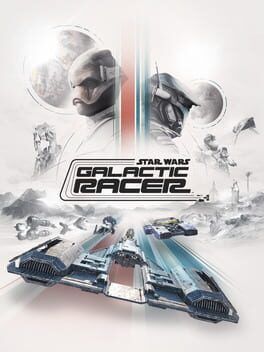
Fuse Games says Anakin Skywalker is missing from Star Wars Galactic Racer at launch because the roster follows its post-original-trilogy timeline, while previews point to a multiplayer Tour Mode built around heats, upgrades, and match-long escalation.
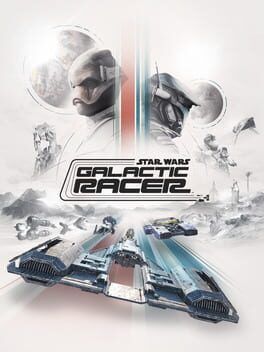
Image: IGDB
Store links: Star Wars: Galactic Racer on Steam
Anakin is out at launch because Galactic Racer is drawing a hard timeline line
The clearest answer yet on Star Wars Galactic Racer Anakin questions comes from Fuse Games CEO and co-founder Matt Webster, who told VGC that the racer “has to be accurate” to its in-game timeline. That is the concrete reason Anakin Skywalker is missing at launch, at least based on the rule Webster described for the single-player and arcade portions of the game.
According to VGC’s interview, Star Wars Galactic Racer is set after the original trilogy, in the post-Empire, New Republic period. Webster said the characters who appear in the single-player and arcade portions are those who are canonically alive at the time of the story. Anakin, whose story ended decades earlier in Star Wars continuity, does not fit that roster policy.
That answer also sets up the tension around the Star Wars Galactic Racer launch roster. This is a Star Wars racing game plainly built to evoke Episode I: Racer and the wider podracing memory bank, but Fuse is not treating that nostalgia as a license to ignore chronology. Webster told VGC the team does not “recreate the Boonta Eve Classic as it appeared in Episode 1” because the outcome of that race is already decided. His point was not that prequel-era material is off-limits. It was that the game has to use those inspirations “in creative and interesting ways” while staying aligned with the era it has chosen.
When VGC pressed specifically on whether Anakin could appear later, Webster did not announce him as DLC or rule him out permanently. His quoted answer was: “Who knows where things will take us. You’ve seen the characters that are available to you right now. What is true is that launch will be a moment, and we’re keen to bring new things to the game post-launch.” That leaves Anakin as an unanswered post-launch question, not a confirmed roadmap item.
The launch roster is being shaped by canon, but the game still borrows from podracing history
The useful distinction is between roster accuracy and racing heritage. Fuse is keeping the story-era cast constrained, according to Webster’s VGC comments, while still building a racing format that clearly points back to Star Wars’ podracing legacy.
Operation Sports reported that creative director Kieran Crimmins described Star Wars Episode I: Racer as one of his favorite N64 games and said this is a game he had wanted to make for “at least 20 years.” That legacy is important because Galactic Racer is arriving with a very specific expectation attached: players remember podracers as dangerous, twitchy, high-speed machines, and they are going to measure this game against that feel even if it is not a straight remake.
Public game summaries and previews reinforce that split. IGN describes Star Wars Galactic Racer as a runs-based, high-stakes racing game set in an underground, unsanctioned Galactic League after the Empire’s fall. ScreenRant’s single-player preview says the campaign takes place in the New Republic era and follows a player drawn into the Galactic League, created by Darius Pax. Wikipedia’s public entry, which should be treated as a secondary listing rather than a publisher statement, says the game features racers from The Phantom Menace such as Ben Quadinaros and Sebulba, and lists locations including Tatooine, Lantaana, Jakku, Ando Prime, and Sentinel One.
Those details do not contradict Webster’s Anakin explanation so much as frame the boundary Fuse is trying to draw. The game can use planets, vehicle silhouettes, rivalries, and surviving legacy racers where canon allows. It is not, based on the quoted VGC interview, presenting the launch roster as a free-for-all museum of every famous Star Wars driver. For players searching Star Wars Galactic Racer launch roster details, the current safest reading is simple: the confirmed launch selection is era-conscious, and post-launch additions are possible but not specified.
Tour Mode turns multiplayer into a series, not a single race
The latest multiplayer details are where Galactic Racer starts to separate itself from a conventional arcade lap battle. VGC says the multiplayer portion has players competing across a series of heats. After each race, players can upgrade their ship to improve their position in the next race. The series then ends with a finale in which every racer’s fully upgraded craft fights for supremacy.
That structure is the key to understanding the Star Wars Galactic Racer Tour Mode conversation. PC Gamer’s hands-on preview describes the multiplayer Tour mode as “a chaotic arcade racer spliced with a MOBA,” and VGC’s described format explains the comparison at a systems level. This is not simply twelve players launching from a grid, trading paint, and calling the podium final after three laps. The match has escalation. Early results feed into upgrade choices. Upgrade choices change the next heat. The last race is affected by everything that happened before it.
The provided PC Gamer excerpt does not spell out exact lanes, roles, team compositions, or objective rules, so any detailed claim about MOBA-style team play needs to be treated as preview characterization unless Fuse publishes a full ruleset. What is confirmed by VGC is the match-long upgrade arc, and that is already a meaningful design choice. In a normal arcade racer, a bad first corner can ruin a race. In a heat-based Tour, the more interesting question is whether a bad opener can be converted into a better build for the next round.
From a racing design perspective, that changes the pressure profile. A single-race game rewards clean launches, route knowledge, and moment-to-moment control. A Tour format adds strategic recovery. If upgrades are significant, players may be incentivized to think like they are managing a stint rather than one qualifying lap: protect position when the vehicle is weak, spend rewards into a clearer role, then arrive at the finale with a craft built for the conditions and the lobby.
The MOBA comparison appears to come from escalation and specialization
Calling Tour Mode part-MOBA is a loaded comparison, so it is worth being precise about what the available sources support. MOBA influence does not automatically mean Star Wars Galactic Racer multiplayer has lanes, creeps, towers, or a draft. The sourced details point instead to match-length progression and differentiated builds.
VGC’s multiplayer description confirms upgrades between heats. ScreenRant’s single-player preview adds useful context for how upgrades work elsewhere in the game, saying rewards and currencies can be spent on vehicle improvements and that each stat and upgrade makes “a real difference” to speed and handling. Although ScreenRant was previewing the single-player portion rather than Tour Mode, it supports the broader point that Galactic Racer treats vehicle setup as a meaningful performance layer rather than a cosmetic wrapper.
That is where the MOBA-style language becomes practical. If upgrades reshape acceleration, top speed, handling, survivability, or boost behavior between heats, then players are no longer choosing only a vehicle at the start. They are building toward an end state during the match. In team play, if that structure is present in the rules Fuse ultimately ships, the strategic value would come from complementary builds and race-to-race adaptation: one player prioritizing straight-line speed, another building for control through technical sections, another choosing tools that help stabilize the group over multiple heats.
Fuse has not provided, in the supplied material, a complete public breakdown of team objectives or ranked Tour Mode rules. The confirmed facts are narrower: online multiplayer exists, VGC says the format uses heats, upgrades, and a finale, and Wikipedia’s public entry says online races support up to 12 players with a ranking system planned. PC Gamer’s preview impression supplies the MOBA comparison, while the exact mechanical basis for team play remains the piece still needing a developer-level explanation before launch.
Handling has to carry the strategy, or Tour Mode collapses into upgrade math
For a racing game, strategic structure only works if the driving model gives those choices consequences. The previews suggest Fuse is aiming for a handling model that stays arcade-accessible but unstable enough to make speed management matter.
ScreenRant’s single-player preview says the speeders are fun to handle, with a regular afterburner and a ramjet that provides a huge temporary boost at the risk of crashing into a wall at extreme speed. The same preview describes the handling as difficult to learn but rewarding once mastered, and says the feeling of being slightly out of control fits the type of racing Galactic Racer is trying to deliver.
That matters for Tour Mode because between-heat upgrades need to be felt through the hands. If a player invests in speed and the craft becomes harder to rotate, that is a tradeoff. If a handling upgrade makes a speeder more stable through chicanes or rough planet terrain, that can become a strategic answer to a specific course sequence. ScreenRant also says vehicle stat changes make a real difference, which is encouraging for a mode built around progression, though it remains a preview observation rather than a final verdict.
The danger is balance. Arcade racers thrive on readable chaos, not spreadsheet dominance. If the fully upgraded finale lets early leaders snowball too hard, the Tour format could make the final heat feel predetermined. If catch-up tools are too aggressive, the early heats could feel disposable. The strongest version of this mode is one where the opening races matter, but recovery remains possible through smart setup and cleaner execution. That is the sweet spot Fuse has to hit.
Release date, platforms, editions, and the practical wait-or-buy question
Star Wars Galactic Racer is scheduled to release on October 6, 2026. VGC, Operation Sports, IGN, and public listings all point to PlayStation 5, Xbox Series X|S, and PC as the announced platforms. Wikipedia lists Windows for PC and names Fuse Games as developer and Secret Mode as publisher, while IGN’s game page lists Lucasfilm Games and Secret Mode under publishers. The sources are aligned on the release window and platforms, even if publisher attribution varies by listing.
VGC reports that the Deluxe Edition costs $79.99, £64.99, or €79.99. That edition includes three bonus vehicles, named by VGC as the Kor Sarun: Darc X landspeeder, Kor Sarun: Ciza T speeder bike, and Kor Sarun: Rak S skim speeder, along with three deluxe Arcade events, the Deluxe Livery Pack, Deluxe Player Banner Pack, and a Digital Art Book. VGC also reports a physical Collector’s Edition priced at $159.99, £139.99, or €159.99 for PS5, Xbox Series X|S, and PC. That package includes a physical model of the Kor Sarun: Darc X landspeeder, a physical banner, two pilot patches, a physical copy of the Digital Art Book, a custom slip cover, and a steel case.
For players deciding whether to buy at launch, the Anakin question should not be treated as a reason to preorder or hold off by itself. Fuse has said new things are planned post-launch, but Anakin is not confirmed. The better practical question is whether the launch package already matches what you want from a Star Wars racing game: a New Republic-era campaign with run-based structure, arcade and scenario-style racing, and a multiplayer Tour format built around heats and upgrades.
If your main interest is Star Wars Galactic Racer multiplayer, it may be worth waiting for Fuse to publish the full Tour Mode rules, especially around team structure, matchmaking, ranked play, and how upgrades are balanced. If your interest is the handling model and campaign, the previews point to a faster, riskier arcade racer with meaningful vehicle tuning and a run-based Galactic Tour. The missing Anakin answer is now clear enough. The larger launch question is whether Galactic Racer’s layered format can keep its high-speed chaos legible once twelve upgraded machines arrive at the finale.