
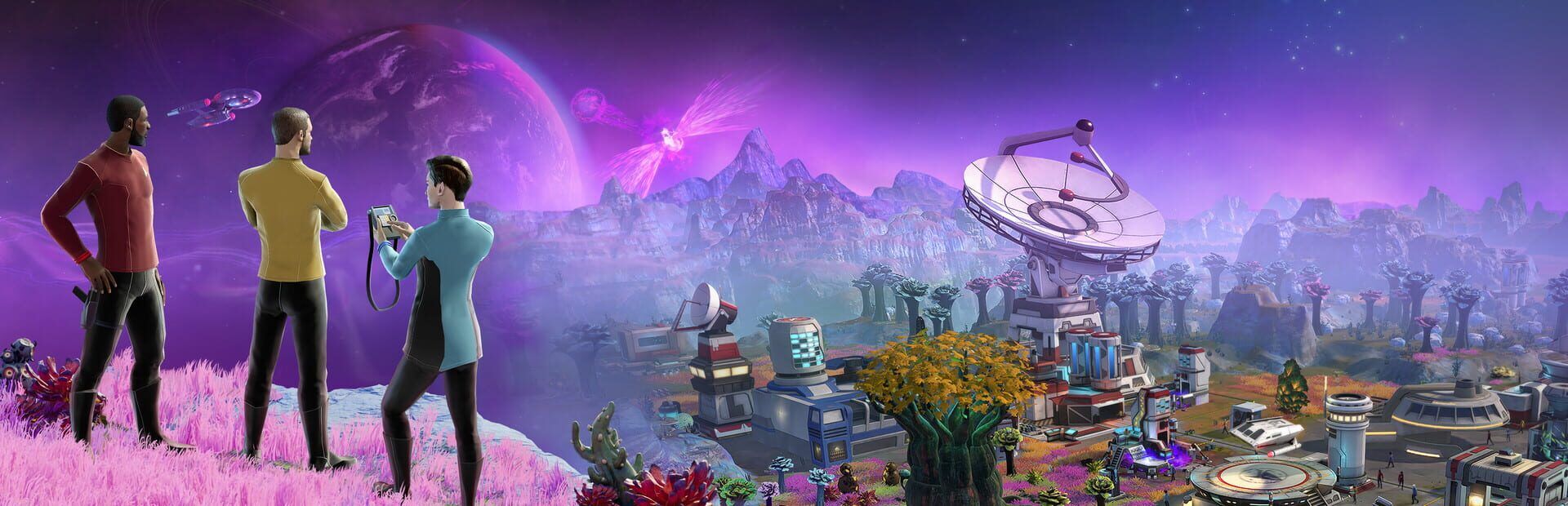

How the newly announced Star Trek: Outposts Unknown turns the harsh colony sim formula into a hopeful, story-driven outpost builder that leans on exploration and management instead of grim survival.
Star Trek: Outposts Unknown is not trying to be RimWorld in a Starfleet uniform. The newly announced colony-builder from Magic Fuel Games and publisher Playstack is a management and exploration game first, a survival sim second, and that shift in priority makes a big difference to how life on the final frontier feels.
Set in the 23rd century, during the Star Trek: Strange New Worlds era, Outposts Unknown casts you as the commanding officer of a Federation expedition into the X'Lehari System. Your mission is not to squeeze one more day of life out of doomed settlers, but to help a fragile new ally survive an impending cosmic catastrophe. The result is a colony-builder that treats hardship as something to solve with science, diplomacy and logistics rather than a constant spiral of disaster.
Where many settlement sims drop you on a hostile rock and tell you to somehow not die, Outposts Unknown is structured around a campaign. The demo already offers a few hours of story, introducing new characters, alien species and a mysterious threat that hangs over the system. You still gather resources, place buildings and keep an eye on food and power, but there is a clear narrative pull guiding you from one problem to the next.
That narrative focus is one of the big ways it separates itself from survival-driven games. Instead of chasing an open-ended meta of min-maxed killboxes and exploitation, you are making classic Star Trek tradeoffs. Do you divert power to experimental research in the hope of understanding the anomaly faster, or keep the shields and life support comfortably over-provisioned in case something goes wrong planetside? The structure gives your build choices context that is more about Starfleet priorities than raw efficiency.
Crew management underlines this difference even more. Colonist sims often turn people into walking spreadsheets of mood bars and traits that spiral out of control for entertainment value. Outposts Unknown still tracks needs, competence and morale, but it aims for an upbeat tone. Officers clock off from shifts, you assign them posts, and their growth over time feeds back into the strength of your outposts. The point is to build a capable team, not to watch them implode in a sea of mental breaks.
That focus on officers also gives the game a clear Star Trek identity. Your key crew are more like a bridge roster than anonymous workers. Developing them, assigning them to research, engineering or away teams, and seeing how their specialties shape the solutions you find turns the colony into an extension of your starship command rather than a faceless industrial complex. Where a harsher sim might celebrate how badly things can fall apart, Outposts Unknown wants you to feel like you are growing into the role of captain.
Outpost building itself leans into that idea of a Federation expedition, not a desperate off-the-grid commune. You snap down research labs, habitat modules, defensive structures and power plants, then connect them up into a functional base. Progression runs through tech trees and new facilities, but it is framed around the Federation toolbox: scanners, medical bays, communications arrays and ships that slowly extend your reach across the X'Lehari System. Each new site feels like a forward operating base planted by Starfleet rather than a bunker carved out of necessity.
Exploration is where the license has the most room to stretch. Instead of a single static map to tame, you are moving between strange new worlds, scanning points of interest and responding to events as they develop. Away missions and system-level decisions factor into how your fledgling ally perceives the Federation and how prepared they are for what is coming. In mechanical terms that seems to translate into new resources, story beats and modifiers for your outposts, but thematically it lets the game echo the show’s rhythm of discovery and consequence.
Survival still matters. Harsh environments, supply shortages and external threats can push your crew, and careless management will get people hurt or worse. The crucial difference is emphasis. Outposts Unknown treats those pressures as obstacles on the path to a solution rather than the whole point of the experience. It is closer to the spirit of Star Trek’s crisis-of-the-week storytelling, where a looming disaster is an excuse to showcase clever plans and ethical dilemmas instead of an excuse to wipe your colony again and again.
That also affects tone. The demo, going by early impressions, comes across as bright and optimistic. Art and interface design reinforce that sense of an official mission, with clean Federation lines and a clear view of your bases across alien landscapes. There is room for tension when a storm rolls in or a system failure spreads, but the baseline is hopeful problem-solving in line with the Strange New Worlds era, not a grim battle for scraps.
Seen as a whole, Star Trek: Outposts Unknown looks like an attempt to adapt the colony-builder into a Starfleet operation, where management, exploration and narrative all pull in the same direction. You are still juggling resources, terrain constraints and the limits of your crew, but your tools and goals are firmly rooted in the license. If you like the bones of settlement sims yet bounce off the harshness of games like RimWorld, this is shaping up to be a more welcoming frontier: still dangerous, but guided by the idea that science, cooperation and a good plan can actually win.