
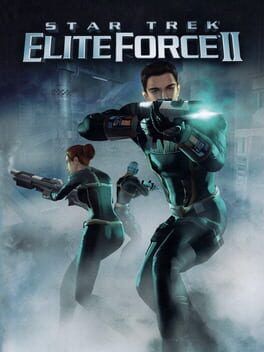
A former Ritual Entertainment developer says Star Trek: Elite Force 2 cut a Starfleet Academy attack involving a shuttle after 9/11, adding new context to Activision’s Star Trek FPS history.
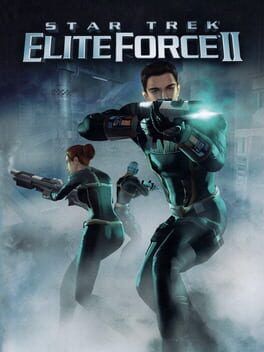
Image: IGDB
A Star Trek FPS changed course after 9/11
Star Trek: Elite Force 2 was originally set to open with a terror attack on Starfleet Academy before the September 11, 2001 attacks forced Ritual Entertainment to rethink the sequence, according to former lead scripter and level designer Benson Russell.
Speaking to FRVR, Russell said the team was making Elite Force 2 when 9/11 happened. One planned scene at Starfleet Academy involved an attack where “we actually had a shuttle fly into a building,” he recalled. Russell said that became “a no-no, for understandable reasons.” VGC and Kotaku both reported the comments from the FRVR interview.
That detail cuts straight into the core tension of Star Trek: Elite Force 2’s history. The final game is remembered as an Activision Star Trek shooter built around Alexander Munro, the Hazard Team, linear missions, action, puzzle work, and Patrick Stewart’s Jean-Luc Picard. Russell’s comments show that its published shape was also the result of a post-9/11 production pivot, not only a normal licensed-game rewrite.
For a Star Trek FPS, that matters. Elite Force 2 sits in a narrow lane: a Trek game trying to make corridor firefights, squad objectives, and problem-solving feel like they belong inside a franchise built on command decisions and exploration. Removing a Starfleet Academy attack involving a shuttle hitting a building was not a cosmetic cut. It likely changed the game’s opening pressure, the player’s early motivation, and the way the sequel framed violence inside Starfleet’s own space.
The final game moved Munro from Academy duty to Picard’s Hazard Team
FRVR describes the final version of Elite Force 2 as beginning after protagonist Alexander Munro has been working as a teacher at Starfleet Academy. In the released game, Jean-Luc Picard recruits him to reform the Hazard Team aboard the USS Enterprise. VGC similarly reports that players control Starfleet lieutenant Alexander Munro, who is made leader of a newly created Hazard Team by Captain Picard and then takes on linear missions directed by Picard.
That structure is cleaner than the abandoned setup Russell described. It gets the player onto the Enterprise, puts Picard in command authority, and gives the FPS campaign a mission-to-mission rhythm. From a shooter design angle, that matters because Elite Force 2 needs a strong pipeline: briefing, loadout, encounter, puzzle, extraction, repeat. A terror attack on Starfleet Academy would have given the story a more immediate homeland-assault hook. The shipped version leans harder on institutional chain of command and Picard’s presence.
Russell also told FRVR that the game’s puzzle direction came partly from his love of System Shock. He called System Shock 1 one of his favorite games, and FRVR frames Elite Force 2 as a sequel that pushed further into the FPS and puzzle mixture fans liked. Kotaku also characterizes the game as mixing puzzles, action, and dialogue, while noting it ran on id Tech 3.
That combination is the game’s fingerprint in Star Trek FPS history. Elite Force 2 was not competing with pure arena shooters on raw speed or meta depth. Its strength was pacing: phaser fights, environmental tasks, scripted Trek beats, and squad flavor. Russell’s rewrite comment adds a new layer to how that pacing came together.
The cut scene shows how close licensed games were to real-world timing
The Star Trek Elite Force 2 9/11 rewrite is a reminder that early-2000s licensed games were not insulated from the news cycle, even when they were set in distant futures. Russell’s account is specific: Starfleet Academy was to be attacked, and the scene included a shuttle flying into a building. He did not describe the full abandoned plot in the supplied interview text, and neither FRVR, VGC, nor Kotaku presents a complete outline of the original story.
That boundary is important. What is confirmed is Russell’s recollection that the scene existed and became unacceptable after 9/11. What remains unconfirmed is how much of the wider campaign was rebuilt around that decision, how far the scene had progressed in production, whether it was playable, and what other missions changed as a result. VGC says the game “had to be rewritten,” while FRVR says the game needed to be “heavily altered during development.” Those reports support a significant change, but they do not provide a full before-and-after campaign map.
Kotaku draws a comparison to Grand Theft Auto 3, reporting that Rockstar changed elements around its New York-like setting after 9/11, including police car presentation and the U.S. cover. That comparison is useful because it places Elite Force 2 in a broader industry pattern: games close to release or mid-development suddenly had imagery, tone, and urban destruction beats reassessed.
For Trek, the sensitivity is sharper. Starfleet Academy is symbolic ground. Turning it into the site of an attack involving a spacecraft and a building would have carried a different charge after September 2001, regardless of the franchise’s science-fiction setting.
Picard’s central role came from budget and cast contract realities
Russell’s FRVR interview also explains why Elite Force 2 leans on Picard while mostly avoiding the full Star Trek: The Next Generation bridge crew. According to Russell, the team wanted more of that cast, but actor contracts created an equal-pay problem. If one actor was paid a certain amount, the others would also need to be paid that amount. Russell said the studio “dumped all of that” into securing Patrick Stewart and then filled out the game with tertiary characters and other Star Trek actors where possible. VGC reports the same explanation, saying the budget could not accommodate an all-or-nothing arrangement for the main cast.
That is a practical production detail with design consequences. Picard gives Elite Force 2 instant franchise legitimacy and a strong command voice, but the absence of the wider main cast changes the temperature of the campaign. The player spends more time with Munro, Hazard Team personnel, and lesser-known Trek faces, rather than playing through a full ensemble TNG episode with the entire bridge crew active.
From an FPS perspective, that may have helped the game stay focused. A shooter campaign needs radio chatter and character presence, but too many legacy characters can drag mission pacing into cameo management. Still, the budget constraint shaped what kind of Star Trek fantasy Activision and Ritual could deliver. This was a licensed FPS with Patrick Stewart as Picard, not a full Next Generation reunion wrapped around a shooter.
That distinction helps explain why Elite Force 2 has always occupied a strange, interesting slot. It carries major Trek branding, but its actual campaign identity belongs to Munro’s Hazard Team and Ritual’s mission design as much as to the TV cast.
Elite Force 2’s release history is messier than a nostalgia pitch
The supplied reports do not fully agree on one basic point: release timing. VGC identifies Star Trek: Elite Force 2 as a PC game released in 2003 and published by Activision. FRVR also discusses the game as a sequel in the Elite Force line and places its development around the post-9/11 changes, but the provided FRVR text does not give a release date. Kotaku’s article says the game arrived on PC in June 2002, which conflicts with VGC’s 2003 framing and with the assignment’s description of Activision’s 2003 shooter.
Because the provided sources conflict, the safest reading is to treat the 2003 date as the supported framing from VGC and the assignment, while noting Kotaku’s different date rather than smoothing it over. The date matters because Russell’s comments are tied to development timing after September 2001. Whether a reader is approaching this as game history, preservation, or production archaeology, exact timing affects how much runway the team had to make story changes.
VGC also reports the game sold poorly and became part of a messy lawsuit between Activision and Star Trek IP owner Viacom. According to VGC, Activision claimed Viacom had left Star Trek in “stagnation,” leading to reduced interest in the game. VGC says Viacom countersued, the parties settled, and Star Trek game rights later moved to publishers including Bethesda for Star Trek: Legacy, Atari for Star Trek Online, and Paramount Digital Entertainment for Star Trek DAC.
That business fallout keeps Elite Force 2 from being a simple cult-classic victory lap. It is fondly remembered by many players, as Kotaku and FRVR both frame it, but VGC’s account places it inside a troubled late-Activision Trek period.
How to play it now, and what the new detail adds to Star Trek FPS history
For players curious after Russell’s comments, VGC reports that Star Trek: Elite Force 2 is still available to buy on GOG. The supplied sources do not list a current Steam version, console release, price, remaster plan, upgrade path, system requirements, or modern performance notes. Anyone buying it today should treat it as an older PC release and check the storefront listing for compatibility details before purchasing.
The reason to revisit it is not only trivia about a removed scene. The Star Trek Elite Force 2 developer comments clarify why the final campaign feels built around controlled deployment rather than a more traumatic Academy attack. The published game’s rhythm, Picard’s central role, and its Hazard Team framing all sit downstream from production choices shaped by real-world events, licensing costs, and the need to make Trek work inside an FPS format.
That is the useful lesson for Star Trek FPS history. Elite Force 2 was developed by Ritual Entertainment, published by Activision, and built in an era when licensed shooters had to prove they could respect a franchise while still delivering combat pace. Russell’s System Shock influence points to the puzzle-and-action blend. The Patrick Stewart casting decision points to budget triage. The 9/11 rewrite points to a moment when a planned science-fiction image became impossible to ship unchanged.
Seen together, those facts make Elite Force 2 a sharper case study. It was a shooter trying to make Starfleet field operations playable, a licensed project negotiating actor contracts, and a post-9/11 game forced to redraw the line between dramatic attack imagery and real-world pain.