
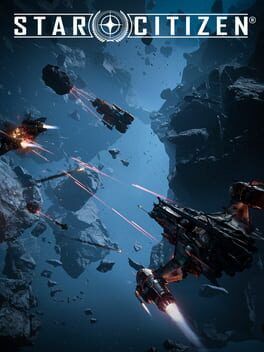
Cloud Imperium’s Siege of Orison stream was meant to show Star Citizen’s intended mission design. Instead, reported bugs and an awkward shutdown reopened player trust questions after over $1 billion in funding.
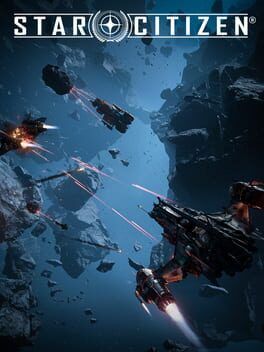
Image: IGDB
A stream meant to restore confidence became the new evidence against it
Cloud Imperium Games put Star Citizen’s Siege of Orison mission on a developer livestream to show players the intended version of content that had already drawn complaints, according to IGN and Kotaku. The plan, as Kotaku reports content director Jared Huckaby saying at the start of the August 5 Star Citizen Live broadcast, was to show “the intended design” and “how it’s supposed to work.” The immediate tension is that the stream became a public case study in why players were frustrated in the first place.
Across IGN, Kotaku, MeinMMO, Analytics Insight, and SSBCrack News, the same core account emerges: developers attempted to play an internal build, hit multiple bugs, struggled with basic interactions, grew visibly frustrated, and ended the broadcast awkwardly. IGN reports that the team had trouble using weapons, swapping between weapons, accessing inventory, and other functions. MeinMMO adds problems with reviving teammates and picking up items, citing a community-compiled bug list. Kotaku describes the mission as having been delayed repeatedly because of technical issues and says the public test server build was also being criticized as buggy.
That makes this Star Citizen livestream fail unusually damaging. Live demos break. Internal builds are unstable by nature. But this was not a convention stage accident or an influencer preview gone sideways. It was a developer-controlled stream organized in response to player complaints, using a build meant to communicate the mission’s design target. When the showcase itself reinforces the criticism it was meant to calm, player trust becomes the story.
The failure was technical first, then operational
The most concrete problem was the game itself. IGN reports that Cloud Imperium’s developers ran into bugs affecting weapons, inventory, and other basic gameplay actions. MeinMMO reports additional issues around revives and item pickups. Analytics Insight similarly says developers had problems using weapons, switching between them, accessing inventory, and performing other tasks. None of those are obscure edge cases in a mission stream. They are core verbs in a shooter-leaning space sim mission.
Kotaku’s account adds the operational collapse around the end of the broadcast. After roughly an hour and a half of playing, the group wiped and the room went silent, according to the outlet. Kotaku reports that one developer told a teammate to kill himself, then added “in game” after awkward laughter. The article also describes Huckaby entering near the end, telling developer Olli, “It’s your show, wrap it up,” and leaving Olli to close the stream while appearing overwhelmed. MeinMMO separately reports that Huckaby told Olli, “It’s your show, wrap it up,” shortly before the end.
IGN says the closeout made the situation worse because one developer said the team was proud of the work and wanted to get the build out so players could have the “same experience” the developers had on stream. IGN’s read is that this landed poorly with fans because it seemed disconnected from what viewers had just watched. That is a key distinction for Cloud Imperium. A buggy mission can be patched. A broadcast that appears to misread its own failure creates a communications problem on top of the build problem.
The funding scale raises the burden of proof
The reason this incident traveled beyond normal alpha-build discourse is Star Citizen’s scale. IGN reports that Star Citizen has been in development for roughly 15 years, has raised over $1 billion from fans, has been in early access since 2017, and still has no release date in sight. Kotaku says the game was announced in 2012, remains without an official launch, and has raised over a billion dollars through crowdfunding since that announcement. MeinMMO frames the timeline as 14 years of development and says the money comes from crowdfunding and the sale of in-game spaceships.
There is a small wording conflict across the coverage. IGN uses “roughly 15 years,” while MeinMMO uses 14 years, and Kotaku anchors the project to its 2012 announcement. Those descriptions are pointing at the same long development history from slightly different counting methods and publication dates. The relevant fact for players is less the exact anniversary math than the combination of a decade-plus public project, over $1 billion in reported funding, and no 1.0 release date cited in these reports.
From a strategy and live-development perspective, that changes the expected standard. In a low-budget early access game, a failed mission stream can read as growing pains. For Star Citizen Cloud Imperium, the money and time involved turn every public proof point into a referendum on production discipline. The question players are asking is not whether a single Siege of Orison session had bugs. It is whether the studio’s internal validation process can reliably turn ambition, funding, and years of iteration into stable playable content.
Players reacted to the trust gap, not only the bugs
The community response reported by multiple outlets centers on confidence. IGN says some fans lost confidence after the stream and that morale was low afterward. The outlet quotes a comment under the stream calling it “Incredibly awkward, cringe, forced, slightly sinister feeling at times,” adding that local server gameplay was still terrible and that it “Felt like a hostage video.” SSBCrack News reports similar fan language, including “awkward,” “cringe,” and “hostage video,” while saying many viewers mocked the mishap and questioned why the video remained available.
MeinMMO highlights a Reddit reaction from user THESALTEDPEANUT, paraphrasing the sentiment as “One billion dollars and [14] years later” the developers staged a live disaster so fans could experience the same annoying bugs. Kotaku notes that YouTube videos and Star Citizen subreddit threads discussed the broadcast, including community breakdowns of the bugs. Those reactions are not formal evidence of the game’s full technical state, but they are evidence of the reputational problem the stream created.
Cloud Imperium’s challenge is that Star Citizen’s community is also its funding base. MeinMMO says the project’s money comes from crowdfunding and spaceship sales, while Kotaku points to expensive starter packs and ships costing thousands of dollars. When funding depends heavily on player belief in the roadmap, a stream like this hits a different part of the economy than a bad trailer would for a traditionally shipped game. It challenges the confidence loop that keeps long-term backers engaged.
Siege of Orison now has to prove stability in public, not intent in private
The Siege of Orison stream was framed as a look at intended design, according to Kotaku. That framing is important because intent is no longer the scarce resource in Star Citizen. The project’s pitch has always been ambitious, and the reports around this stream do not dispute that Cloud Imperium is still building and adding content. The concern is whether the content can survive contact with real play conditions.
A controlled internal demonstration should theoretically offer better conditions than a live public environment. It can use selected personnel, prepared context, and a build chosen by the developer. Yet IGN, Kotaku, MeinMMO, Analytics Insight, and SSBCrack all report that the session still exposed bugs and poor mood. If the goal was to show players that their current pain was temporary, the stream instead gave critics a clean narrative: even the intended version looked unstable when the people building it tried to play it.
That does not prove Siege of Orison cannot be fixed, and it does not prove the full state of Star Citizen. Analytics Insight explicitly notes that the livestream does not show the full state of the game. But it does create a clear test. The next convincing evidence will not be another assurance that the mission works internally. It will be the same mission behaving reliably for ordinary players on the public test server and live environment, especially around the exact interactions that failed on stream: weapons, inventory, revives, item pickup, mission flow, and recovery after wipes.
Squadron 42 adds another timing pressure point
IGN and SSBCrack News both connect the Star Citizen stream to broader questions around Squadron 42, Cloud Imperium’s standalone single-player project. IGN reports that CIG CEO Chris Roberts said last year Squadron 42 was playable from start to finish and on track for a 2026 release, but that with four months left in the year there was no release date in sight. SSBCrack News repeats that Roberts said Squadron 42 was playable from start to finish and on track for 2026, while noting no specific release date had appeared as the end of the year approached.
That matters because Squadron 42 and Star Citizen share the same studio reputation. The source material here does not establish that the Siege of Orison problems reflect Squadron 42’s state, and it would be unfair to treat one multiplayer mission stream as proof about a standalone campaign. Still, from a player-trust angle, public confidence is cumulative. If one Cloud Imperium showcase struggles to demonstrate stability, the studio’s next dated promise or release-window claim will be examined more harshly.
For players, this is where patience should become criteria-based rather than faith-based. A release window, a mission showcase, or a statement of pride is less useful than specific evidence: stable builds, transparent known-issues lists, follow-up fixes tied to visible problems, and public dates that survive contact with testing. The more Cloud Imperium asks players to separate present instability from future delivery, the more it needs to show the process that bridges that gap.
What to watch in Cloud Imperium’s response
Cloud Imperium’s most important next move is not a broad morale statement. Based on what the stream exposed and what outlets reported, the studio needs to address the concrete failure points. If the response centers on the Siege of Orison mission, players should look for direct acknowledgement of the bugs reported during the stream, including weapon handling, weapon switching, inventory access, revives, item pickup, and mission wipe recovery. A useful update would explain which issues are fixed, which are still under investigation, and whether the fixes are in internal builds, the public test server, or the live alpha.
Players should also watch the tone. IGN reports that the closing comment about wanting players to have the “same experience” landed badly because viewers had just watched a rough session. The next communication needs to show that Cloud Imperium understands the gap between developer intent and player experience. If the studio treats the stream as a funny mishap while players see it as evidence of deeper instability, the trust problem will linger even if individual bugs are patched.
The practical advice is simple: if you are already invested, judge the next patch by whether it improves the specific friction points that embarrassed the stream. If you are considering spending money because Siege of Orison or a future update looks promising, wait for player reports from public builds rather than relying on internal-showcase language. Star Citizen can still improve, and a failed livestream is not a final verdict on the whole project. After over $1 billion in reported funding and more than a decade of development, though, Cloud Imperium now needs fewer explanations of how things are supposed to work and more public proof that they do.