
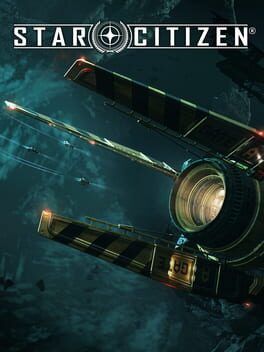

Star Citizen just crossed an unprecedented $1 billion in crowdfunding while selling a $5,000 ship you cannot fly yet. Here is how Cloud Imperium keeps players spending, why ultra-premium ships are so controversial, and whether this development model is still sustainable over a decade in.
Star Citizen has finally done it. According to Cloud Imperium Games’ own funding tracker, the long-in-development space sim has now pulled in over $1 billion in crowdfunding and direct player spending. No other game project comes close. This is not investor money or platform-holder backing, it is a decade-plus of pledges, ship sales and upgrades from players who are still buying into a project that is officially in alpha.
The timing of the milestone is telling. The counter ticked past $1 billion during a fresh in-game event and ship sale, headlined by the Anvil Odin, a capital-class warship that costs $5,000 and is not yet flyable in the live game. The fact that Star Citizen could hit ten-figure funding while selling what critics call a “$5,000 JPEG” sums up both the project’s astonishing pull and its most persistent controversies.
A billion-dollar crowdfunded MMO
Star Citizen began as a relatively traditional Kickstarter-style pitch back in 2012, with Chris Roberts promising a spiritual successor to Wing Commander and a massively detailed living universe. The original crowdfunding run raised a few million, impressive but not unheard of for the Kickstarter boom era. What sets Star Citizen apart is that the campaign essentially never ended.
CIG built its own funding portal, layered in pledge tiers and ship sales, and turned periodic events into revenue spikes. Over time the project shifted from a finite campaign into a live funding model that runs in parallel with live development. Thirteen years later that model has generated about $1 billion from a reported playerbase in the millions.
A key part of this is that the game has always been playable in some form. Star Citizen’s Persistent Universe, along with modules like Arena Commander and Star Marine, has been available for years, slowly accumulating systems like server meshing tech, new star systems, professions and visual upgrades. Supporters are not just pre-ordering a distant dream. They log in, join orgs, haul cargo, run bunkers and look forward to the next major patch that might finally fix that one bug they hate.
The result is a feedback loop that looks more like a live service MMO than a traditional pre-release crowdfunded title. Updates, events and roadmaps keep the community engaged, which feeds back into fresh waves of spending during every major sale.
How CIG keeps players spending this far in
Most games see their biggest revenue spike near launch. Star Citizen’s lifetime graph looks almost inverted. The longer it stays in development, the more elaborate its funding beats become, and the more money comes in. There are several reasons this still works in 2026.
First is the ship catalog itself. Star Citizen has turned ships into aspirational items with real emotional weight. These are not just skins. Each hull promises a specific role and fantasy, from solo exploration craft to industrial mining rigs to capital ships like the Odin intended to command fleets. For committed players who treat Star Citizen as a hobby rather than a one-off purchase, collecting ships becomes akin to assembling a high-end model collection.
Second is the cadence of in-game events. CIG’s annual Invictus Launch Week and Intergalactic Aerospace Expo function as digital trade shows. Players can test-fly ships, tour displays, watch in-universe military flyovers and, crucially, buy limited-time concept ships and warbonds. When the $1 billion milestone was crossed, reports show the funding tracker jumping by millions of dollars in the span of an hour as the Odin sale and event hype aligned.
Third is the layered ecosystem around the game. Subscriptions for extra content, concierge tiers for high spenders, physical merch and a steady flow of lore posts and dev diaries help frame Star Citizen as a living universe that people invest in over years. The project does not rely purely on new players discovering it. Instead, it leans on long-term backers who keep upgrading hangars, chasing new roles and “future-proofing” their fleets for whatever the game eventually becomes.
All of this is underpinned by the same core promise that has driven interest since 2012. Star Citizen wants to be the ultimate PC space sim, with a level of simulation and fidelity no one else is attempting. Players are not just buying a current alpha build, they are buying into a vision of a science-fiction life they hope to inhabit for years.
The $5,000 Odin and the ultra-premium ship controversy
The Anvil Odin capital ship crystallizes every discomfort people have with Star Citizen’s funding model. At $5,000, it is CIG’s most expensive ship concept yet. It is sold as a “concept pledge,” which in practical terms means players are spending real money on the promise of a ship that has concept art, writeups and a future gameplay role, but does not yet exist as a fully functional in-game vehicle.
To supporters and high-spending concierge backers, this is not inherently a problem. Many see themselves as patrons of the project, not customers chasing short-term value. For them, getting in on a flagship capital ship early is a badge of honor. They will tell you that every dollar helps fund server tech, Squadron 42 polish, and the long-term dream of a truly persistent universe.
Outside that circle, the optics are brutal. Selling a $5,000 virtual ship, unflyable at purchase, the same week you celebrate $1 billion in crowdfunding easily feeds the perception that Star Citizen is monetization-first. Critics argue that this crosses from enthusiastic crowdfunding into a kind of speculative digital luxury market, one that leans on FOMO and social status inside the community.
There is also a competitive question. Star Citizen is not a single-player-only experience. Ship capability matters in PvP and group PvE. CIG insists that everything sold for cash can, in theory, be earned in-game. But when the starting point is a capital ship that costs thousands of real-world dollars, accusations of pay-to-win or at least pay-for-advantage inevitably follow.
The Odin is not the first lightning rod here. Star Citizen has a long history of expensive ship packages, lifetime insurance perks and limited-time hulls that trigger arguments about class divides inside the community. But as the single most expensive ship yet, released at the precise moment the game crossed ten figures in funding, it feels like an escalation that has rekindled long-simmering debates.
A development cycle that refuses to end
Beyond the price tags, the billion-dollar milestone forces a harder question. How sustainable is a development cycle that never seems to end?
Star Citizen’s alpha has been playable for years, but the project’s original scope has long since exploded. Entire systems have been reworked multiple times. Technologies like server meshing and persistent entity streaming, which CIG positions as foundational to its future growth, have taken years to reach even partial implementation.
Meanwhile, Squadron 42, the single-player campaign starring an A-list cast, remains unreleased despite occasional progress updates and hints that it is nearing completion. For many early backers, Squadron 42 was the reason they pledged in the first place. The longer it remains out of reach, the more “future delivery” starts to feel like a permanent state.
Financially, though, the model has worked so far. CIG has repeatedly reported strong year-on-year revenue growth from player spending. The $1 billion figure reflects cumulative funding, not profit, but it is clear that Star Citizen is still adding enough new money each year to support a large, multi-studio team and ambitious tech goals.
The question is whether that can continue indefinitely. The longer Star Citizen stays in alpha, the more it relies on two fragile assumptions: that existing whales will keep spending at the same rate, and that new players will continue to accept a buy-in to an unfinished product.
Is this sustainable for Cloud Imperium Games?
For Cloud Imperium, the sustainability of the current model comes down to three fronts: community trust, content velocity and regulatory or platform pressure.
On the trust side, $1 billion is a double-edged milestone. It proves an extraordinary level of long-term commitment from backers, but it also raises expectations. With that much funding, the tolerance for missing features, technical instability and moving goalposts shrinks. The Odin sale has already prompted renewed scrutiny from outside observers who see a nearly decade-and-a-half project still selling non-functional luxury ships rather than shipping a complete game.
Content velocity might be the most immediate risk. The live alpha has improved, but progress still feels incremental for many players. If major features like full server meshing, additional star systems or Squadron 42’s launch do not land in a meaningful way soon, enthusiasm could cool. Star Citizen’s monetization is tightly tied to hype. Without big leaps in the live game, it becomes harder to justify new concept ships and pledge drives.
There is also a wider industry context. Regulators and platform holders have grown more skeptical of opaque monetization practices, especially around high-priced digital goods. Star Citizen currently sells through its own platform, which gives CIG more freedom than a typical Steam or console title, but the more news cycles focus on unflyable $5,000 ships, the more likely it becomes that consumer protection questions start to circle.
That said, CIG is not behaving like a studio that expects the funding to dry up tomorrow. Hiring continues across multiple locations. Infrastructure investments and tech roadmaps suggest a company planning for a long tail of development and live operations. In that sense, $1 billion is less a finish line and more a proof-of-concept for a funding model that the studio believes can bankroll a long-lived online universe.
What the $1 billion milestone really means for players
For players on the fence, the $1 billion figure and the Odin sale underline the reality of Star Citizen in 2026. This is not a typical game waiting for a neat 1.0 release. It is an ongoing project supported by a subset of players willing to pay far more than the usual $60 price of entry. If you jump in today with a basic starter pack, you are entering a world partly shaped by the expectations and purchasing power of those ultra-invested backers.
That comes with benefits. The funding has enabled a level of visual fidelity, cockpit detail and ship variety that would be hard to justify in a conventional boxed product. The ongoing revenue means CIG can keep experimenting with tech that might underpin the next decade of space sims.
It also comes with tradeoffs. Star Citizen’s economy, progression and social dynamics are deeply entwined with the presence of fleets that cost tens of thousands of dollars in aggregate. The sense that the game will always be “better next patch” can be exciting or exhausting depending on your tolerance for alpha churn.
The road ahead
The most important thing about Star Citizen crossing $1 billion is that it did so without a traditional release moment. No retail launch, no console debut, no marketing blitz around a finished product. The milestone happened in the middle of yet another ship sale, which implies that CIG believes it can keep this cycle going for years.
Whether that cycle is still sustainable will be answered less by funding counters and more by what actually ships next. If Squadron 42 finally lands and the Persistent Universe starts to feel like the robust sandbox originally promised, then Star Citizen’s strange, extended adolescence may be remembered as the cost of building something unique.
If, on the other hand, the pattern remains one of incremental patches punctuated by ever more expensive ships like the Odin, then $1 billion will start to look less like a triumph of community-backed ambition and more like a warning about how far perpetual crowdfunding can be stretched.
For now, Star Citizen sits at a crossroads. It has the money, the tech foundations and a fiercely committed community. What it needs next is to convert some of that billion-dollar promise into finished, concrete experiences that feel worthy of the decade-plus wait and the staggering amount of trust, and cash, that players have poured into the stars.