
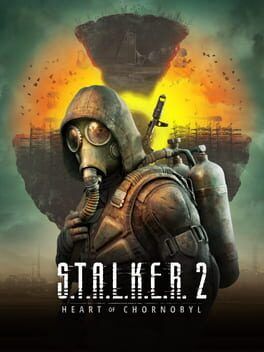

GSC Game World’s first major STALKER 2 expansion, Cost of Hope, pulls players back to the Chornobyl power plant, escalates the Freedom vs Duty conflict, and quietly lays out a long-term roadmap for the Zone.
STALKER 2: Heart of Chornobyl is barely out the door, but GSC Game World has already sketched the next chapter in the Zone’s future. Cost of Hope, the game’s first major story expansion, arrives this summer as a large, non linear add on that is pitched as dozens of hours of new content rather than a short epilogue.
For returning stalkers, the pitch is simple. You step back into the boots of Skif, but this isn’t a post credits victory lap. Cost of Hope runs parallel to the core campaign, branching off once you install the DLC and pick up a mysterious signal on your PDA. In practice that means the expansion is meant to be folded into an active save rather than treated as a separate side story. Your relationship to factions, your gear, and your sense of place in the Zone all carry forward into this new strand.
The headline promise is two new explorable regions, each treated as a full blown destination rather than a bolt on arena. The return of the Chornobyl Nuclear Power Plant looms largest, both as a lore touchstone and as a practical endgame space. For players who still remember creeping around the sarcophagus in the original STALKER, the idea of revisiting the plant with modern tech, new AI routines, and the expanded anomaly systems of Heart of Chornobyl is instantly compelling. GSC describes it as a full region, complete with its own hub, questlines, ambient activities, and bespoke rewards, not just a climactic corridor.
Alongside it is the Iron Forest, a name that suggests another of the Zone’s uneasy convergences of industry and decay. Details are thin, but framing it as a second major area indicates more than a quick dungeon crawl. Expect a space that stitches into the wider map, with its own routes, stalker camps, and trajectories for both combat and exploration. The promise of new weapons and gear tied to these regions hints at fresh build options, whether that means more specialized anomaly tools, exotic firearms, or armor tuned for the new threats around the plant.
Cost of Hope is not just new ground to pick clean, it is also the setting for one of STALKER’s oldest tensions to finally boil over. The long simmering rivalry between Freedom and Duty takes center stage here. Instead of treating those factions as background flavor, the expansion leans on their ideological clash as the spine of its story. You are still Skif, but your choices within that conflict are perched to carry real weight, both for the Zone and, according to GSC, for events beyond its borders.
That faction focus has clear gameplay implications. Freedom and Duty have always shaped encounter design and moment to moment tension, from who shoots at you at roadside checkpoints to who shows up when an anomaly field spits out a rare artifact. Putting their war at the heart of a major DLC suggests more dynamic patrols, shifting control over key areas, and questlines that change tone and outcome based on who you side with. It is easy to imagine an Iron Forest where firefights flare as frontline skirmishes, or a power plant interior where your chosen allies open some paths and permanently close others.
Because Cost of Hope plays out alongside the main story, it also hints at a more flexible structure for replays and late game saves. Rather than waiting for a New Game Plus style mode, players can fold this conflict into an ongoing run, pivoting their allegiances and testing different approaches to faction politics. GSC describes the expansion as non linear, a subtle but important signal that this is not one more straight shot of missions. Instead, it aims to provide branching tasks, optional detours, and multiple conclusions that sit comfortably within the web of choices that already define Heart of Chornobyl.
Framed this way, Cost of Hope looks less like a one off DLC and more like a statement of post launch intent. GSC has already called it the middle chapter of a second trilogy, with the base game serving as the opener and a later expansion planned as the finale. That language matters for players wondering how invested they should be in this first add on. If Heart of Chornobyl is the relaunch of STALKER as a modern open world shooter RPG, Cost of Hope is the test case for how that structure can sustain multi year storytelling.
In practical terms, that roadmap signals a future where returning to the Zone is not just about patch notes and balance passes. The first DLC brings back one of the series’ most iconic locations, layers in a full scale faction war, and offers at least two sizable new regions for veteran stalkers to inhabit. It suggests that future content will not be afraid to reinterpret or revisit key landmarks, all while pushing the narrative forward instead of quietly circling the same anomalies.
For players, the expectation to set is that Cost of Hope will be less about novelty for its own sake and more about deepening the rhythms that already define STALKER 2. That means more planned scavenging runs that tilt sideways when a blowout rolls in, more tense decisions at faction checkpoints, and more moments where the Zone feels like a living, unstable system rather than a static backdrop. The expansion will likely integrate best for those with half finished saves, a pile of unanswered radio messages, and a willingness to throw their lot in with one vision for the Zone’s future.
As a first step on the post launch road, Cost of Hope looks appropriately grim. It pulls the camera back to the Chornobyl power plant, asks you to pick a side in a war that has been brewing since the original games, and treats your route through its new areas as another thread in a much larger tapestry. If GSC can land that promise, this expansion will not just be more Zone, it will be the moment STALKER 2’s long term future starts to take shape.