
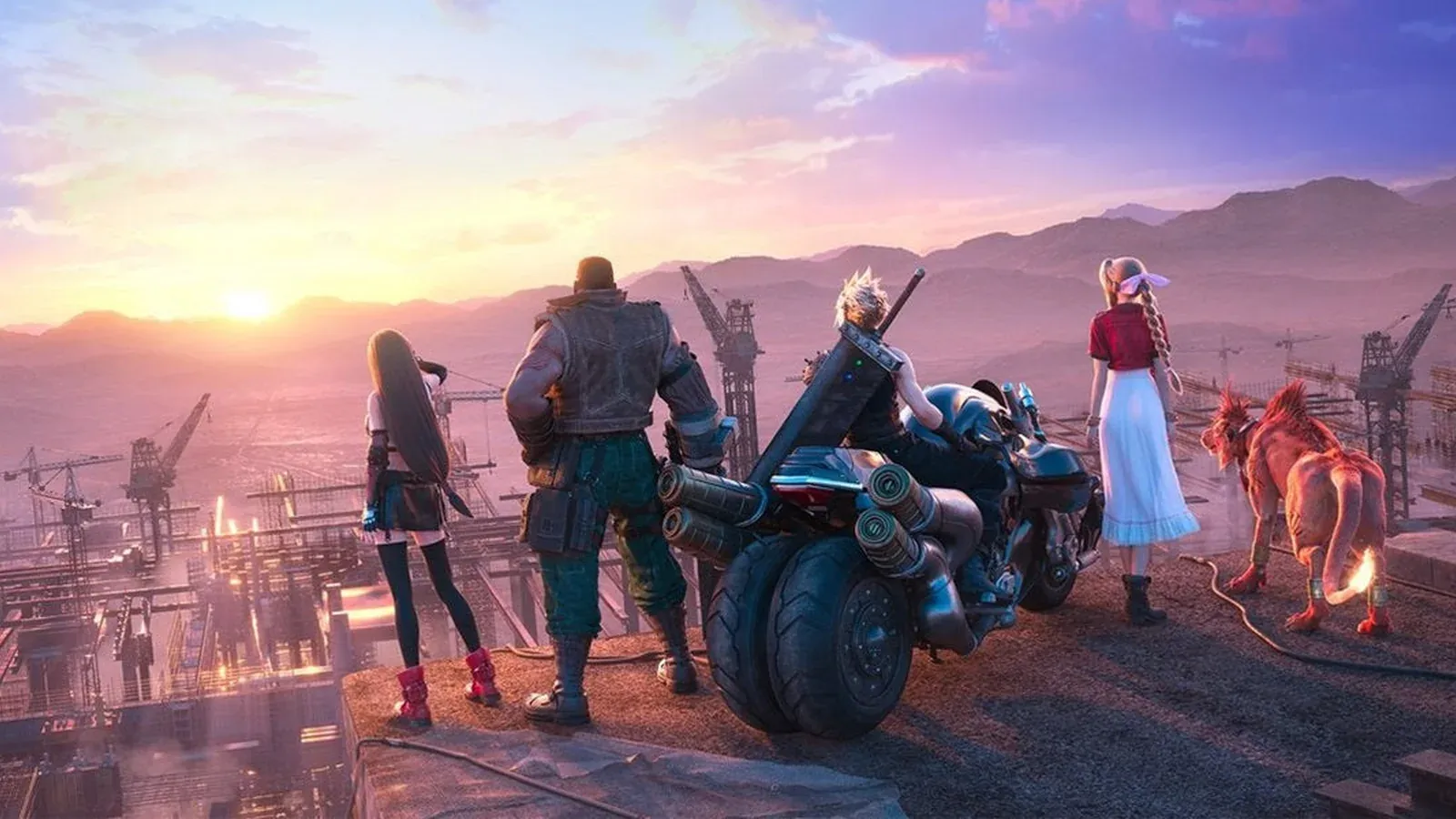

Square Enix raised its forecast after first-half earnings jumped, with digital game sales, catalog titles, and a broader platform push doing the heavy lifting.
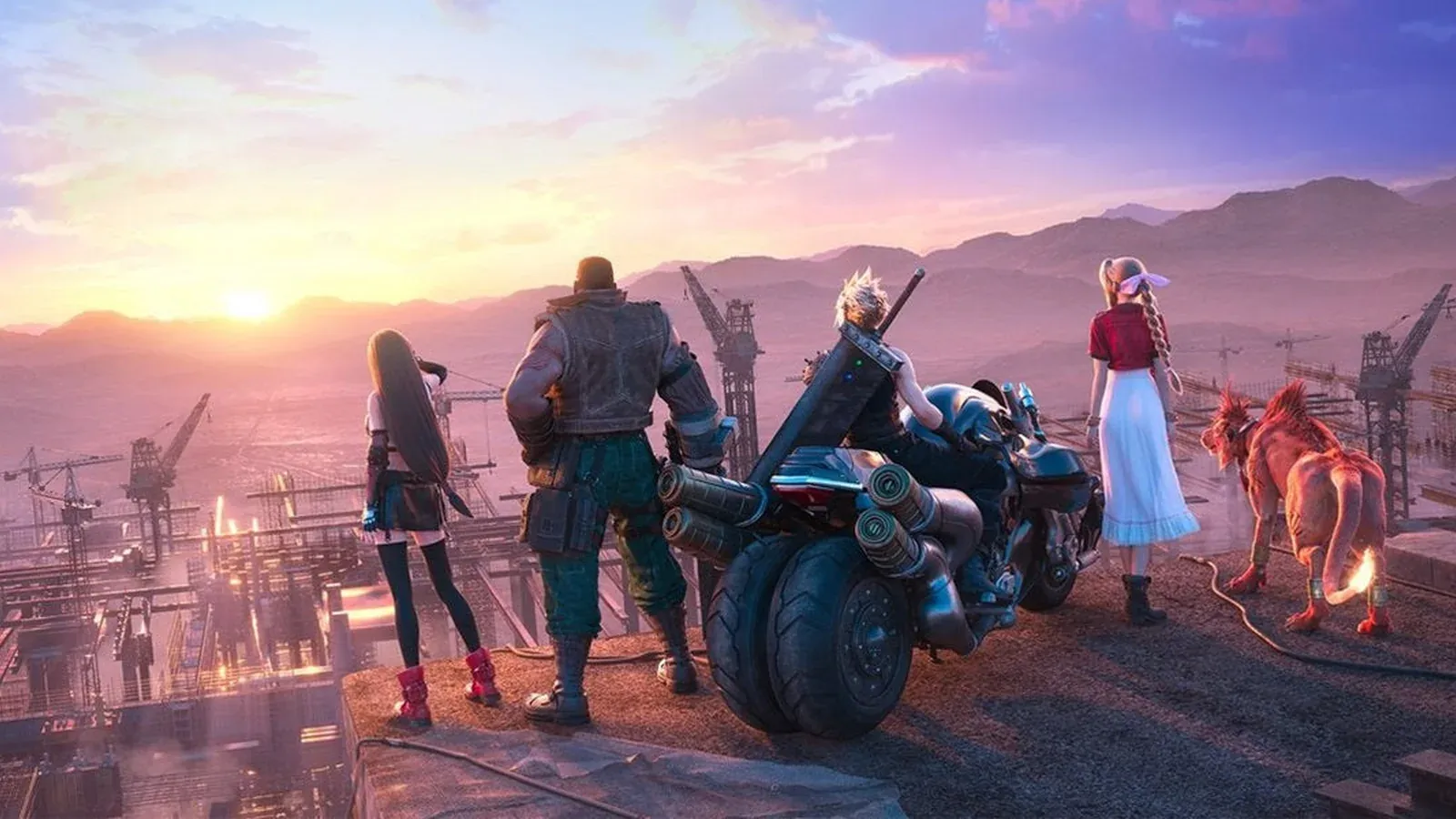
Image: techtroduce.com
Square Enix lifts its outlook, but the real story is the sales mix
Square Enix has raised its full-year forecast after a stronger first half, with the publisher now expecting ¥310 billion in net sales instead of its previous ¥298 billion forecast and ¥59 billion in operating income instead of ¥49 billion. That is the concrete change in the latest Square Enix financial results, and it comes with a sharper strategic signal: the company’s games business is doing better because digital sales, catalog titles, and broader platform availability are carrying more weight.
According to coverage of Square Enix’s results for the six months ending September 30, 2026, net sales rose 21.9% year over year to roughly ¥163.2 billion. Inven Global and Twisted Voxel, citing Square Enix’s earnings materials, report operating income of ¥38.8 billion, up 42.2%. Nintendo Life reports the same operating income figure as ¥38,793 million but lists the increase as 41.3%, so there is a small percentage discrepancy across reports even though the profit figure itself aligns closely. Inven Global and Twisted Voxel also report that profit attributable to owners of the parent nearly tripled to ¥28.6 billion, with Twisted Voxel putting the increase at 184.2%.
The tension is that this better Square Enix forecast is not being driven by boxed retail strength. In North America and Europe, Square Enix’s physical sales fell from 1.09 million units to 1.01 million, while digital sales rose from 5.83 million to 8.19 million, according to Nintendo Life, Push Square, and Inven Global. Globally, Inven Global reports that Square Enix sold 14.87 million units across HD and MMO games in the half, up from 9.93 million a year earlier, with downloads accounting for 13.35 million units. That puts digital at roughly 90% of reported HD and MMO unit sales, close to Nintendo Life’s figure of just over 89%.
The reset is showing up first in the Digital Entertainment segment
Nintendo Life frames the results as evidence that Square Enix’s “big reset” is working, but the source material available here does not lay out every element of that internal reset strategy. What the earnings coverage does show is where the rebound is appearing: Digital Entertainment, the segment that contains Square Enix’s games business, is the engine behind the stronger outlook.
Inven Global reports that Digital Entertainment sales rose 33.7% to ¥97.7 billion, while operating income in the segment increased 63.5% to ¥32.9 billion. Twisted Voxel reports the same segment figures. Within that, HD Games, Square Enix’s console and PC category, grew from ¥24.0 billion in sales a year earlier to ¥35.6 billion, while operating income more than doubled from ¥5.0 billion to ¥13.0 billion.
Square Enix credited new releases including Final Fantasy VII Rebirth on Nintendo Switch 2, Xbox Series X|S, and Windows, along with The Adventures of Elliot: The Millennium Tales, according to Inven Global and Twisted Voxel. Both outlets also report that previously released games contributed to the improvement. That last point is important for understanding the current Square Enix earnings 2026 picture. The publisher is not depending only on a single launch spike. The half-year result includes ports, new releases, and back catalog demand working together.
Digital sales are not replacing a healthy physical business, they are expanding the addressable market
The headline number in the Square Enix digital sales story is the download share. Push Square reports that 89% of Square Enix’s sales over the six-month period were digital. Inven Global’s figures put downloads at 13.35 million of 14.87 million combined HD and MMO units, which is about 90%. Physical units, by contrast, totaled 1.52 million globally, according to Twisted Voxel, with North America and Europe at 1.01 million physical units.
There is a risk of reading that as a simple death-of-physical story, but the numbers are more specific. In North America and Europe, physical sales declined from 1.09 million to 1.01 million, a drop, but not a collapse. The much larger movement came from downloads rising from 5.83 million to 8.19 million. On the available figures, Square Enix’s first-half unit growth came from digital expansion rather than from physical retail falling off a cliff.
That distinction matters for the Square Enix reset strategy. A publisher with a deep RPG catalog benefits when older titles keep selling digitally, because digital storefronts keep games available without the same retail shelf constraints. Twisted Voxel reports that catalog titles generated about 12.59 million unit sales, up from 8.48 million in the prior year. If that pattern continues, Square Enix’s earnings become less dependent on one launch window and more dependent on how well the company packages, discounts, ports, and promotes its existing library across active platforms.
The source material does not provide pricing data, discount depth, or storefront-by-storefront breakdowns, so it would be premature to say exactly how much of the surge came from promotions. What can be said from the reported results is that Square Enix’s download base is now large enough to move the company’s annual forecast.
Rebirth’s wider release is the clearest test case
Final Fantasy VII Rebirth is named repeatedly in coverage of the earnings as a contributor to the stronger first half. Inven Global says Square Enix credited Rebirth on Nintendo Switch 2, Xbox Series X|S, and Windows. Push Square similarly points to healthy numbers for Rebirth’s Nintendo Switch 2 and Xbox ports. That gives the publisher a practical case study for a strategy that is less tied to one platform window and more focused on widening access over time.
Push Square adds a useful bit of context, reporting that Final Fantasy VII Rebirth could not come close to matching Final Fantasy VII Remake’s initial sales. That makes the newer ports especially relevant. If the original launch underperformed expectations, then the later expansion to additional platforms becomes part of how Square Enix can recover value from a very expensive flagship project.
From a strategy angle, this is the RPG equivalent of changing the matchup after the first round. Square Enix is not only counting on a bigger opening weekend. It is trying to keep the game alive through platform additions and long-tail digital demand. The reported rise in catalog sales supports that approach, but it also creates a higher bar for the next slate. If digital reach is now central to the business model, future releases need to arrive with fewer platform gaps, clearer upgrade paths, and strong storefront visibility.
The next slate will show whether the reset has staying power
Square Enix’s upcoming lineup gives investors and players three major checkpoints. Twisted Voxel reports that Dragon Quest Monsters: The Withered World is scheduled for December 2026. Inven Global reports that Square Enix’s results presentation lists Final Fantasy XIV: Evercold for February 23, 2027. Nintendo Life and Push Square both report that Final Fantasy VII Revelation is set for April 8, 2027.
The Revelation launch is the one most directly tied to the platform question. Nintendo Life reports that, unlike the previous two entries, the Switch 2 version of Final Fantasy VII Revelation will launch day and date alongside all other platforms. Push Square describes Revelation as the first game in the trilogy to release on multiple platforms. If accurate to Square Enix’s own presentation, that makes Revelation a cleaner test of the publisher’s new release logic than Rebirth, which is currently being cited for later platform sales.
Final Fantasy XIV: Evercold is a different kind of test. Inven Global reports that Square Enix attributed MMO revenue growth, from ¥19.9 billion to ¥25.7 billion, to higher player activity after announcing the next Final Fantasy XIV expansion. That suggests Evercold is already having a measurable effect before release, at least in the form of renewed activity around the MMO business. The question for the next earnings cycle is whether that activity converts into expansion sales and sustained subscriptions after February 23.
The Adventures of Elliot: The Millennium Tales also matters because it was cited alongside Rebirth as a contributor to the HD Games improvement. The available source material does not provide a unit breakdown for Elliot, so it is impossible to separate its exact impact. Still, its presence in Square Enix’s explanation indicates that the publisher’s first-half strength was not exclusively a Final Fantasy story.
What readers should watch before the next Square Enix financial results
For players, the practical takeaway is that Square Enix’s business incentives are now visibly aligned with digital availability. The company’s reported unit mix strongly favors downloads, and its improved forecast follows stronger digital performance, catalog demand, and wider platform releases. That does not mean physical games are gone, but the reported numbers show boxed sales as a shrinking minority of the business.
If you are deciding whether to buy now or wait, the source material supports one cautious conclusion: Square Enix’s older games are clearly important to its current performance, but the reports do not provide enough pricing detail to recommend waiting for any specific sale. For physical collectors, the key watchpoint is availability and format for upcoming releases, because the earnings coverage shows lower physical volume but does not detail cartridge or disc contents, print runs, or regional editions.
For anyone tracking the Square Enix forecast, the next meaningful signals are straightforward. Watch whether Dragon Quest Monsters: The Withered World adds to the December quarter, whether Final Fantasy XIV: Evercold sustains the MMO rebound after February 23, and whether Final Fantasy VII Revelation benefits from launching across platforms on April 8 rather than expanding later. The first half shows that Square Enix can generate stronger profit when digital units, catalog sales, and platform reach line up. The next slate will tell us whether that was a well-timed surge or the start of a more durable reset.