
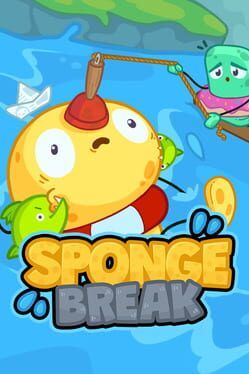

Goose Byte Games and Balor Games have revealed Sponge Break, a 1-4 player indie co-op game about sponges, plungers, fragile rafts, and physics-driven teamwork.
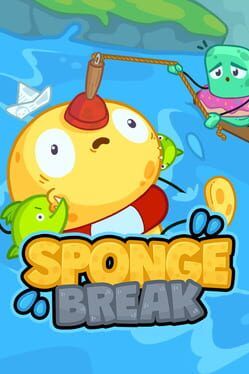
Image: IGDB
Store links: Sponge Break on Steam
A fragile raft, four sponges, and one very loud escape plan
Goose Byte Games and Balor Games have revealed Sponge Break, a 1-4 player co-op rafting adventure about sponges trying to escape the kitchen sink on a raft that sounds barely qualified to float. Console Creatures, MonsterVine, and GamersHeroes all reported the reveal on July 7, with the developers opening an invite-only Sponge Break playtest the same day through the game’s Firstlook signup page.
The concrete hook is wonderfully small and immediately readable: you are a sponge, the river wants you gone, and your team has to keep a fragile raft alive long enough to reach safety. According to MonsterVine, the raft can flip, break apart, and scatter supplies after a bad move. Console Creatures adds that one mistake can scatter gear, deal damage, and quickly end an escape run.
That gives Sponge Break a sharper identity than the phrase “co-op rafting game” might suggest. This is not being pitched in the reveal coverage as a slow base-building ocean sim. The raft is a shared liability. Everyone stands on the same bad decision at once.
What players actually do together in Sponge Break
The reveal materials describe Sponge Break as a multiplayer adventure game built around messy coordination. Each player has a plunger-hook, which MonsterVine says can grab objects, pull supplies, and help the crew survive. Console Creatures frames the plunger-hook as the main tool for escape, used while the team steers the raft, solves puzzles, navigates environmental dangers, avoids being set on fire, and fights beavers.
That set of verbs matters. Sponge Break appears to put co-op pressure on moment-to-moment physical interaction rather than long-term optimization. Players are not simply assigning jobs in a menu or splitting chores at a camp. They are grabbing, pulling, steering, recovering gear, and reacting to a raft that may betray them after one sloppy turn.
The safehouse structure gives that chaos a readable loop. Both Console Creatures and MonsterVine report that players travel through areas such as sewers, rivers, abandoned facilities, and other hazardous locations, then regroup at safehouses between runs. Those safehouses are described as places to patch up, revive, restock, and, in Console Creatures’ words, argue before setting sail again. The joke lands because the design already sounds like it will generate blame.
The physics hook could be the whole game, if it has teeth
Sponge Break’s most promising design signal is its emphasis on physics-driven traversal, which GamersHeroes and MonsterVine both cite in their reveal coverage. Physics in co-op games can be a magic trick or a liability. When tuned well, it creates stories players could never script: a supply crate yanked at the wrong angle, a rescue that turns into a wipe, a heroic plunger shot that saves the raft by accident. When tuned poorly, it becomes input mush with jokes attached.
The reveal gives a few reasons to be optimistic, while stopping short of proving anything. A raft that can flip and scatter supplies gives the physics system consequences. A plunger-hook gives players a direct way to affect the world. Hazards such as fire, environmental obstacles, puzzles, and beavers suggest the river is meant to push teams into improvisation rather than let them drift between slapstick set pieces.
For indie co-op fans, that distinction is the appeal. Sponge Break does not need the largest world or deepest crafting tree if the raft itself becomes a reliable comedy machine. The question for the playtest is whether the chaos feels readable enough to master. Great co-op panic works best when failure feels earned, then funny, then fixable on the next run.
Voice chat is part of the character design
One of Sponge Break’s stranger and smarter touches is its proximity voice chat with lip-syncing sponge characters. Console Creatures says the proximity system is “hilariously lip-synced” from players’ microphones to their sponges, while MonsterVine reports that the sponge characters react as players yell directions, panic, or blame one another.
That is a small cosmetic flourish with real multiplayer implications. Proximity chat already changes how teams behave, especially when separation, noise, and panic are part of the scenario. Pairing it with lip-syncing avatars turns communication into animation. Your sponge is not a silent cursor with a headset behind it. It becomes a goofy little witness to every rushed callout and bad accusation.
MonsterVine also reports that Sponge Break includes more than 100 cosmetic options, covering eyes, eyebrows, mouths, hats, inflatable buoys, plungers, and emotes. Customization is common in co-op games, but here it supports the same central idea as the lip-syncing: the team’s failure should be legible, expressive, and personal. If players are going to lose a run because someone steered into a hazard, it helps if the guilty sponge is wearing a ridiculous hat.
A rafting game looking past survival crafting
The rafting space is strongly associated with survival crafting, which makes Sponge Break’s reveal angle worth separating from the genre shorthand. The Google Play listing for Raft® Multiplayer: Survival, for example, advertises a sandbox MMO RPG built around collecting resources, crafting tools, expanding a floating base, building storage, and communicating with other survivors. Roblox’s Raft 101 Survival listing similarly tells players to build a raft with friends and survive for 101 days.
Sponge Break is being introduced with different priorities. The developers and reveal coverage focus on a fragile shared vehicle, drop-in co-op, full solo play, proximity chat, physics traversal, puzzles, hazards, and escape runs between safehouses. The raft is transportation and lifeline, according to MonsterVine, with a shared stash of loot that can be lost when steering goes wrong.
That gives Sponge Break a lane for players who like the social friction of co-op survival games but bounce off resource grind or base expansion. The appeal here is immediate coordination: who grabs the supply, who steers, who saves the teammate, who caused the raft to flip. If the final game leans into that clean loop, Sponge Break could sit closer to the school of chaotic indie co-op than the survival-crafting treadmill.
Playtest timing, confirmed features, and the missing launch details
The practical news is that players can try for access now. GamersHeroes reports that the Sponge Break playtest is invite-only and live through July 28, with signups available through the official Sponge Break Firstlook page. Console Creatures says the playtest is running in waves until July 28, which means signing up does not necessarily guarantee immediate entry.
Confirmed feature claims from the reveal coverage include 1-4 player support, drop-in co-op, full solo support, proximity voice chat, lip-syncing sponges, physics-driven raft traversal, the plunger-hook, safehouses between runs, environmental hazards, puzzles, fires, beavers, and more than 100 cosmetic options. Those details come from the outlets’ reporting on the reveal and, in GamersHeroes’ case, a cited press release and Goose Byte social posts.
Several buyer-relevant details remain unannounced in the provided source material. There is no confirmed release date, price, platform list, PC store page, console plan, crossplay information, local co-op confirmation, or system requirements in the supplied reveal coverage. That is normal at the first-reveal stage, but it should temper expectations. For now, Sponge Break is best treated as an indie co-op game to watch, or to sample through the playtest if invited, rather than a product with a clear launch window.
The strongest reason to pay attention is also the simplest: Sponge Break has a mechanical premise that can be understood in one sentence and tested in one bad turn. Four sponges, one raft, a river full of problems, and a plunger-hook that might save the run or make the argument louder. For co-op players hungry for a new kind of shared disaster, that is a sturdy reveal, even if the raft itself is anything but.