
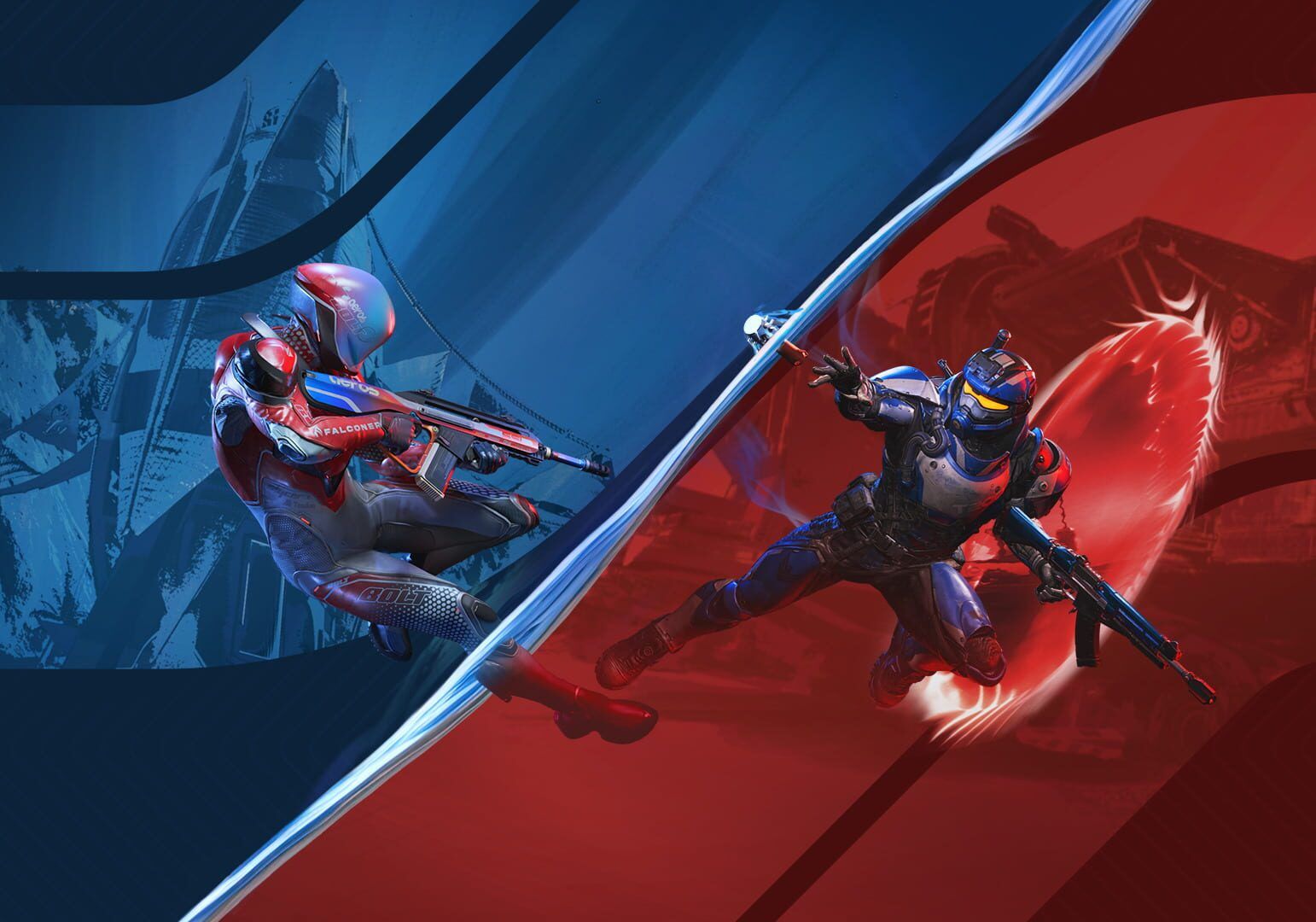
Looking at Splitgate: Arena Reloaded’s shaky relaunch through the Steam player-count discourse, what 1047 Games actually meant by “Steam charts don’t measure fun,” how its current numbers stack up against past peaks, and which metrics really matter for a free-to-play arena shooter in 2026.
When Splitgate: Arena Reloaded quietly re‑emerged in December 2025, the conversation around it had little to do with portals, time‑to‑kill, or map design. Instead, screenshots of SteamDB graphs did the rounds on social media, held up as proof that the relaunch had already failed.
On paper, the numbers look bleak. According to SteamDB and other public trackers, Arena Reloaded’s Steam relaunch peaked at just under 2,300 concurrent players, then settled into the high hundreds soon after. That is a sharp contrast to the steam‑blowing launch of Splitgate 2 earlier in June 2025, which briefly pulled in nearly 26,000 concurrent players on Valve’s platform.
In response to the spiraling discourse, 1047 Games fired back with a simple line that instantly became a headline: “Steam charts don’t measure fun.” Underneath the defensiveness, though, is a question that matters far beyond this one game. For a free‑to‑play arena shooter trying to survive in 2026, what should we actually be looking at, and what do Splitgate’s numbers really mean?
What 1047 Games actually said about Steam charts
After players began sharing SteamDB screenshots and Reddit threads titled along the lines of “the relaunch is already dead,” 1047 Games published a statement on X that several outlets, including GameSpot, PC Gamer, IGN and GamesRadar, picked up.
The message boiled down to three key points.
First, Steam stats represent a thin slice of the audience. Splitgate: Arena Reloaded is free‑to‑play on PC (Steam and Epic Games Store) as well as on PlayStation and Xbox. SteamCharts and SteamDB expose only one storefront and only one platform. Console concurrency, Epic’s numbers, and crossplay behavior are all invisible to armchair analysts. From 1047’s point of view, getting roasted for a single public graph ignores the full picture of who is actually playing.
Second, concurrency snapshots are about timing as much as popularity. The studio argued that “one number at one moment in time” is a poor stand‑in for the health of a live game. A midnight content drop, a regional event, or even a YouTuber stream can temporarily spike or crater a chart. Arena Reloaded launched in a crowded holiday window and in the shadow of its own troubled history. Using that first weekend’s PC peak as a permanent verdict was, in 1047’s eyes, more about vibes than data.
Third, charts do not reflect the quality of the experience. This is the “don’t measure fun” part. 1047 used the statement to stress how much work went into the relaunch: a rebuilt progression system, overhauled and new maps, systemic tweaks derived from Splitgate 2’s beta, and heavy community‑driven iteration. The team insisted that the gunplay and portaling are “the best they’ve ever been” and that players who actually queue into matches are having a good time and actively shaping the roadmap, including the upcoming Arena Royale mode.
Taken together, the statement was less a denial that PC numbers are low and more an attempt to reframe the public scoreboard. The studio wanted the conversation to pivot from Steam charts to in‑game experience and long‑term plans.
How today’s Splitgate compares to its own peaks
To understand why Steam graphs became such a lightning rod, you have to look at where Splitgate has been.
On Steam alone, Splitgate: Arena Reloaded’s relaunch has so far topped out at just under 2,300 concurrent players. That is modest even within the niche of arena shooters, and worryingly low for a game that depends on healthy matchmaking pools.
Compare that with two previous data points in the franchise’s short but chaotic life:
Splitgate 2’s initial launch in June 2025 hit nearly 26,000 concurrent players on Steam. That spike reflected both years of goodwill built up by the original Splitgate and genuine curiosity around a sequel that promised a bigger, cleaner, more modern take on the portal‑meets‑Halo formula.
The same SteamDB page now lists an all‑time peak for the Splitgate 2 / Arena Reloaded app ID of over 25,000 concurrent players. That figure bundles together the original June launch and the traffic around the “unlaunch” and later rebranding, but it underlines how high interest once was compared to the sub‑2,500 peaks of Arena Reloaded’s second chance.
Zooming out further, veteran fans remember when the first Splitgate briefly broke into the tens of thousands during its own breakout moment, aided by console launches and crossplay. That early rush convinced many players and pundits that there was room for a dedicated arena shooter in the modern FPS ecosystem.
Taken in that context, Arena Reloaded’s Steam relaunch feels like a dramatic comedown. The audience that once tried Splitgate in droves has not returned in the same force, at least not on PC. That is the backdrop for the “Steam charts don’t measure fun” line and why it was immediately read by some as spin rather than nuance.
Yet the raw comparison also ignores one crucial detail: peaks are not the same as sustainability.
Splitgate 2’s 26,000 concurrent spike did not translate into a stable population or strong revenue. Within a month, the sequel was pushed back into beta, layoffs hit 1047 Games, servers for both the original Splitgate and the sequel went down, and the project was retooled into what would become Arena Reloaded. In other words, higher peaks did not save the game from crisis.
Arena Reloaded’s problem is different. Instead of a big spike that burns out, it is struggling to convince people to give it another shot at all.
Why the community still fixates on Steam numbers
If Steam charts are such a narrow window, why does the community care so much about them?
Part of it is simple accessibility. SteamDB and SteamCharts give instant, public, third‑party numbers. There are no equivalents for Xbox, PlayStation, or the Epic Games Store. When players want to know whether a live service game has a future, that little green graph is often the only concrete data they have.
For a multiplayer shooter, concurrency numbers are also directly tied to player experience. Low peaks suggest longer queue times, thinner regional matchmaking, and higher odds of being funneled into the same few modes or maps. A player deciding whether to invest time into a free‑to‑play game does not want to risk falling in love with a shooter that becomes unplayable six months later.
Finally, there is a trust issue specific to Splitgate. The franchise has already gone through a series of hard resets: an original game that quietly faded, a sequel that spiked then slipped back into beta, servers that were switched off, and a relaunch that arrived under a new subtitle. For some fans, SteamDB graphs act as a kind of emotional hedge. They want numerical reassurance that this time is different before committing again.
From that point of view, 1047’s messaging clashes with what players can see. When the studio tells people not to worry about charts while those same charts show sub‑1,000 player peaks on the most transparent platform, skepticism is inevitable.
What actually matters for a free‑to‑play arena shooter in 2026
Still, 1047 is right about one thing. Steam charts on their own are a crude way to judge the health of a free‑to‑play game, especially a crossplay shooter. The numbers are part of the story, but not the whole story.
Several other metrics quietly determine whether a project like Splitgate: Arena Reloaded has any chance of surviving.
The first is daily active users across all platforms. Internal DAU is the most important “hidden stat” for a live shooter. A game can limp along on low thousands of concurrent players on Steam if it has a much larger console audience filling queues behind the scenes. With crossplay enabled, what ultimately matters is total bodies in the matchmaking pool and how they are distributed by region and mode.
The second is retention. Do players come back tomorrow, next week, next month? For a free‑to‑play title, keeping people engaged is more important than pulling massive launch peaks. Splitgate 2’s trajectory is a warning here: tens of thousands tried it at release, but not enough stuck around. Arena Reloaded’s revamped progression, new maps, and upcoming Arena Royale are all explicitly designed to improve retention by giving players a clearer sense of long‑term goals and variety.
The third is conversion and monetization. Free‑to‑play arena shooters live or die on how many regular players spend money on cosmetics, battle passes, and bundles. A game with 5,000 passionate spenders can be healthier than one with 50,000 occasional tourists. This is the part of the business that Steam charts cannot show at all and that 1047 is likely watching obsessively behind closed doors.
The fourth is matchmaking health. Even at modest scale, smart matchmaking and smart scheduling can make a game feel more alive than its numbers suggest. If 1047 can keep queue times under a minute in core regions, fill lobbies with reasonably balanced players, and avoid too many empty playlists, Arena Reloaded can deliver a surprisingly robust experience to the people who are actually there.
Finally, there is content cadence and sentiment. The studio’s promise of an evolving roadmap, including Arena Royale and further balance passes, is a bid to change the narrative from “low on Steam” to “worth checking in on.” Regular drops of modes, maps, and cosmetics, coupled with clear communication about what is coming next, can gradually rebuild trust and maybe even lure back players burnt by previous resets.
All of these factors exist below the surface of the green line on SteamDB, but together they are what make or break a free‑to‑play shooter.
Can Splitgate change the story again?
Splitgate’s core idea remains strong. The mash‑up of tight arena shooting with quick‑thinking portal gunplay still produces clips that no other FPS can quite replicate. That uniqueness is why the franchise keeps getting second chances even after brutal downturns.
The challenge for Arena Reloaded is no longer proving that portals in an arena shooter are fun. It is convincing enough people to believe the game will still be there six or twelve months from now to justify learning its maps, its angles, and its muscle memory all over again.
In that light, the “Steam charts don’t measure fun” line is less of a mic drop and more of a plea. 1047 Games is asking players to judge the relaunch on how it feels in‑game today rather than on what a single PC graph suggests about tomorrow.
But for anyone who lived through Splitgate’s previous boom and bust cycles, the answer is not either/or. Fun and numbers are intertwined. If Arena Reloaded truly offers the best version of Splitgate yet, the only long‑term proof will be a slow, stubborn climb in the very charts the studio wants people to ignore, backed by players who keep queuing even when the graphs are not pretty.
Until then, the argument around Splitgate’s future will keep playing out in two places at once: in the tight corridors and wide sightlines of its arenas, and in that little green line that everyone keeps refreshing.