

How Splitgate: Arena Reloaded strips out heroes, doubles down on portals, rethinks monetization, and what it must nail at launch to stand out against XDefiant, Valorant, and classic arena legends.
A Do-Over For A Portal FPS With An Identity Crisis
Splitgate 2 launched trying to be everything at once: a bit of Call of Duty scale, a bit of hero shooter structure, layered progression, busy UI, and a portal system that sometimes felt like an accessory instead of the star. Within weeks it was shoved back into beta as 1047 Games admitted the obvious: players wanted something closer to the original Splitgate’s lean, readable arena chaos.
Splitgate: Arena Reloaded is the studio’s public do-over. It keeps the sequel’s tech and lessons, but re-centers the entire game on what made the first Splitgate click: tight 4v4 arenas, mirrored map control, and a portal system that lets the smartest player, not the loudest gun, dominate the lobby.
From Splitgate 2 To Arena Reloaded: What Actually Changed
Arena Reloaded is not just a rename. Under the hood it is a rollback of Splitgate 2’s most divisive ideas and a sharpening of everything that still worked.
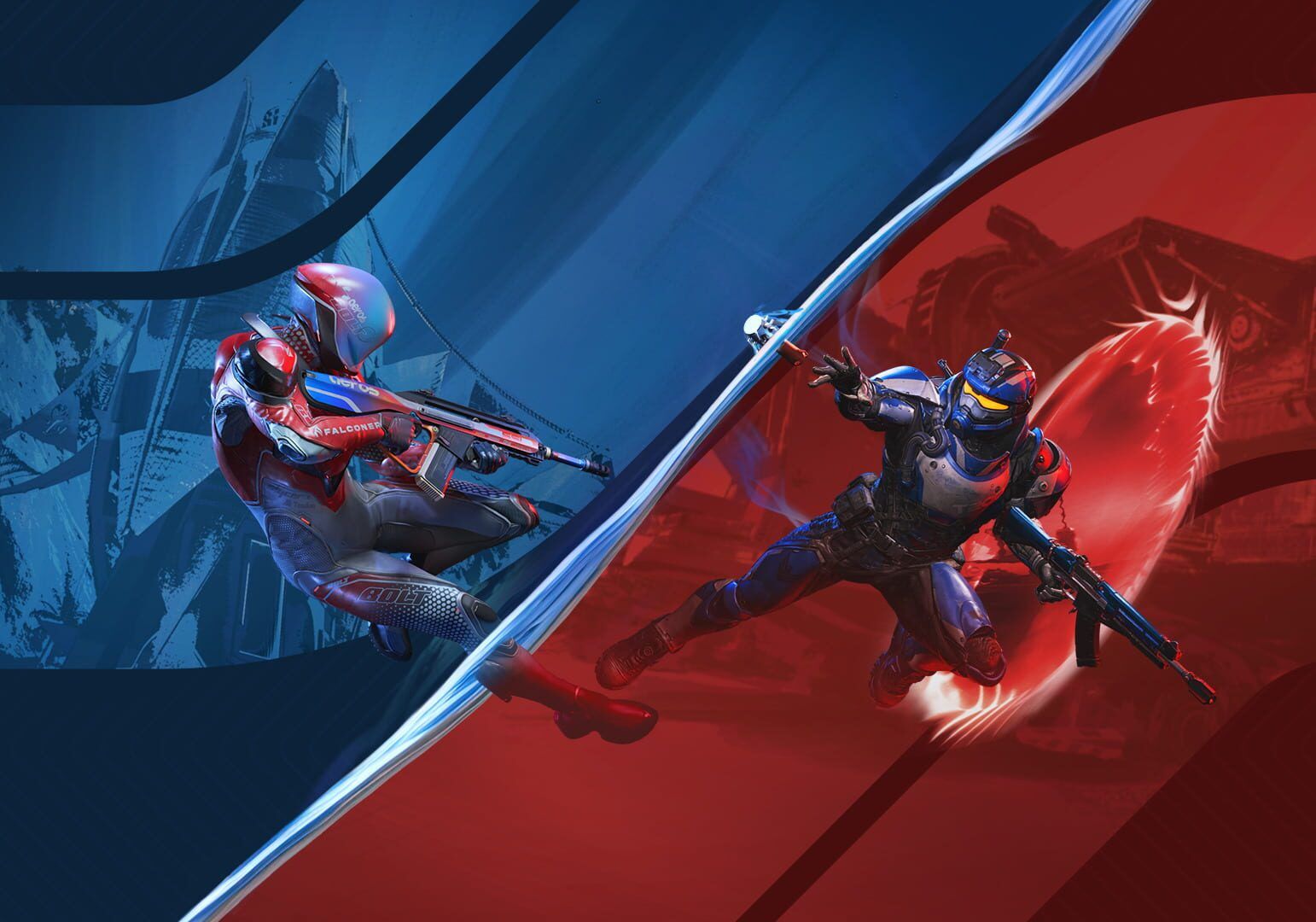
The biggest shift is structural. Splitgate 2 layered on factions, hero-style loadouts, and ability-driven power spikes that pulled the game toward Overwatch and Apex Legends. Arena Reloaded strips that away. No heroes, no character abilities, no asymmetrical kits. Every player spawns as the same Spartan-style soldier with the same baseline tools, and the only real edge now comes from movement, aim, and how well you bend space with portals.
Map design follows the same philosophy. Splitgate 2 flirted with larger modes and spaces that felt closer to modern combined-arms shooters. Arena Reloaded doubles back to classic arena footprints: readable sightlines, mirrored lanes, and power positions that become contests rather than one-sided camping spots. 1047 is shipping a mix of new and reworked maps, several of which have been rebuilt to emphasize portal walls and multi-level rotation paths instead of long, flat corridors.
The weapon sandbox has been trimmed and tuned around this smaller stage. New primaries and a reworked set of power weapons, including a headline railgun, are designed to behave more like old-school arena staples. Time-to-kill is long enough that outmaneuvering an opponent through portals actually matters, but short enough that running a bad angle into a sniper lane is still instant regret.
Even the UI and presentation have been pared back. Menus that once felt like a live-service store front are being simplified, and playlist selection is clearer about what you are actually queueing for. The studio’s own messaging is direct: this is “arena first.” Everything else is secondary.
Portals As A Skill Ceiling, Not A Gimmick
The original Splitgate earned its audience by posing a simple question: what if Halo’s sandbox happened on top of Portal’s spatial nonsense? Arena Reloaded is doubling down on that premise instead of hiding it behind hero kits and overloaded modes.
Portals are once again the backbone of every fight. Competitive modes are tuned so that smart portal usage gives tangible advantage. You can create unpredictable off-angles, chain flanks between upper and lower levels, or snap into power positions seconds faster than someone trying to sprint the old-fashioned way.
Crucially, 1047 is attentive to how portals affect readability. Too many portals and every engagement turns into visual noise. Too few and you may as well be playing another Quake-inspired shooter. Beta tests have focused on portal wall placement, portal recharge timings, and visibility so that they feel powerful without turning matches into instant-delete peek wars.
In a good Arena Reloaded match, your decisions look a lot like classic Quake or Halo: rotate quickly to power weapon spawns, coordinate angles with your duo, trade control of high ground. The difference is that you teleport into those rotations instead of strafing around them. The best players are the ones who turn the map into a three-dimensional puzzle where every wall can become an ambush route or an escape hatch.
A Tighter Arena Identity: Modes And Competitive Focus
To reach the level of recognition enjoyed by Valorant or even XDefiant, Splitgate cannot afford to feel scattered. Arena Reloaded’s mode slate reflects that.
The core of the game is small-team arena combat, mostly 4v4, built around even starts and map control. A Classic Arena playlist gives everyone the same loadouts and leaves the real differentiation to weapon pickups and portaling routes. This is the mode meant to evoke Quake duel energy and Halo’s early ranked ladders, where map knowledge and timing trump unlock trees.
Alongside Classic Arena, 1047 is leaning into curated competitive playlists instead of a mishmash of experimental templates. Ranked has been reworked into a more transparent climb with clearer rewards and progression beats. The goal is less about chasing a seasonal engagement graph and more about letting players understand why they won, why they lost, and what to fix.
Party modes and casual queues still exist for off-meta play, but the studio is sensibly marketing them as side dishes instead of the main meal. If Arena Reloaded is going to make a dent in a world that already has Valorant for tactical heads and XDefiant for casual arcade chaos, it needs to be the portal-based arena game that knows what it is the second you hit matchmaking.
Fixing The Money Problem: Monetization And Progression
Splitgate 2’s aggressive, confusing monetization was one of the biggest points of friction at launch. Battle passes layered on top of multiple currencies and cosmetic bundles, combined with high sticker prices, made the store feel hostile even before you fired a shot.
Arena Reloaded keeps the free-to-play model but attempts to cleanly separate performance from payments. The store has been rebuilt with clearer pricing, cheaper bundles, and a narrower focus on cosmetics that do not affect gameplay. Battle pass structure is being simplified so it is obvious what you will unlock, how long it will take, and whether you can reasonably complete it within a season without treating Splitgate as a second job.
Progression is also being reframed. Instead of tying your sense of growth to unlocks that can subtly affect balance, 1047 is channeling most of the grind into cosmetic ladders, mastery tracks, and ranked milestones. That is closer to Valorant’s approach, where your wallet decides how flashy your weapon looks but has zero say over recoil or damage profiles.
This is a crucial pivot if Splitgate wants to be mentioned in the same breath as the arena classics it idolizes. The genre’s best stories are about players who climbed on skill alone, not because they spent more on a meta-defining blueprint.
How It Stacks Up Against XDefiant, Valorant, And The Arena Greats
Arena Reloaded’s competition is cutthroat. XDefiant offers casual-friendly arcade gunplay with recognizable factions and instant readability. Valorant owns the tactical, team-based corner of the market. Classic arena shooters like Quake Champions and Halo Infinite still have small but committed cores.
To justify its space, Splitgate has to lean into being the only shooter where reading geometry is as important as reading crosshair placement. Portals create a match flow that neither tactical shooters nor lane-heavy arcade titles can replicate. The trick is preventing that uniqueness from becoming an onboarding nightmare.
Onboarding is where Valorant quietly excels through curated intro missions, agent recommendations, and clear attack/defense structures. Arena Reloaded needs its own version of that for portal literacy. New players must learn basic portal routes, counter-portal tactics, and common map tricks in controlled spaces before they are thrown into live matches where veterans bunny-hop through six years of muscle memory.
If 1047 can blend the intuitive aim-and-move feel of Halo with the quick execution puzzles of Portal, then Splitgate can carve out a role as the “highlights game” that constantly feeds social media with absurd cross-map telefrags and instant reversals. That is its best marketing tool in a crowded field.
What Arena Reloaded Needs To Nail On Day One
Relaunches do not get many second chances. For Splitgate: Arena Reloaded to matter beyond its first month, several pieces need to land cleanly at launch.
First, server stability and latency have to be rock solid. A portal shooter magnifies any netcode issue because players are constantly changing positions in ways that stress interpolation. Rubber-banding or inconsistent hit registration will feel even worse here than in a traditional corridor shooter.
Second, ranked and matchmaking need to build trust from day one. This means sensible placement matches, protection against early smurfing, and clear feedback after each game about how your rating changes. If players feel the climb is fair they will keep playing even when they lose.
Third, content cadence must be predictable without feeling like a chore. Regular map refreshes, new cosmetics, and occasional experimental modes can keep the game feeling alive without spiraling back into the bloat that broke Splitgate 2. Players should feel excited, not anxious, when they see a roadmap.
Finally, communication has to stay as transparent as it has been during the beta era. The quick retreat from Splitgate 2’s launch and the willingness to go back into beta earned 1047 some goodwill, but that only lasts if feedback continues to visibly shape balance tweaks, portal design, and economic decisions.
If Arena Reloaded can hit those marks, it will not just be a rescue mission for a troubled sequel. It could become a modern anchor for the arena FPS genre, a space where Halo, Quake, and Unreal’s DNA lives on in a game built around the wildest traversal trick of all: shooting a hole through reality and stepping through it mid-fight.