
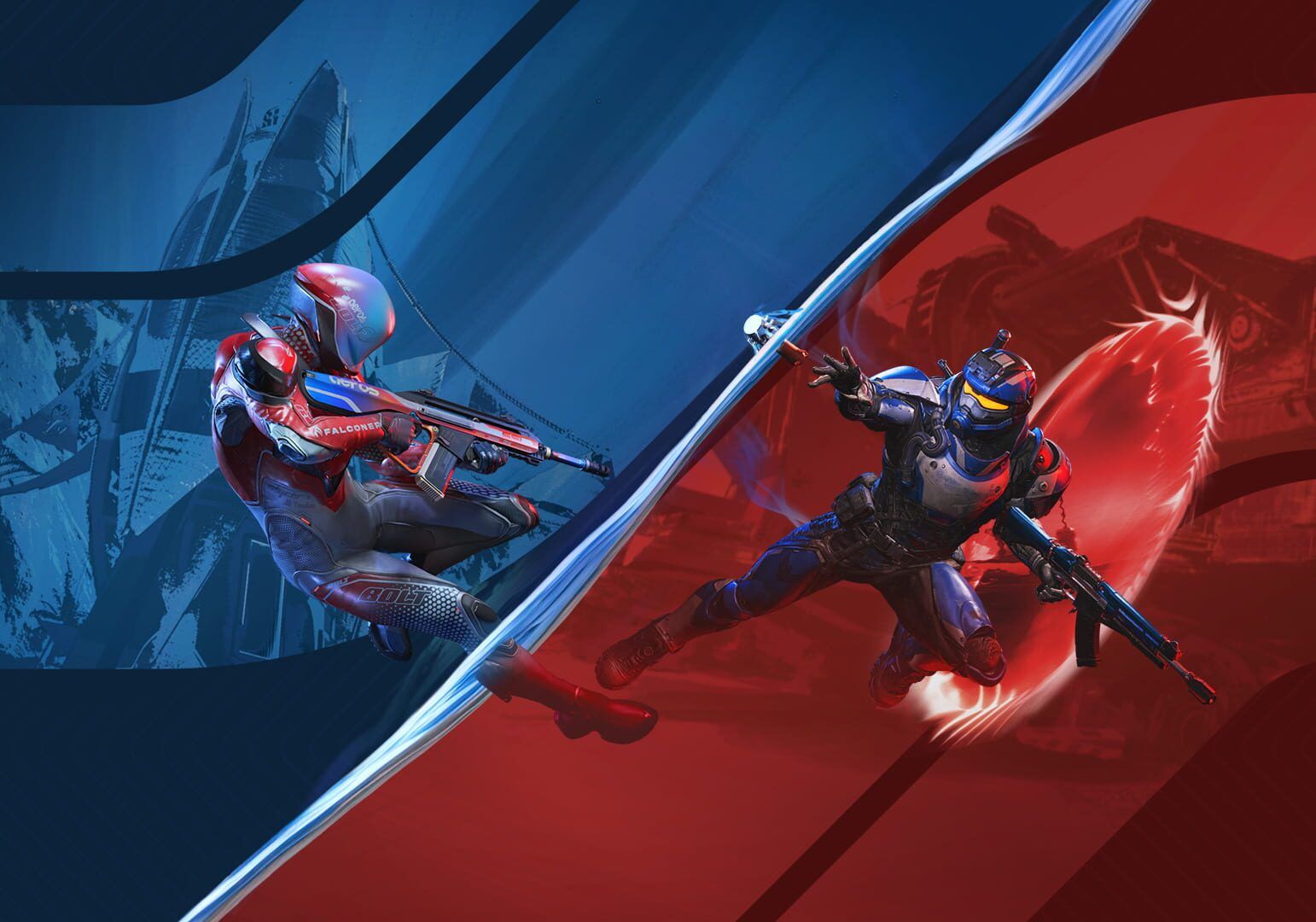
Update 2.2’s Arena Royale mode is a faster, arena-first spin on battle royale that leans closer to Apex Legends than Warzone. Here’s how it works, how it fixes Splitgate Arena Reloaded’s troubled relaunch BR, and what it needs to do to give the portal shooter a sustainable second life.
Update 2.2 is the first time Splitgate Arena Reloaded has felt like it’s really fighting for its life.
Arena Royale, arriving as the headline feature, isn’t just another playlist. It’s 1047 Games ripping out the old, lumbering battle royale that helped sink the relaunch and replacing it with something that finally understands what Splitgate is good at: fast reads, faster gunfights, and constant portal creativity.
How Arena Royale Actually Works
Arena Royale drops 24 players into a match, split into six squads of four. Instead of sprawling across a massive island and spending minutes looting, every game is contained inside a single biome. That could be one of the existing BR environments or the brand new urban zone, Outskirts, but the idea is always the same: dense layouts, short sightlines, and near-constant contact.
Squad survival is at the heart of the ruleset. As long as at least one member of your team is still alive, your dead teammates can respawn back into the match. Early and mid game are less about being instantly erased and more about juggling risk, tempo, and positioning. You can take aggressive portal flanks or risk a high ground push knowing that a wipe isn’t necessarily permanent.
That changes when the last circle closes. Once the final zone locks in, respawns are shut off and Arena Royale hard-pivots into a pure last-squad-standing finish. You still have Splitgate’s trademark mobility and angles, but the safety net is gone. One misplayed portal or lost duel and the entire match can swing.
Loot and economy are also streamlined. 1047 has removed buy stations in favor of instant upgrades and simplified progression. Instead of stopping to shop or grind currency, you’re rewarded for moving, fighting, and rotating with your team. The mode borrows the “evolving loadout through action” feel common to modern BRs, but trims downtime to fit the pace of a traditional arena match.
The result is a BR that plays out like a series of connected arena rounds rather than a 25-minute survival sim. Rotations are short, third parties are frequent, and every respawned teammate is both a second chance and a resource you have to protect.
What’s Different From The Troubled Relaunch Version
When Splitgate returned as Arena Reloaded in December, its battle royale component felt out of sync with the rest of the game. The core arena modes were fast, readable, and lethal. The BR was slower, more traditional, and full of dead time between fights. You’d spend long stretches sliding through portals just to chase the next engagement, which undermined the immediacy that made Splitgate’s original success.
Update 2.2’s Arena Royale is pitched explicitly as a course correction. The studio’s own messaging describes it as bringing “our previous Battle Royale closer to the speed and intensity of Arena Reloaded.” Cutting the mode down to 24 players, shrinking each match to a single biome, and keeping respawns team-dependent are all levers pulled toward that goal.
Confined biomes mean you’re never far from a gunfight or a flank route. The team-based respawn system reduces the early-match anxiety of being eliminated by the first squad you meet and sitting out, without going as far as full-on respawn beacons scattered across the map. And by stripping out buy stations and overcomplicated economy systems, the mode eliminates one of the biggest pacing offenders from the relaunch.
Crucially, the whole thing is built around what Splitgate actually does differently from other shooters. Portals matter on every rotation, every cross, and every last-circle hold, because the map footprint and player count keep sightlines stacked and routes overlapping. The failed relaunch BR often felt like, at best, “Fortnite but with portals.” Arena Royale is trying to be “Splitgate first, BR second.”
Why Arena Royale Sounds More Like Apex Legends Than A Traditional BR
The pitch for Arena Royale lines up much more cleanly with Apex Legends than with slower, loot-heavy BRs like PUBG or Warzone.
First, squad dynamics matter more than sheer survival time. The conditional respawn system, where teammates can come back as long as one of you is alive, echoes Apex’s focus on squad cohesion and clutch potential. It’s less about hoarding plates and killstreaks and more about how well your four-person unit trades space, health, and angles.
Second, pacing is front-loaded toward action. Traditional BRs are built around a curve that starts with a chaotic drop, settles into a midgame lull, then spikes again in the final circles. 1047 has said outright that Arena Royale is meant to feel as fast and short as a regular arena match. That suggests games measured in single-digit minutes, driven by short rotations and stacked zones that keep you fighting across the match instead of just at the beginning and end.
Third, the relationship between loadouts and movement skews toward mobility and creative plays instead of slow, incremental power. Apex’s best moments come from coordinated pushes, clever repositioning, and movement tech. Splitgate’s unique hook is its portal system, and Arena Royale’s compact design practically guarantees that any high ground, flank, or off-angle you port to will immediately matter. The loop is less “loot, move, loot again” and more “move, fight, reposition, repeat.”
Arena Royale still has the genre staples, from a shrinking zone to a high-stakes final circle, but its focus on team flow and constant fighting puts it in the same philosophical camp as Apex. The difference is that Splitgate layers in a level of vertical and lateral freedom that even Apex’s movement tech can’t match.
The Rest Of Update 2.2: Keeping Arena Fans Fed
Arena Royale might be the headline, but Update 2.2 is also clearly trying to keep the core arena audience engaged.
Two new arena maps, Trihard and Runway, expand the standard playlist. Trihard is a floating cloud-set arena that leans into vertical play and cleaner sightlines, giving portal players plenty of room to get creative. Runway offers a neon-drenched cityscape inspired by Shinjuku, full of tight corners, alleys, and elevated lanes that should reward aggression and smart portal placement.
The update also adds a new endgame mastery camo and fresh mastery challenges, a small but important nod to the kind of long-term progression that competitive players expect. Meanwhile, the limited-time Teabag Takeover event, starting January 23, winks at the community’s old-school FPS roots by literally awarding points and rewards for teabagging opponents. It’s a silly hook, but it fits Splitgate’s irreverent, Halo-era identity and gives lapsed players a reason to log in and mess around.
This is the first patch that feels like a “season-style” drop rather than a hotfix, which matters for perception. A mode revamp, two maps, cosmetic progression, and an event all landing together sends a signal that 1047 is still trying to build an ecosystem, not just patch holes.
Player Counts, Perception, And The Studio’s Message
All of this is happening against a backdrop of uncomfortable numbers.
On PC, Splitgate Arena Reloaded’s relaunch peaked at around 2,300 concurrent players on Steam, roughly 90 percent below the height of the original Splitgate 2 run. In the weeks since, daily peaks have hovered in the 900 to 1,000 range, sometimes dipping lower. Third-party trackers show a live player count often in the hundreds rather than the tens of thousands.
Those figures are sobering for any free-to-play multiplayer shooter, especially one trying to reboot itself. 1047 Games has been vocal about what those charts do and don’t represent, repeatedly telling players that “Steam charts don’t measure fun” and that the platform’s stats don’t capture console populations or crossplay engagement. They have a point: PC-only numbers don’t tell the full story for a cross-platform title, and they don’t measure retention quality, match completion, or revenue per user.
But visible concurrency still drives sentiment. Forums and social media have been full of questions about whether it’s worth investing in a game whose queues could dry up. The messy path from Splitgate 2 to Arena Reloaded, layoffs along the way, and a relaunch that stumbled out of the gate have left the community cautious.
With Update 2.2, the studio’s tone has shifted slightly. The message is less defensive about metrics and more focused on framing Arena Royale as “our boldest mode yet” and a realignment of the BR experience with what players say they actually enjoy. The implication is clear: rather than chasing a trend with a by-the-numbers battle royale, 1047 wants to double down on the arena DNA that made Splitgate stand out in 2021.
What Arena Royale Needs To Do To Give Splitgate A Second Life
For Arena Royale to be more than a novelty, it has to solve three problems at once: retention, identity, and discoverability.
On the retention side, the mode has to be sticky enough that players don’t just drop in for launch week and bounce. The built-in squad respawns and faster match times are a good start. They cut down on the frustration of being knocked out early and sitting in lobbies, while also making it easier to run “one more game” with friends. To keep people around, 1047 will need to back the mode with ranked support, visible progression, and frequent tuning updates that respond to early meta trends.
Identity-wise, Arena Royale must feel irreplaceable. If it drifts too close to generic BR structure, players will ask why they shouldn’t just play Apex, Fortnite, or Warzone instead. The answer has to be “portals, pacing, and teamplay you can’t get anywhere else.” That means leaning into portal-exclusive plays, map gimmicks that only work with teleportation, and endgame circles designed specifically to test portal mastery rather than standard ring rotations.
Finally, discoverability is where the player-count problem loops back in. A fresh mode and new maps create the marketing beats, but they need to be paired with clear onboarding on every platform. That includes featured playlists that put Arena Royale front and center, limited-time challenges that push even hardcore arena mains into trying it, and collaborations or creator events that spotlight those “you have to see this portal play” clips.
If Arena Royale can generate consistent, shareable highlights and deliver reliable queue times on all platforms, it gives Splitgate Arena Reloaded a shot at building a modest but healthy core. It doesn’t need to dethrone Apex to succeed. It just needs to establish itself as the place where arena shooter fundamentals and battle royale stakes meet in a way that no other FPS is offering.
Update 2.2 feels like a line in the sand for 1047 Games. Arena Royale is less a side mode and more a bet on what Splitgate should be in 2026. If the mode’s arena-first design clicks with players, this troubled relaunch might finally have the foundation it has been missing. If it doesn’t, there may not be many more chances left for this particular reboot.