
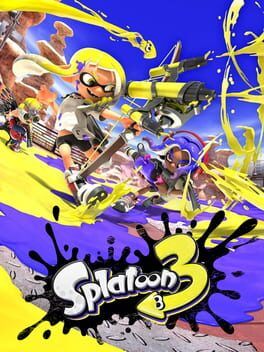
Breaking down Splatoon 3’s Frosty Fest 2026 Splatfest from a community angle: why Team Solo beat Friends and Family, how weapons and maps shaped the meta, and the fan creativity that kept this late‑era event feeling special.
Splatoon 3’s first Splatfest of 2026 brought an icy glow back to the Splatlands with a rerun of a familiar question: who do you spend the holidays with, Friends, Family, or Solo? Branded once again as Frosty Fest, the seasonal special Splatfest wrapped up with a surprise winner that flipped the halftime narrative and gave late‑era Splatoon 3 one of its most talked‑about events in months.
Final results: Team Solo’s quiet comeback
Going into the weekend, many players assumed the battle would be a rerun of Splatoon 2’s classic “Family vs. Friends” showdown, just with Solo added as the wild card. At first, that prediction looked right: Friends surged ahead early and led at halftime in overall clout with 35.09 percent, while Solo sat at 33.40 percent and Family trailed at 31.51 percent.
Once the ink dried, though, the scoreboard told a very different story.
Team Solo took the overall win with 460 points. Team Friends followed closely with 410 points, and Team Family, caught in the crossfire all weekend, finished with 0 points after missing every scoring category.
Looking at the breakdown, you can see how the match swung.
Solo absolutely dominated the popularity vote with 45.27 percent of players choosing to spend the holidays alone. Friends clocked in at 32.27 percent and Family at 22.46 percent. Friends still carried both Open and Pro clout, winning those categories with mid‑34 percent shares, while Solo trailed only slightly behind. The difference maker came in Tricolor, where Solo narrowly edged Friends with 34.66 percent to 34.20 percent.
Because of how Splatoon 3 tallies Splatfest points, Solo’s wins in popularity, Conch Shells and Tricolor were enough to offset Friends’ advantage in Open and Pro. The result is a win that feels very true to its theme: a quietly overwhelming Solo team that simply outnumbered the competition and refused to crumble in the chaotic final phase.
The meta beneath the snow: weapons that defined Frosty Fest
Like most late‑era Splatoon 3 events, Frosty Fest played out in a meta shaped heavily by patches from late 2025. High‑paint, high‑mobility kits were everywhere, especially on Team Solo, which seemed to lean into weapons that could quickly lock down space in the closing minute of Turf War.
S‑tier usual suspects like Splattershot, N‑Zap and Aerospray kits remained widespread, but what stood out over the weekend was the sheer number of support‑leaning builds in Solo lobbies. Players highlighted Tenta Missiles and Ink Storm as match‑tilting tools on the snowy‑lit stages, using them to soften choke points and maintain map control even when pushed back to spawn. Tri‑Strike and Crab Tank remained potent, yet the most successful Solo squads often ran at least one turf monster with a special that could be layered over teammates’ engages rather than going all‑in on aggressive picks.
On the flip side, some Friends and Family squads leaned harder into frontline aggression. Dualies and aggressive brushes showed up often in anecdotal reports, with the classic Splash‑o‑matic and various Splat Dualies kits finding plenty of representation. Those weapons looked fantastic in the moment, especially during hot streaks in Open, but they sometimes struggled to keep pace in the last thirty seconds when more paint‑focused Solo compositions stabilized the map.
At high levels, the picture did not change dramatically from other recent Splatfests. Top players largely gravitated toward proven sets, but the structure of Frosty Fest rewarded consistency over flash. In a field where Solo simply had more players, strong, paint‑efficient weapons with reliable specials likely magnified that statistical advantage.
How map rotations and Tricolor shaped the outcome
Frosty Fest made full use of its wintry presentation, but under the snowflakes there was a very specific stage environment that favored certain playstyles. Across the 48‑hour run, the standard Turf War rotation leaned on familiar, relatively open stages where midline control matters more than risky backline flanks. On maps with broad mid sections and predictable choke points, Solo’s popularity stacked the deck. More Solo mirrors meant more matches that simply did not move the needle, while their wins in trio matchups slowly piled up.
The Tricolor rotation likely mattered even more. Brinewater Springs and MakoMart returned as the featured Tricolor stages, and both tend to reward quick access to central high‑value turf and strong specials that can crack fortified positions.
Brinewater’s cramped center favors teams that can rapidly contest the high ground, while MakoMart’s aisles and elevated shelves become playgrounds for players who can juggle verticality and sneak around cover. In this environment, Solo’s tendency toward paint‑oriented, special‑rich compositions gave them natural tools to disrupt defensive set‑ups from Friends and Family. A well timed Storm or Missiles barrage over mid could peel defenders away from key platforms, opening paths for rollers, brushes or shooters to repaint massive swaths of ground in seconds.
Crucially, Solo also won the Conch Shell phase leading into the Splatfest, which meant Solo players on average earned more shells from pre‑event play. That translated into more pulls on the Shell‑Out Machine, more festival gear variety and, loosely, more players who had already knocked off the rust in the weeks ahead of Frosty Fest. It is easy to overstate that edge, but in a festival where Team Solo already had the numbers, any small advantage in preparedness only added to the snowball.
A slower cadence, but Splatsville still shows up
By the time Frosty Fest 2026 rolled around, Splatoon 3’s development cadence had clearly shifted. New weapons and stages are effectively done, and Nintendo had already signaled that Splatfests were mostly in the rear‑view mirror, which is part of what made this rerun feel special. It is a callback to an earlier holiday event, wrapped up in a game that has quietly settled into a long tail rather than a constant drip of headline‑grabbing updates.
Even so, the festival atmosphere proved that there is still life in the ink. The title screen swapped to a frosty logo and special jingle, hub areas like Splatsville and Inkopolis Plaza were dusted with snow, and NPCs donned party hats. Deep Cut, the Squid Sisters and Off the Hook all showed up in Frosty Fest themed outfits, complete with masks, shawls and swirling winter patterns that helped the event feel distinct from the original run.
Regular players noted how different it felt stepping back into a fully dressed‑up Splatlands after months of quieter rotations. Many community posts framed Frosty Fest as a “reunion tour” for old squads or a kind of farewell lap for players who had drifted away post‑launch and returned out of nostalgia for past winter Splatfests.
Community highlights: art, jokes and quiet victories
As often happens with Splatoon events, the match results were only half the story. Frosty Fest produced a wave of art and screenshots that made the winter theme feel alive even outside of Turf War.
Mail art in the splatboards leaned heavily into the three perspectives. Family pieces focused on warm living rooms and crowded dinner tables, Friends submissions showed chaotic couch co‑op sessions and gift exchanges, and Solo artists leaned into cozy blankets, handheld mode and self care at home. On platforms like Pixiv and social media, that same energy exploded into more polished works, with artists drawing Deep Cut in their masquerade costumes or depicting Inklings juggling coupons for karaoke and dessert buffets as referenced in the event’s localized dialogue.
There was also a lot of affectionate joking about the outcome. Memes quickly spread about Solo winning by staying home to grind while Friends were “too busy hanging out” and Family was “stuck explaining motion controls to their parents.” Other players leaned into the bittersweet side of the theme, turning Solo’s win into a celebration of people who spend the holidays alone by choice or circumstance but still find connection online through games like Splatoon.
In game, that community spirit showed up in unexpected ways. Some Solo squads intentionally coordinated matching winter outfits, while a few Friends and Family trios reported going into Turf War with mixed weapon loadouts specifically chosen to spell words or draw hearts on the map before the final horn. Frosty Fest felt less like a hard competitive showdown and more like an end of year gathering, a chance for the playerbase to express where they are in life several years into Splatoon 3’s lifespan.
What Frosty Fest means for Splatoon 3’s late life
Frosty Fest 2026 is unlikely to radically reshape the series or suddenly restart a rapid update cycle, but it did serve as a proof of concept. Even with support winding down, a well timed, well themed Splatfest can still spark community conversation, revive fan art and get lobbies buzzing for a weekend.
Team Solo’s win, powered by a combination of sheer numbers, paint efficient meta picks and solid Tricolor play, will mostly live on as another tile in the long Splatfest history chart. The more important story is that players came back, dressed up their Inklings and Octolings in winter finery and once again turned Splatsville into a festival ground.
If Splatoon 3 continues to see occasional reruns or surprise events, Frosty Fest 2026 will likely be remembered as the moment that proved the community will still show up, even a few years and many patches removed from launch. For now, though, Solo can curl up with a victory book, Friends can plan their next lobby night and Family can regroup for whenever the next big question hits the Splatlands.