


Spry Fox’s Spirit Crossing is out on PC, Switch, and Switch 2, built as a cozy MMO where strangers can connect only when players choose to be seen.
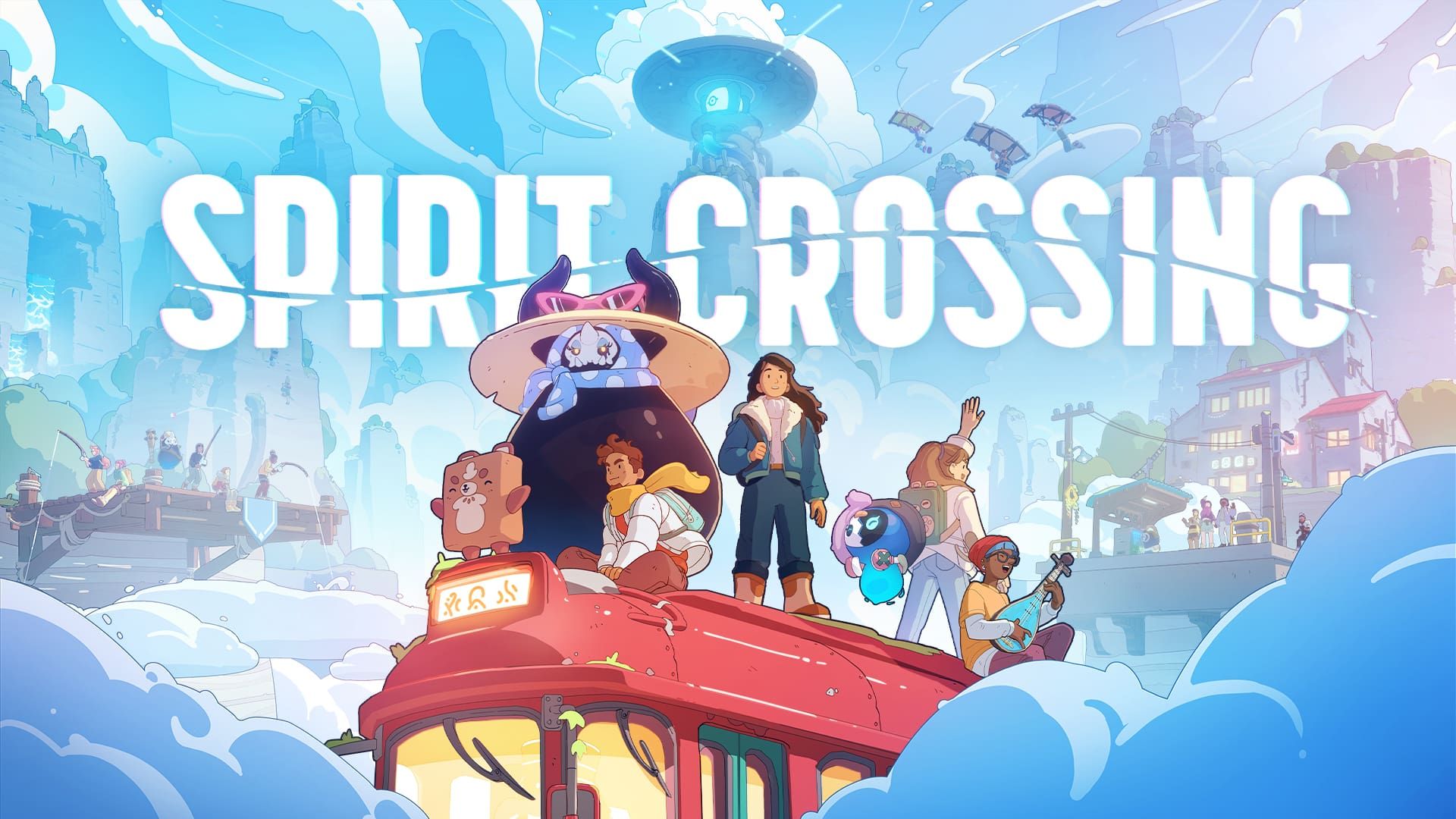
Image: nintendo.com
Spirit Crossing launches with a social promise and an escape hatch
Spry Fox launched Spirit Crossing on November 16, 2026 for PC via Steam and the Epic Games Store, Nintendo Switch, and Nintendo Switch 2, according to the studio’s launch press release on Games Press. The sharpest part of the pitch is not that Spirit Crossing is another cozy online world. It is that Spry Fox is selling a cozy MMO built around strangers while also designing for players who would rather drift through that world quietly.
That tension sits at the center of the Spirit Crossing launch. Games Press describes it as a cozy MMO about making a home in “a strange, beautiful, and ever-changing world,” with players wandering, gathering, building, painting murals, joining fishing tournaments, or simply sitting together while someone plays music at sunrise. At the same time, Rock Paper Shotgun reports that other players appear as shadows by default and only become fully visible, interactive people after social consent, framed in-game through a high five.
For a genre that often treats presence as permission, that is a meaningful design choice. Spirit Crossing is still an MMO, and Spry Fox is explicit about wanting it to bring people together. But the launch pitch is equally clear that the game is not asking every player to perform sociability on demand.
Spry Fox’s friendship system makes connection gradual, not automatic
The studio’s launch materials describe Spirit Crossing as a game where friendship progresses over time instead of flipping on instantly. According to Games Press, the friendship progression system gradually unlocks proximity chat, two-player emotes, gift-giving, and instant teleportation. Those are substantial MMO features, but Spry Fox is tying them to relationship growth rather than throwing every social tool at players the moment they load in.
Rock Paper Shotgun’s launch coverage gives the system its most useful practical shape: by default, players are shadowy figures to one another, and direct social access depends on interaction. The outlet quotes Spry Fox’s own phrasing around players being able to “stay a mysterious shadow,” help when they feel like it, and leave before the encounter turns awkward. Games Press also says Spirit Crossing includes highly customizable social permissions, letting players decide exactly how they want to interact with people they meet.
That is the craft decision that separates the Spry Fox cozy MMO pitch from a conventional hangout game. Spirit Crossing is not treating silence as failure. It appears to recognize that many players enjoy a populated world for the texture it provides: figures gliding in the distance, someone fishing nearby, a shared campfire that does not require joining voice chat or making small talk. The design question for launch week is whether those permissions feel smooth in practice, or whether the game’s best rewards eventually pressure quiet players into more contact than the pitch implies.
Crosslands is built for low-pressure routines rather than combat escalation
Notebookcheck reports that Spirit Crossing is set in the Crosslands, a spirit-inhabited sky world damaged by magical storms, where players help residents rebuild, explore, complete quests, and discover local stories. The outlet also describes Spry Fox’s approach as an MMO without combat, dungeons, or PvP. That matters because Spirit Crossing is launching into a market where “MMO” still usually carries expectations of progression ladders, combat rotations, build optimization, and daily chores disguised as obligations.
The activity list here is deliberately softer. Games Press mentions fishing tournaments, mural painting, music, gathering, building, and decorating personal homes or shared community Waystations. Rock Paper Shotgun adds group photos, dress-up, instruments around a campfire, material gathering, crafting, gliding through skybound spaces, and quests to heal troubled spirits. Notebookcheck also notes Zelda-like gliding above the clouds, while Rock Paper Shotgun compares the landscape’s mood to Sable and The Legend of Zelda: Tears of the Kingdom.
The important caveat is that these are launch descriptions and outlet reports, not a scored review. We are not judging the depth of the systems yet. Still, the available details point toward an MMO whose “missions” exist to create occasions for proximity. If a fishing event, a mural, or a spirit errand gets players near one another, the game has done part of its job. Whether that remains satisfying after the first few days will depend on the variety of daily quests, the usefulness of building, and how often the storm-touched world meaningfully changes.
The price is upfront, with an optional Cozy Club on top
Spirit Crossing is a paid release, not a free-to-play MMO. Games Press lists the launch price at $29.99, £22.99, or €24.99, with a 10% temporary launch discount. Notebookcheck previously reported a Steam discussion where a developer confirmed a $29.99 PC price, and NT Deals pricing cited by Notebookcheck put the Nintendo versions at €24.99 before the 10% discount.
Spry Fox’s monetization pitch is also part of the launch story. Rock Paper Shotgun reports that Spirit Crossing has an upfront cost intended to give players “full access to the complete game experience in perpetuity,” while an optional subscription adds cosmetic items and access to a limited resource exchange shop. Playnews, citing Spry Fox’s pre-launch information, names that membership Cozy Club and reports pricing at $9.99 per month or one-time 30-day passes at $10.99, with buyers receiving 30 free days to redeem when they choose. Playnews also reports that Spry Fox says clothing and decor are not exclusive to members, with membership perks including an upgraded weekly gift, bonus shop slots, additional outfit save slots, and Fluffalo customization options.
For buyers, the distinction is worth watching. Avoiding traditional microtransactions, as Rock Paper Shotgun notes, removes one common MMO pressure point. A subscription layered onto a cozy decorating game can still shape how abundant or restrained the base experience feels. At launch, the confirmed practical answer is simple: Spirit Crossing is sold as a complete paid game, while Cozy Club is optional. The longer-term question is how visible those membership advantages feel inside a social space where self-expression, homes, outfits, and cute creature customization are core motivations.
PC, Switch, and Switch 2 all arrive together, but the Nintendo details need attention
The Spirit Crossing PC release is available through Steam and the Epic Games Store, while the console release covers both Nintendo Switch and Nintendo Switch 2. That simultaneous platform spread gives Spry Fox access to the two audiences most likely to understand the pitch immediately: PC players who follow cozy online indies, and Nintendo players trained by Animal Crossing, Zelda-like traversal, and portable life-sim routines.
There are a few platform notes buyers should not skip. Playnews reports that Steam tags Spirit Crossing as an MMO with online co-op and cross-platform multiplayer. Playnews also reports that Nintendo’s listing gives online play for 1 to 100 players. If you are planning to play with friends across systems, check the live store pages and in-game account requirements before buying, because cross-platform labels do not always answer every question about parties, invites, region behavior, or account linking.
Switch owners have an additional caveat. According to Playnews’ report on Nintendo’s US eShop listing, the Switch 2 version is digital only, and the Switch and Switch 2 versions are separate purchases that do not share save data or additional content. That is a practical purchasing issue, especially for anyone who owns an original Switch now and expects to move to Switch 2 later. Based on the provided source material, there is no confirmed upgrade path or shared-save entitlement between those Nintendo versions.
Spry Fox is extending the Cozy Grove ethos into a riskier online shape
Spirit Crossing comes from Spry Fox, the Seattle studio best known recently for Cozy Grove. Notebookcheck describes Cozy Grove, released in 2021, as well received by players, while Rock Paper Shotgun also points back to Spry Fox’s Road Not Taken and Triple Town as part of the studio’s longer history. That background helps explain the launch’s unusual tone. Spry Fox has spent years making games where cuteness can sit beside melancholy, routine, and small acts of care.
The studio is framing Spirit Crossing in openly social terms. In the launch press release, Spry Fox co-founder and CEO David Edery says the team began development in 2020 with the ambition of making the world less lonely and angry, connecting that goal to concerns about loneliness and social toxicity. That is a big claim for any game to carry. The design answer, at least from the launch materials, is not a louder lobby or a bigger chat box. It is friction, permission, and repeated low-stakes contact.
There is also one transparency note around production. Rock Paper Shotgun updated its coverage to report that, according to developer responses on Discord cited by the outlet, Spry Fox used Anthropic’s Claude for behind-the-scenes tasks such as editing several config files at once. The provided source material does not include a full storefront disclosure for that issue, so the safest reading is that this is a reported production detail from Rock Paper Shotgun rather than a platform-listed feature of the game.
For now, Spirit Crossing’s strongest launch identity is clear. It is a cozy MMO that wants the comfort of seeing other players without assuming everyone wants to be seen back. If Spry Fox can keep that consent-first structure intact while giving solo wanderers, shy helpers, and full-time social butterflies enough to do, Spirit Crossing PC, Switch, and Spirit Crossing Switch 2 players may have an online world that understands the quiet side of togetherness.