
Tom Holland and Destin Daniel Cretton say Spider-Man: Brand New Day fight scenes drew from Insomniac’s Marvel’s Spider-Man screenshots, showing how game combat is shaping the movie’s action language.
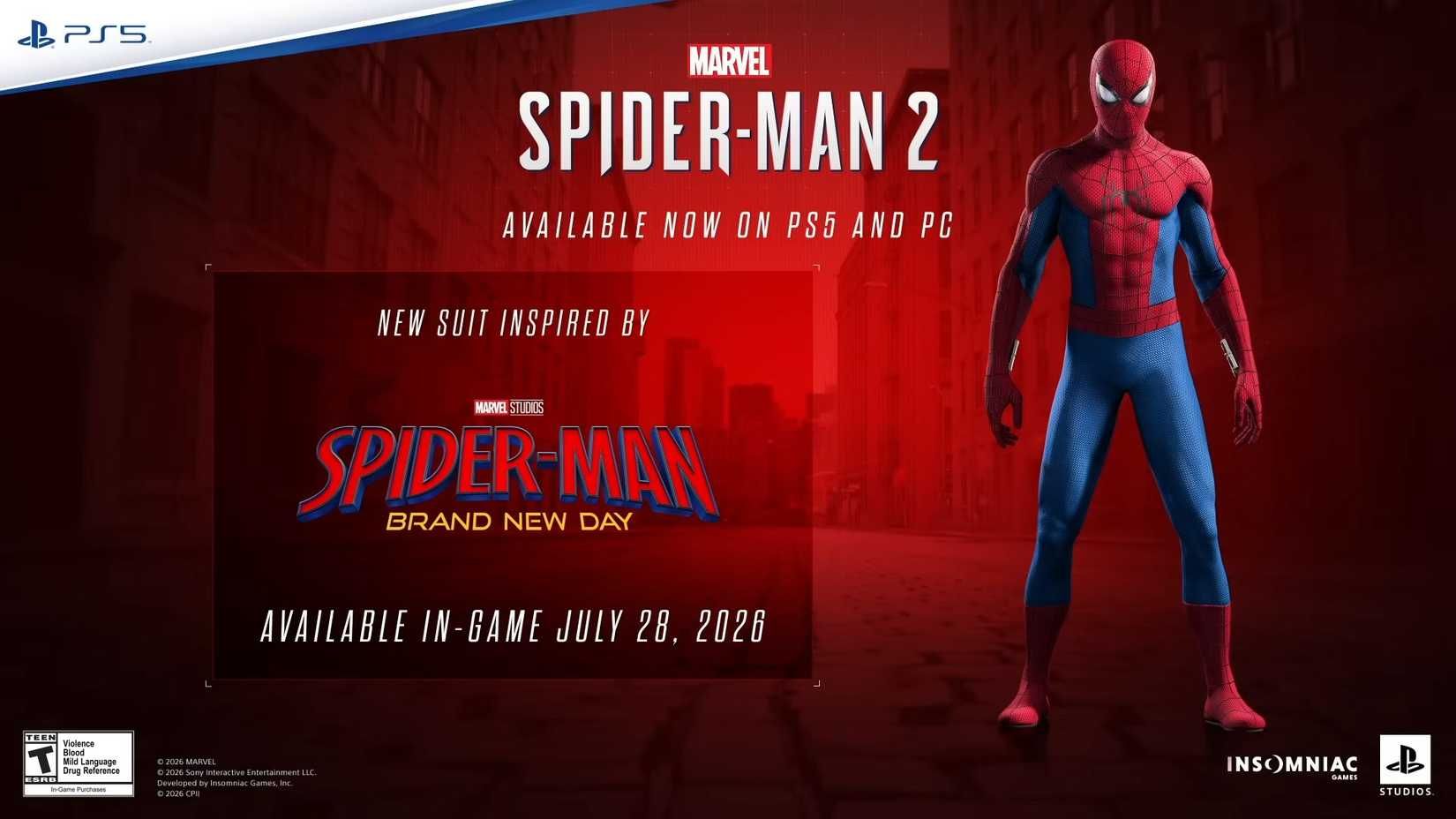
Image: polygon.com
Insomniac’s finishers have moved from controller input to stunt design
Tom Holland says the Tom Holland Spider-Man fight scenes in Spider-Man: Brand New Day were influenced by the finishing moves in Insomniac Games’ Marvel’s Spider-Man series. Speaking to IGN on the red carpet at the film’s premiere, as quoted by Push Square, GameSpot, Yahoo, and VGTimes, Holland said he had been playing the game the night before because he was too excited to sleep, then connected that play session directly to the movie’s action: “For me, a lot of those finishing moves, a lot of our stuff was influenced by that stuff.”
That is the concrete development at the center of this story: the Insomniac Spider-Man movie influence is no longer a loose fan read on a fast trailer shot. Holland has said the film’s combat drew from the games, and director Destin Daniel Cretton has separately described a production process in which action designers and stunt performers brought Marvel’s Spider-Man screenshots into the creative room. According to GameSpot’s account of Cretton’s comments, stunt people would screengrab moves they liked and show them to the director, then the team would ask how to make them work physically.
The tension is obvious. Insomniac’s Spider-Man combat is built for a player camera, animation blending, generous timing windows, and impossible body mechanics sold through a responsive control system. A live action Spider-Man movie has to make those same ideas read through performers, wires, edits, stunt doubles, CG support, and a theatrical camera. Brand New Day is not simply borrowing a costume or nodding at a popular PlayStation series. Based on Holland and Cretton’s comments, the movie is testing whether a game’s combat grammar can survive the jump into live action without becoming weightless cosplay of a button prompt.
The key detail is the screenshot pipeline, not the homage
Cretton’s reported description changes the scale of the influence. Push Square notes that the director previously told Polygon the Insomniac games were a “great influence” on Spider-Man: Brand New Day. GameSpot and Yahoo go further with Cretton’s explanation that many of the action designers and stunt people were gamers, and that they brought screenshots of Spidey’s finishers into the writers’ room because they wanted to pull off those moves in real life.
That image matters: Marvel’s Spider-Man screenshots moving from a console game into a film’s action conversation. A screenshot is not a finished fight scene. It is a pose, a silhouette, a moment of force caught at its most readable angle. In Insomniac’s games, finishers often sell impact by freezing Spider-Man in a clean combat shape: legs extended, web lines taut, enemy body displaced, camera close enough to celebrate contact but wide enough to show spatial control. For a stunt team, that kind of frame is a practical reference. It tells them where the audience’s eye should land.
Cretton’s quote, as published by GameSpot, also makes clear that the team was not claiming to copy animations wholesale. His phrasing was about figuring out “how to do that for real.” That distinction keeps the reporting grounded. What is confirmed is influence, reference, and adaptation. What remains unconfirmed is which specific Insomniac finishers appear in the movie, how directly they map to the games, and whether any particular Brand New Day sequence was built from a named move in Marvel’s Spider-Man or Marvel’s Spider-Man 2.
Why Insomniac’s combat language fits Spider-Man better than generic brawling
Insomniac’s Spider-Man games solved a long-running action problem: how to make Peter Parker feel powerful without turning him into a stationary bruiser. As GameSpot summarizes, the games let Spidey instantly dispose of enemies once enough energy has been banked, using his webs and powers to flatten lesser foes with a finisher. Mechanically, those finishers are rewards. Visually, they are punctuation. They break up a crowd fight with a clean, stylish, decisive beat.
That structure is useful for film because Spider-Man’s best action has rhythm. He should not simply trade punches in the center of a room. He should redirect bodies, collapse distance, vault off surfaces, weaponize webbing, and turn the environment into a moving obstacle course. The games communicate that through animation chains and finisher payoffs. A movie can translate the same idea through staging: a quick web pull to change a guard’s angle, a vault that clears one opponent while striking another, a final knockout that lands with a readable shape.
This is where Holland’s comments are more revealing than a standard “we played the games” marketing line. He specifically cited finishing moves, not traversal, suits, collectibles, or story beats. Finishers are the moments when Insomniac’s combat becomes most cinematic. They are designed to be legible in a fraction of a second, which is exactly what a live action fight scene needs when the hero is moving faster than a human boxer and fighting several people at once.
Early footage has fans looking for the same movement vocabulary
The public conversation around Brand New Day’s action had already been moving in this direction before Holland’s red carpet comment. A Yahoo News video item describes a seven-second fight clip from Spider-Man: Brand New Day in which Holland’s Spider-Man subdues multiple guards with rapid web attacks in a secure setting. Yahoo reports that viewers compared the movement to Andrew Garfield’s sequences in The Amazing Spider-Man 2 and to Insomniac’s Spider-Man game combat. The same item notes that some viewers credited Cretton, citing choreography reminiscent of Shang-Chi.
GeekTyrant similarly reported that fans responding to a surfaced fight sequence on X were praising the faster, smoother, more dynamic look of Holland’s Spider-Man, with some pointing to a blend of The Amazing Spider-Man film movement and video game-style action. That is community reaction, not confirmation of a shot-by-shot source. It does, however, line up with what Holland and Cretton later said: audiences are already reading the footage through the language of game combat.
The Andrew Garfield comparison is useful context because The Amazing Spider-Man 2 is often remembered by fans for a more elastic, acrobatic Spider-Man silhouette. Insomniac’s games took that idea into interactive form, turning web-yanks, aerial recoveries, flips, wall interactions, and enemy juggling into repeatable combat verbs. If Brand New Day is pulling from the games, it may be chasing that same visual promise: a Spider-Man who feels like he can attack from any angle rather than a superhero boxed into conventional hand-to-hand coverage.
The challenge is making a finisher feel physical instead of digital
A game finisher has advantages a film does not. The camera can snap to the best angle. The animation can ignore the fatigue of a real body. Enemy behavior can pause just long enough for the move to complete. Impact can be tuned around player satisfaction rather than injury logic. That is why Cretton’s “do that for real” challenge is the whole story. The stunt team has to convert a playable fantasy into a sequence that still looks like Holland’s Spider-Man inhabits a physical world.
For Brand New Day, the risk is over-clean action. If a fight looks too much like a perfect animation cycle, it can lose danger. Spider-Man’s movement should be graceful, but the scene still needs resistance: guards reacting late but not standing idle, web lines pulling with credible tension, bodies hitting surfaces with weight, and edits that preserve where everyone is in the room. Insomniac’s best encounters work because the player always understands the next target, the current threat, and the payoff of a finisher. A film scene needs the same clarity without a HUD.
Cretton’s presence makes the adaptation especially interesting. The source material here does not provide production details about how Brand New Day was shot, so it would be wrong to claim specific techniques. But Yahoo’s report of fan comments invoking Shang-Chi shows that viewers are already connecting the director to a style of cleaner, body-driven action. If Brand New Day can combine that kind of readable choreography with Insomniac’s web-assisted combat shapes, the movie could give Holland’s Spider-Man a more defined action identity than some of his earlier MCU appearances.
A two-way Spider-Man exchange, with the movie now borrowing the game’s confidence
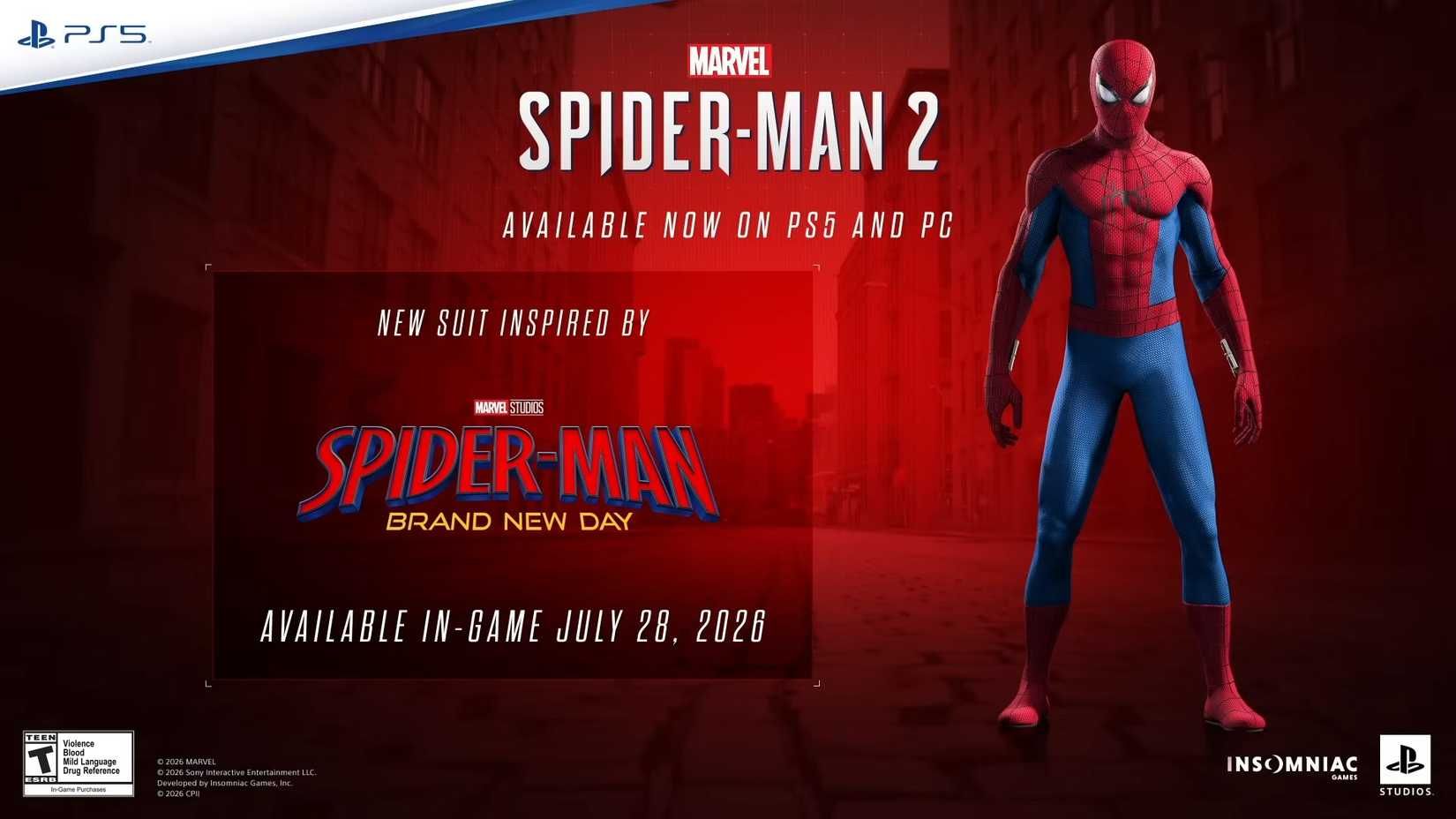
There is also a business and franchise loop underneath the choreography. GameSpot notes that Marvel’s Spider-Man 2 has been used to celebrate the launch of Spider-Man: Brand New Day through the addition of the film’s “Fresh Start” costume, alongside a PS5 Pro PSSR update. Push Square likewise reports that the Brand New Day suit was added to Marvel’s Spider-Man 2. This article is not about that update, but the timing illustrates how porous the boundary has become between Sony’s game and film versions of Spider-Man.
The more interesting exchange runs the other direction. Movie costumes entering games are expected cross-promotion. A live action stunt team bringing Insomniac screenshots into the writers’ room is a stronger signal of creative influence. It suggests the games are no longer secondary adaptations chasing film iconography. At least for Brand New Day’s action, Insomniac’s visual language is part of the reference library for how Spider-Man should move on screen.
That does not mean the film will feel like Marvel’s Spider-Man 2 in full. The sources do not say the story, villains, camera style, or overall structure were adapted from the games. The confirmed influence is centered on action and finishing moves. For players who know the games, the practical viewing question is narrower and more fun: can you spot the combat poses, web takedowns, and knockout rhythms that began life as screenshot references?
When Spider-Man: Brand New Day arrives, watch the fight grammar
Spider-Man: Brand New Day is listed by GameSpot, Yahoo, Push Square, and VGTimes as opening on July 31, with VGTimes specifying July 31, 2026. Yahoo’s video item says advance ticket sales are active. GameSpot, citing Deadline analysts, reports that some projections have the film opening as high as $190 million in North America and up to $465 million globally. Those are forecasts, not box office results.
For game-focused viewers, the cleanest reason to pay attention is not the promise of Easter eggs. It is the possibility that a major superhero film is being choreographed with the same visual priorities that made Insomniac’s Spider-Man readable at high speed: sharp silhouettes, web-assisted reversals, aerial control, and finishers that end a micro-story inside the fight. Holland’s IGN comments and Cretton’s reported screenshot anecdote give fans a grounded lens for watching the action without pretending every flip is a confirmed game reference.
The smart expectation is influence rather than replication. If Brand New Day succeeds on this front, the Insomniac Spider-Man movie influence will show up in combat rhythm: how quickly Peter changes elevation, how clearly a web strike redirects an opponent, how a finishing blow lands as a full stop instead of visual noise. That is where Marvel’s Spider-Man screenshots could matter most, not as trivia, but as the storyboard language for a Spider-Man who finally fights on screen with the same snap players feel in their hands.