
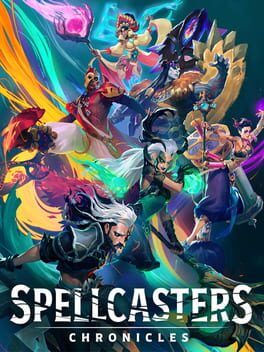

A deep dive into what Closed Beta 2 changes for Spellcasters Chronicles, how its MOBA‑meets‑roguelite structure actually plays, and what Quantic Dream’s February 26 Early Access plan tells us about long‑term support.
Closed Beta 2: The last big shakeup before Early Access
Spellcasters Chronicles is back for one more full‑scale test before it hits Steam Early Access on February 26, and Closed Beta 2 is a much bigger deal than just a balance pass. Quantic Dream is using this long weekend to stress‑test new systems, smooth over criticisms from the first beta, and lock in the technical baseline for what it wants to be a long‑running live game.
Running from January 29 at 15:00 UTC to February 2 at 09:00 UTC, this second beta is both a content drop and a systems check. It adds a ranked ladder, expands the spell and summon roster, introduces a new map and tutorial, and rolls out aggressive optimisation work meant to make the game playable on more machines worldwide.
For anyone who played the first beta or followed early previews, the question is simple: is this still an interesting idea, or is Spellcasters actually starting to feel like a fully formed game?
What’s changed since the first beta
The headline additions in Closed Beta 2 answer a lot of the feedback from the original December test and early hands‑on write‑ups. The first beta already had the core idea in place, a 3v3 MOBA where you draft a deck of spells, summons, and buildings instead of shopping for items in‑match. What it lacked was long‑term progression hooks, a more expressive toolkit of spells, and clear technical stability.
Closed Beta 2 tackles those gaps on several fronts.
First is the addition of a ranked system, a crucial missing piece for a competitive MOBA‑style game. The ranking here is pitched as an early‑access version rather than a full seasonal structure, but it finally gives players a visible ladder to climb across weekends instead of the flat casual queue of the first test. For a game that lives and dies by team coordination and long‑term mastery, even a simple ladder should help keep people engaged between matches and give Quantic Dream hard data on matchmaking and skill spread.
The second big change is content breadth. The spellbook is being meaningfully expanded with six new spells that are designed to widen the tactical space rather than just pad out numbers. Fire Rain and Poison Grenade add more area denial options that matter in tight lane chokes, while Ice Infusion and Fire Infusion tilt certain spellcasters toward burst or control‑oriented builds. Sacrifice and Resurrection hint at more late‑game swing potential, letting teams trade health or units now to set up overpowering pushes later.
On top of that come five new summons, including heavy frontline options like the Stone Behemoth and more micro‑intensive picks like the Wolven Hunter and Faery. These units matter because in Spellcasters, your army is not background noise. It is the main pressure tool that pushes lanes, holds capture points, and occupies enemy defenses while you try to angle a decisive spell combo. Adding more summoning variety directly increases the number of viable game plans in the draft phase.
Three new buildings, such as Rampart and Ballista, further sharpen the base‑building side of the design. Where the first beta could feel light on meaningful structural choices once lanes were set up, these new structures promise more distinct defensive identities per team and more interesting siege scenarios.
The Nordic Shore arena might be the biggest mechanical swing. This five‑lane map, with wide sightlines and harsher environmental framing, is clearly intended to push players away from rote mid‑lane brawls and into more spread‑out macro play. In practice that means more simultaneous objectives, more space for flanks using mobility spells, and a bigger payoff for line‑of‑sight manipulation with AoE and terrain‑based summons.
Finally, there is a heavy focus on fundamentals. Closed Beta 2 adds a proper introduction and tutorial, something the first test sorely needed. Early players reported that the original onboarding assumed MOBA literacy and layered deckbuilding on top of it, which made the learning curve steeper than it had to be. The new tutorial is meant to walk through spell drafting, wave management, and Titan tempo in more digestible steps, which should help the game feel less opaque to newcomers.
Not all the changes are visible mid‑match. Under the hood, Quantic Dream has reworked performance, memory use, and stability, and is using this beta to validate a new set of recommended specs. Alongside that comes a server rollout that adds Asia regions to the existing Europe and North America, reflecting the studio’s stated goal of “every player being able to play our game” at acceptable latency.
Social tools have also arrived. In‑game team text chat and a basic reporting system are now in, which sounds standard, but it is a meaningful step for a studio that has never run a live competitive multiplayer game at scale.
How the MOBA‑meets‑roguelite structure actually plays
On paper, Spellcasters Chronicles sounds busy: a third‑person 3v3 MOBA where you draft a deck of units, buildings, and spells before a match and then use that deck to command giant minion waves in real time. In practice, player reports from the first beta and convention demos paint a clearer picture of how it feels moment to moment.
Matches begin not in lane but in the deck screen. You assemble a limited set of cards representing your active arsenal for the coming game. That deckbuilding layer sets Spellcasters apart from genre staples. Rather than purchasing items during the match, you are deciding beforehand which summons define your pressure plan, which spells unlock your teamfight combos, and which buildings give you defensive fallbacks.
Once the match starts, it plays out more like a hybrid between a MOBA and a light RTS. Your spellcaster is on the field, hurling projectiles, dodging telegraphed attacks, and capturing objectives, but your real impact comes from how you construct and deploy your army. Lining up a Titan push behind a wall of low‑cost summons, timing Sacrifice to spike a crucial wave, or dropping a Harpy’s Nest to control a vital choke point all matter more than landing a single flashy skillshot.
This is where the roguelite descriptor comes in. Runs are short, self‑contained bouts where you iterate on a build idea: maybe this time you lean hard into resurrection loops and attrition, or you try a glass‑cannon strategy built around Fire Rain zoning and fragile, high‑damage summons. Progress across matches is more about unlocking new cards and learning synergies than about persistent stat boosts.
Early criticism of the first beta centered on how passive this could feel. With lanes pushing themselves and escape tools readily available, duels could be oddly low stakes and some players felt more like battlefield architects watching their machines work than heroes in the thick of it. Quantic Dream seems aware of that tension. The new spells and summons in Closed Beta 2 appear aimed at raising the skill ceiling on tactical decisions mid‑fight, while the Nordic Shore’s broader layout pushes teams into more frequent, committed clashes over spread objectives.
Community discussion around the game has largely converged on one point: playing Spellcasters well is about macro control. Good teams coordinate their decks before queueing, decide who brings which form of waveclear, frontline, and utility, and then split the map accordingly. If traditional MOBAs reward last‑hitting and tight ability combos, this one rewards route planning and the timing of massive, card‑driven swings. That is precisely what makes it appealing for players who like RTS macro but want their avatar on the field rather than sitting in a command view.
Ranked mode and the push toward competitive structure
The arrival of ranked in Closed Beta 2 is more than a checkbox feature. It signals that Quantic Dream expects Spellcasters to live or die on its ability to keep a competitive community active past the novelty phase.
In the first beta, players who wanted to grind and improve lacked both clear MMR feedback and a sense of long‑term goals. Every match was its own sealed run, but there was no meta‑progression layer expressing your skill growth or offering seasonal milestones. The early ranking system is meant to plug that gap, giving players matchmaking tiers and a reason to refine their deck choices instead of just experimenting endlessly.
Because this is still a beta system, it is likely to be relatively conservative for now: simple divisions, visible rank emblems, and basic matchmaking parameters rather than intricate ladders with placement series and decay. What matters is that it lets Quantic Dream gather hard data on queue times, win‑rate distribution per spellcaster and deck archetype, and how quickly players climb or stall. That feedback will shape not just balance patches but also future ranked formats, from solo/duo to pre‑made 3‑stacks.
If Spellcasters is going to carve out space in a crowded MOBA ecosystem, it will need that kind of competitive backbone. Closed Beta 2 is the first public test of whether its deck‑driven structure can sustain a meta that players actually enjoy iterating on, rather than one solved by a single dominant summoning combo.
Optimisation goals and what they mean for Early Access
Quantic Dream has been unusually vocal about performance in its messaging around Closed Beta 2. The studio highlights optimised rendering, memory use, and stability, and it has refreshed the published PC requirements accordingly. It is also expanding server coverage to include Asia on top of existing European and North American regions.
That focus is not cosmetic. Competitive games live at the mercy of their frame times and queue health. The first beta, by most accounts, ran acceptably on modern hardware but showed stress once match chaos peaked, especially on mid‑tier rigs and when lots of large summons were on screen. The developer’s stated goal is that “every player” who meets the minimum spec can maintain stable performance even as the battlefield fills with Titans, particle‑heavy ultimates, and sprawling minion waves.
Closed Beta 2 is effectively a wide‑area load test for that ambition. If the client holds steady on a range of machines and latency remains manageable across three major server regions, Quantic Dream can roll into the February 26 Early Access launch with more confidence that new players will not bounce off due to stutter or connection issues. If problems surface, there is still enough time between this beta and launch to target hotfixes.
For players, the practical takeaway is simple. If you were on the fence after performance hiccups in the first test, this beta should give a clearer picture of how the game is likely to run at launch. And because Early Access on Steam inherently brings a wider hardware spread, the studio’s decision to align optimisation and server expansion ahead of that date suggests it is planning for a genuinely global, competitive audience rather than a niche, high‑end PC crowd.
What Quantic Dream’s Early Access strategy hints about long‑term support
Spellcasters Chronicles is Quantic Dream’s first attempt at a fully live, free‑to‑play multiplayer game. The studio is better known for cinematic single‑player adventures, so the way it is structuring Early Access is a useful window into how seriously it takes the long game.
The February 26 Early Access launch on Steam follows two closed betas in quick succession, each framed as a chance to gather real player data. That cadence matters. Rather than running a single limited test and then going dark for a year, Quantic Dream is iterating rapidly, layering in new spells, summons, and systems between public touchpoints. It is a pattern more in line with seasoned service‑game studios than with narrative‑only outfits dabbling in multiplayer.
Founders Packs on Steam that carry cosmetics and currency forward into Early Access also signal intent. They lock in a monetisation structure centered on skins, Lifestone cosmetics, and titles rather than power advantages. That is vital in a competitive game built around deck construction, where pay‑to‑win card advantages would be disastrous for long‑term health.
The narrative framing, including the introduction of Ozdam Devam as the Chronicler of Ashkenon, is another clue. Building an in‑world narrator gives the studio a tool to roll out future seasons, arenas, and spellcaster additions in a lore‑driven way. If Quantic Dream leans into that, we could see story‑tinted updates where new cards and map variants arrive alongside episodes in an ongoing chronicle, marrying the studio’s storytelling roots with its new live‑service ambitions.
Most telling, though, is how transparent the team has been about using Early Access as a balance laboratory. By coming to Steam early with ranked play, a broad spell and summon pool, and a clear roadmap toward more content, Quantic Dream is explicitly inviting a community that wants to theorycraft, break strategies, and push the meta. If it follows through with regular balance patches, seasonal refreshes, and new spellcasters, Spellcasters Chronicles could evolve in the same way established MOBAs have, but with a stronger focus on the deckbuilding and RTS elements that make it distinct.
Should you jump into Closed Beta 2?
If the first beta intrigued you but felt half‑formed, Closed Beta 2 looks like the moment Spellcasters Chronicles becomes a proper test of the full concept. The spell and summon additions, ranked ladder, new arena, and tutorial all serve the same goal: making the MOBA‑meets‑roguelite structure more expressive, more competitive, and more approachable.
There are still open questions. The game needs to prove its matches can feel as tense and personally impactful as more traditional, hands‑on MOBAs. It needs to show that its card‑driven meta will not calcify around one or two optimal archetypes. And Quantic Dream needs to demonstrate that it can patch, communicate, and support a live competitive title over years.
Closed Beta 2 is where those questions start to get real answers. With Early Access locked in for February 26, whatever works over this long weekend is likely to form the backbone of Spellcasters Chronicles’ launch experience. If you are curious about a MOBA where deckbuilding, army composition, and Titan timing matter as much as mechanical outplays, this is the best chance yet to see whether Quantic Dream’s experiment is worth investing in before the full Early Access push.