
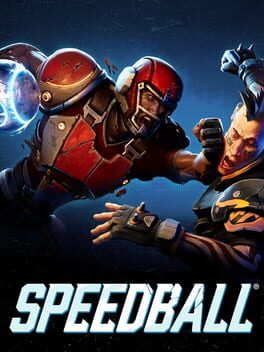
Rebellion’s revival of Bitmap Brothers’ cult classic finally hits 1.0 on Steam and launches on PS5 and Xbox Series X|S. Here’s what has changed since Early Access, how the console ports perform, and whether this bruising arena sport can carve out a place in today’s crowded competitive scene.
A Brutal Classic Reborn
Rebellion’s new Speedball is finally out of Steam Early Access and arriving on PlayStation 5 and Xbox Series X|S, bringing one of the Amiga era’s most infamous future sports into 2026. The pitch is the same as it was in 1988: a steel-walled arena, a handful of barely human bruisers, and a ball that is as much a weapon as an objective.
This launch is more than a simple 1.0 toggle. Over its Early Access period, Speedball has shifted from a promising prototype into a complete package with league structure, deeper team building and more refined brawling. On consoles, it is making a case that there is still room for a lean, mean arcade sport next to today’s sprawling live service giants.
What Has Changed Since Early Access?
The Early Access version that hit Steam in October 2024 was laser focused on getting the core feel right. It delivered the fundamentals, with tight passing, crunching tackles and that aggressive pinball flow that defined the originals. It also showed its rough edges, with modest content, barebones structure and an onboarding curve that made new players feel like they had been blindsided by a two hundred kilo cyborg.
The full release addresses those gaps. The headline addition is a proper League Mode that strings matches together into a season across ten distinct teams. Instead of treating Speedball as a one off skirmish, the game now has a backbone that lets you chase championships and build rivalries. Team development is more intentional too, with traits and talents that nudge your squad toward different identities. You can shape a high pressure pressing team that bullies the ball carrier, or a more surgical side that relies on quick passing and long range shots.
Arenas have also matured. Early Access already had the basics of obstacles and environmental tricks, but the 1.0 version leans harder into making each venue feel like a character. Brutal and Standard variants push you to think differently about space. One arena might turn the mid field into a meat grinder with aggressive hazards and tight corners. Another opens up the flanks and rewards risky cross field passes.
Presentation has been sharpened. The Slam Cam slow motion replay system, used to punctuate the nastiest tackles, is more than a visual gag. It sells the sport as a televised spectacle within the fiction and gives matches that satisfying cadence of build up, hit and highlight. Menus, camera work and match flow are cleaner than they were in the Early Access builds, which makes it easier to get from the main menu into that next grudge match without friction.
How The Console Versions Stack Up
On PS5 and Xbox Series X|S, Speedball arrives as a digital only release at a mid tier price, and the ports are designed to feel native rather than like PC compromises. The game targets smooth performance to preserve responsiveness for tackles and quick passes, prioritizing stable frame rates over visual extravagance. Given the stylized industrial arenas and chunky player models, this is the right call. The sport feels immediate on a controller, and the physicality of smashing someone into a steel wall survives the trip intact.
Feature parity with the PC version is a key selling point. League Mode, online multiplayer and local play are all present. There are no platform exclusive arenas or modes to split the community, and the same mix of arcade action and light management applies regardless of where you play. The console builds benefit from the work Rebellion did during Early Access too, with refined tutorial prompts and more readable UI that suits television viewing distances.
What you will not get on console is a radically different experience. This is a straight translation rather than a bespoke console reinvention. That is largely to the game’s benefit. Speedball is built around fast, readable inputs and short, intense matches that fit naturally with pick up and play couch sessions. Load times are brief, matchmaking is straightforward, and local head to head remains the star of the show if you have someone to share the sofa with.
Speedball’s Place In Today’s Competitive Landscape
The interesting question is not whether Speedball is a faithful revival. It is whether this kind of game can find a foothold in an ecosystem dominated by live service shooters, annualized sports franchises and free to play juggernauts.
On one hand, the game is out of step with modern trends. There is no massive progression ladder full of cosmetics, no sprawling battle pass and no open world wrapper. Matches are short, self contained bursts of aggression rather than multi hour grinds. That makes it harder to compete for attention against games that promise endless content and social hooks.
On the other hand, that sharp focus is precisely where Speedball might carve out its niche. It is a rare example of a competitive sports title that embraces arcade immediacy and violent slapstick instead of simulation. It sits closer to games like Rocket League in spirit, built for repeatable, mechanical fun rather than stat spreadsheets. The fictional backdrop of mega corporations weaponizing sport as distraction gives it a bit of satirical bite, but at its heart this is a game about the joy of timing a tackle and seeing the Slam Cam reward you with a slow motion crunch.
The key will be whether Rebellion is prepared to treat Speedball as an evolving platform. The Early Access period suggests a willingness to iterate. Community feedback has already driven refinements to balance, AI behavior and match pacing. To sustain a player base in 2026, the game will likely need periodic injections of new arenas, teams or mutator style rulesets that can shake up the meta without bloating the fundamentals. The compact size of the current roster is appealing, but fresh wrinkles over time will help keep dedicated leagues and friend groups engaged.
Cross platform play would be an obvious way to strengthen the competitive pool over the long term. With the game launching simultaneously on PC, PS5 and Xbox Series X|S, there is a clear opportunity to prevent fragmentation before it becomes a real problem. Even without that, though, Speedball feels well suited to more contained communities, from local tournaments and online leagues to Discord organized seasons that treat its League Mode as a framework for storytelling.
Verdict: A Sharp, Violent Alternative To The Usual Sports Suspects
As it leaves Early Access and lands on consoles, Speedball feels like a confident pitch for a very specific audience. If you have nostalgia for the Bitmap Brothers era or you simply want a competitive game that values crunch over complexity, this revival delivers. It is not the biggest or flashiest sports game available, and it does not try to be. Instead, it offers a focused blend of bruising contact, quick decision making and light team building that recalls an era when you could master a game over a weekend and then spend months chasing that perfect season.
In today’s crowded competitive landscape, that clarity might be its greatest strength. Speedball will not dethrone the titans of esports or the annualized sports juggernauts, but it does not need to. It only has to convince a dedicated subset of players that there is still room for a steel walled arena and a ball that hits as hard as any tackle. For those players, this 1.0 launch feels like the starting whistle rather than the final horn.