
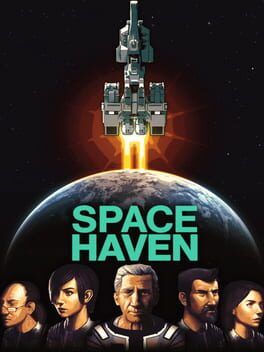

After a decade of work, three‑person studio Bugbyte has finally launched Space Haven 1.0. We look at how the spaceship colony sim evolved through Early Access, what core systems changed, and how it stacks up against RimWorld and Oxygen Not Included in 2026.
A decade to get off the launchpad
When Bugbyte first blogged about Space Haven back in 2016, it looked like a modest riff on RimWorld in space. Ten years, a Kickstarter, and six years of public builds later, the game that finally hit 1.0 in May 2026 is far more specific and confident than that pitch suggested.
Across that span, a three‑person Finnish team slowly turned a simple tile‑based ship builder into a dense simulation about life inside fragile metal coffins between the stars. Oxygen, power, crew psychology, faction politics, boarding combat, and a campaign‑style galaxy map all arrived piece by piece, shaped heavily by community feedback and the realities of a tiny studio working at marathon pace.
Space Haven’s 1.0 launch is not just a content drop, it is the moment where years of overlapping systems finally settle into a clear identity: not RimWorld in space, but a game about running the ship itself, with all the duct‑tape logistics that implies.
From barebones hull to living ship
The Early Access version that landed on Steam in May 2020 was striking, but narrow. You could sketch a hull tile by tile, place life‑support machinery, and watch your handful of civilians shuffle around on basic AI routines. Combat existed mostly as simple boarding actions and pirate skirmishes. The galaxy was a loop of similar encounters stitched together by hyperspace jumps.
Most of the attention in that first phase went into making the ships feel physical. Rooms needed walls, vents, and generators before they would maintain breathable air. A misplaced power node could leave a whole wing freezing in the dark. Even then you could feel the kernel of what Space Haven would become, but almost everything else was skeletal.
Where the next years of updates pushed the game was toward depth and friction. Systems grew rarer and more interconnected. Every room became another dependency chain, and every crewmember another liability as well as an asset.
Systems that hardened over Early Access
The Gas System and environmental simulation were the first pillars that really matured. Early builds treated oxygen as a simple meter. Over time, Bugbyte layered in separate gas types, leaks, and flow between rooms. Fires did not just do hit point damage, they altered the composition of the air. Hull breaches meant explosive decompression, not just cosmetic alarms. The end result is a model where your floor plan is as tactical as any weapon loadout.
Power management followed a similar trajectory. Primitive power nodes eventually gave way to a web of generators, batteries, and distribution points that can be overtaxed, shorted, or strategically disabled. Running too many grow lamps, shield emitters, and comfort items at once has real costs, forcing trade‑offs between safety, efficiency, and crew happiness.
The crew simulation is where the long timeline is easiest to see. What began as colonists with a couple of stats gradually expanded into characters with skills that grow, traits that clash, and mental states that respond to cramped quarters, traumatic events, or poor diet. Early Access milestones added relationship tracking, more nuanced mood modifiers, and the ability for long campaigns to tell quiet stories of grudges, burnout, and people quietly holding the ship together.
On top of that interior life, 1.0 stands on a much tougher external game. Tactical ship‑to‑ship combat evolved from simple exchanges of hull damage to a layered dance of shield management, targeting specific ship sections, and timing boarding actions. Derelict exploration gained more enemy variety, environmental hazards, and reasons to risk life and limb for salvage. Factions that were initially little more than names on the encounter screen now have reputations, diplomacy levers, and distinct behaviors in the wider sector.
How a three‑person team steered the design
With only three developers, every system Space Haven added had to pull double duty. That constraint is visible everywhere in the final design.
Life‑support is both a survival mechanic and a pacing tool. The slow creep of carbon dioxide or the whiplash of a leaky hull creates natural crisis beats without the team needing bespoke story events. A single fire or breach can cascade through power failures, food spoilage, and morale collapse, generating drama through simulation rather than scripted narrative.
The crew model serves as both storytelling and progression. Instead of tech trees full of abstract nodes, you are mainly upgrading people. Specialists level into irreplaceable engineers, medics, and gunners. Losing one veteran on a derelict boarding run hurts more than any single destroyed module, which discourages treating runs as disposable and nudges the game toward long‑form campaigns.
The procedural galaxy map, while not as elaborate as some 4X games, gives the team room to remix a finite pool of handcrafted events and factions into fresh runs. As years went on, updates added new sector types, enemy varieties, and narrative hooks tied to pirates, cultists, slavers, androids, and alien threats. This helped compensate for a development cadence that could not constantly ship bespoke storylines.
The throughline is that Space Haven’s depth comes less from raw content volume and more from multiplying interactions between carefully chosen systems. It is an approach that suits a very small studio far better than chasing the feature sprawl of bigger management sims.
What version 1.0 actually adds
The 1.0 update is not a reinvention, but it does mark the point where Bugbyte seems confident calling the loop complete. The full release arrives with a more defined endgame, expanded faction interactions, and a pass on quality‑of‑life that smooths out long‑standing rough edges in UI and automation.
Most importantly, it ties the previous years of content updates into a campaign arc that feels more deliberate. Sector progression has clearer stakes, derelicts are more varied in layout and danger, and late‑game ship builds finally have meaningful threats to test against. It feels less like an endless sandbox and more like a hazardous journey with a destination, even if the specifics differ each run.
Under the hood, 1.0 continues the project’s tradition of tuning the implicit stories. Mental breaks, funerals, makeshift medical bays, tense negotiations with slavers, and desperate raids on alien hives are all better surfaced by UI prompts and improved event text. The game still leans on your imagination to fill gaps, but it now meets you halfway with cleaner presentation and pacing.
Standing next to RimWorld in 2026
RimWorld is the comparison that has trailed Space Haven from day one, and after version 1.0 that is still fair. Both trade in emergent stories about small groups of people clinging to life in hostile environments. Both take a top‑down, tile‑based view and let AI personalities generate chaos.
The most obvious difference in 2026 is focus. RimWorld is about the colony as a whole and sprawls across a planet. Space Haven is about the ship. Where RimWorld’s drama often comes from grand disasters sweeping over a base, Space Haven’s comes from cramped catastrophe. A single breached wall can unravel hours of careful planning. Logistics are tighter and more spatial; airflow, cable routes, and docking positions matter more here than in almost any other colony sim.
In terms of breadth, RimWorld still wins. Its years of DLC, workshop support, and wildly varied biomes give it an edge in sheer variety. Space Haven cannot match that volume of toys or narrative events. What it offers instead is a more unified theme and a heavier emphasis on the minute‑to‑minute management of a single vessel or small fleet.
If you already own RimWorld and its expansions, Space Haven is less a replacement and more an alternative flavor. It occupies a nearby niche but not the same one, and at 1.0 it finally has enough systemic weight to stand there confidently.
Oxygen Not Included and the systems race
Measured against Oxygen Not Included, Space Haven sits closer on the spectrum than you might expect. Both games orbit around environmental simulation and the constant struggle to keep your little bubble habitable.
Oxygen Not Included remains the genre’s gold standard for fluid and gas modeling, with elaborate piping networks and incredibly granular resource chains. Space Haven does not go that far into engineering puzzles. Its gas simulation is robust enough to make ship layouts a genuine tactical question, but it never overwhelms the rest of the game. You are thinking about airflow and temperature every time you carve out a new room, not solving textbook thermodynamics problems.
Where Space Haven pulls ahead is in character focus and narrative framing. Its crew are more fully rounded individuals than ONI’s duplicants, with deeper mood modeling, interpersonal friction, and high‑stakes events such as boarding actions and permadeath in derelict hulks. It trades some of ONI’s pure mechanical density for stronger situational tension.
In the broader 2026 management‑sim landscape, that trade holds up. Players who want sprawling, intricate factories will still gravitate to ONI or Factorio. Those who want to know their crew, sweat every hull breach, and role‑play a ragtag caravan of civilians fleeing a dead Earth will find Space Haven offers something that the more abstract industrial sims do not.
Does Space Haven 1.0 really compete?
After a decade of iteration, Space Haven does not feel like an underdog clone trying to catch RimWorld or Oxygen Not Included. It feels like a smaller, narrower, but sharply defined peer.
It cannot match the raw content scale, mod ecosystems, or graphical flourish of its better‑funded cousins. The three‑person team’s fingerprints are still visible in some repetitive events and modest production values. But on its own terms, the 1.0 build delivers a complete and satisfying loop that can hang with the giants in the same Steam library.
Where it truly competes is in personality. Few sims sell the fragility of space travel this well. Your ship in Space Haven is not just a mobile base, it is the main character. Every bulkhead, grow bed, and vent is a quiet decision about how these people intend to survive. That is a perspective even genre leaders have not quite captured.
For players who bounced off Early Access builds as too thin or unfinished, the 1.0 release is worth a return visit. Space Haven has grown into the specific game its developers always hinted at: a claustrophobic, systems‑heavy story about keeping a small group of humans alive in a universe that barely notices they exist.