
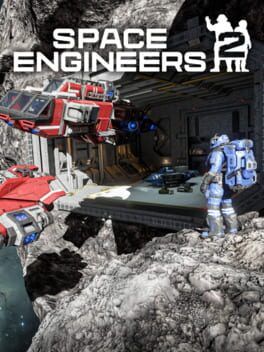

How the huge VS2 Almagest update transforms Space Engineers 2 with a full star system, planets, progression and survival systems, and whether now is the right time to jump in.
Space Engineers 2 has quietly crossed an important line. With the new VS2 “Almagest system” update, it is no longer just a promising creative alpha. It finally feels like the foundation of a full survival sandbox, with structure, progression, and a proper sense of place.
VS2 is the second major “vertical slice” milestone for Keen Software House, and it is easily the most transformative update so far. It introduces a full traversable star system, the first real survival loop, an early story framework, and a powerful projection building system that rewires how you design ships and bases.
This is still an early access style build, with some big-ticket toys like wheels and weapons still missing, but VS2 is the point where Space Engineers 2 stops feeling like a tech demo and starts feeling like a game.
The Almagest system is a real destination, not just a backdrop
The headline addition in VS2 is the Almagest system itself. Instead of working in a flat test sector, you now exist inside a proper star system with its own logic and personality.
Almagest is built around the brown dwarf Delfos, with the brighter star Almagest acting as your primary light source. This dual star setup gives the system a distinctive look, with stark lighting shifts as you move between orbital paths and planetary bodies. It is a subtle change, but it immediately makes the environment feel less like a skybox and more like a real place you inhabit.
The update also brings fully traversable planets, rather than the more abstracted play spaces from the earliest builds. Verdure and Kemik are the current headliners. Verdure is the greener and more hospitable of the two, with lush biomes that make it a natural first home for your early bases. Kemik skews harsher and more industrial, pushing you to think more carefully about logistics, power, and resource extraction.
Both worlds feature multiple biomes, caves and overhangs. Terrain is not just a flat canvas where you drop prefabs. Cliff faces, cave mouths, and jagged overhangs invite you to nestle bases into rock, tunnel for protection, or simply carve out cinematic vistas with a drill. Flora and certain natural features are destructible, which lets you reshape the land to fit your engineering ideas instead of treating it as a static stage.
The system is stitched together with a star map and station points that enable fast travel. Early on you will be introduced to this map through the story setup, learning how to chart destinations and move between key locations. It is still a curated environment rather than a fully procedural galaxy, but it already adds more sense of scale and purpose than the original test environments.
Survival mode arrives, along with the first hint of story
Before VS2, Space Engineers 2 was effectively a creative sandbox with some survival-adjacent features. You could weld, grind, and manage power, but there was little structure nudging you forward. VS2 changes that by introducing the first proper survival mode and an early narrative wrapper.
Your journey now begins with an introductory cutscene and voiceover that establish who you are, why you are in the Almagest system, and what you are supposed to do next. It is not a heavy story campaign yet, more of a framing device that makes your first few hours feel less like being dropped into a designer’s testbed and more like surviving a real situation.
Crucially, this story is woven into the new survival and progression systems. You are guided through the basics of setting up a foothold, taking on base contracts, and learning how to use the star map. These early objectives make what used to be opaque systems feel more approachable. When you build your first production line or establish a station point, it is now in response to a clear need, instead of because a patch note told you the feature existed.
There is still no sprawling campaign with branching choices or deep lore, but as a survival on-ramp, the narrative in VS2 does its job. It gives context, teaches core systems, and then gets out of the way so you can get back to welding questionable contraptions together.
Projection building changes how you design
One of the most impactful changes in VS2 is not about planets or story. It is the projection building system, which quietly flips the survival building experience on its head.
In the original Space Engineers, designing in survival was often a painful compromise. You could either test ideas in creative and then painstakingly rebuild them in survival, or you could wing it with limited resources and hope you did not discover a fatal design flaw twenty hours in.
The new projection system in Space Engineers 2 gives you a third path. You can place holographic projections of ships, stations, or block layouts without committing any resources up front. These ghost builds let you experiment with shapes, layouts, and thruster or conveyor placements before you turn on the welder.
It feels like a bridge between creative freedom and survival constraints. You still have to gather materials when it is time to make the projection real, but you do not pay a resource tax for every design iteration. That lowers the mental cost of experimentation. It encourages you to try bolder designs, more complex interiors, or more intricate conveyor routing, because you know you can iterate quickly before you sink ore into steel.
In practice this makes survival in Space Engineers 2 feel far less punishing without sacrificing the satisfaction of finally welding a ship into existence. It also makes the game far more approachable for newer players who might otherwise be intimidated by the unforgiving nature of engineering mistakes.
Production, power, and resources feel more coherent
VS2 also takes big steps toward a complete survival loop by fleshing out production and power systems. Where earlier builds gave you a handful of blocks to poke at, the Almagest update starts stitching those blocks together into a recognizable chain.
You will mine ore, move it through conveyors, and process it through smelters, fabricators, and gear forges. These production blocks are not just isolated machines. They encourage you to think in terms of flow. Ore detection and drilling determine where your inputs come from. Conveyor decisions decide how those inputs move through your base. Output blocks then shape how quickly you can expand your grid, replace damaged parts, or scale up to larger projects.
Power is similarly more structured. Swappable batteries, reactors, and solar panels give you short term, mid term, and long term power options. A small outpost can live on basic battery and solar setups. A more serious industrial plant will need you to think about reactor placement, hydrogen storage, and fuel logistics. The addition of hydrogen tanks and generators folds nicely into both propulsion and base power strategies.
Tools and personal gear round this picture out. Welders, grinders, and drills all return in refined form, and you are constantly swapping between them as you break down derelicts, harvest materials, and bring projections to life. Consumables and support blocks help keep your engineer alive as you push deeper into caves or higher into orbit.
Together these changes do not yet form the kind of sprawling, late game industrial empires you might remember from Space Engineers 1, but they finally anchor Space Engineers 2 as a survival-first game instead of a feature testbed.
What is still missing and what comes next
As significant as VS2 is, it is not the end of the road. Keen is very open that some classic toys are still on the shelf.
Wheels are not in yet, which means full planetary rovers and ground logistics are still aspirations rather than daily problems. Weapons and mechanical blocks are also missing, so combat and complex moving contraptions will have to wait. If your favorite memories of Space Engineers involve elaborate warships and automated turrets, you will need patience.
The studio is already talking about the next big milestone, VS2.2: Survival Extensions. The roadmap points toward a GPS system for better navigation, more variety in contract types, area welding tools to ease large scale construction, and block wrappers to simplify building workflows. There is a clear intent to keep layering utility and quality of life on top of the survival core introduced in VS2.
That said, VS2 is still an alpha style environment. Balance will change. Systems will get refactored. Entire parts of your base might break between milestones. If you are allergic to that kind of volatility, it is better to treat Almagest as a preview of where the game is headed rather than a finished destination.
How it compares to the original Space Engineers
If you are coming from Space Engineers 1, the most interesting question is not just what is new, but how it feels different.
The biggest shift is structure. Space Engineers 1 grew into its survival and progression systems over years, and a lot of its content is still tuned for open ended creative play. Space Engineers 2, especially after VS2, is designed around survival from the start. The presence of a guided intro, contracts, and a curated star system makes it feel less like a vast, directionless sandbox and more like a space survival sim with engineering at its core.
The Almagest system also gives Space Engineers 2 a stronger sense of place than the original’s more modular map setup. Even in its current limited form, traveling between Verdure, Kemik, and orbital stations carries more narrative weight than hopping servers or switching worlds ever did in the first game.
On the building side, projection construction and improved production chains smooth out a lot of the friction that defined early Space Engineers 1 survival. Where the first game often punished experimentation with wasted resources, Space Engineers 2 invites tinkering. It is closer to a CAD tool that happens to be strapped to a survival game.
There are still areas where the first game offers more breadth. Space Engineers 1 has years of blocks, weapons, wheels, and workshop content that Space Engineers 2 will not match for a long time. If you live for combat scenarios, complex mechanical rigs, or massive community blueprints, the original remains the more complete package for now.
Is this the right time for newcomers to jump in?
If you have been watching Space Engineers 2 from the sidelines, VS2 is the first update that makes it reasonable to recommend as an early access style purchase.
For new players who enjoy survival and building games, VS2 finally provides a real on-ramp. The intro story, contracts, and more coherent progression make your first ten hours much less bewildering than dropping into a barebones creative sandbox. Projection building reduces the frustration of costly mistakes, while the Almagest system gives you concrete destinations and a sense of journey.
You still need to accept that this is a work in progress. Entire feature pillars like wheeled vehicles, combat, and advanced mechanics are absent. Performance and balance will evolve. Saves may not be future proof as the game marches toward release. If you want a stable, fully featured sandbox akin to late life Space Engineers 1, you should wait.
But if you enjoy being on the ground floor, giving feedback, and watching systems grow, VS2 is the moment where Space Engineers 2 stops being theoretical. The building tools are already powerful, the survival loop is finally coherent, and the Almagest system is a compelling setting to test your engineering ambitions against.
Space Engineers 2 is still constructing itself, but with the VS2 Almagest update, the frame of the finished game is finally visible.