
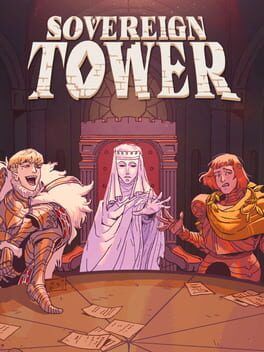
Wild Wits and Curve Games are bringing Sovereign Tower to Nintendo Switch on January 14, 2027, with post-launch PC updates, Hard Mode, and its round-table RPG management systems included.
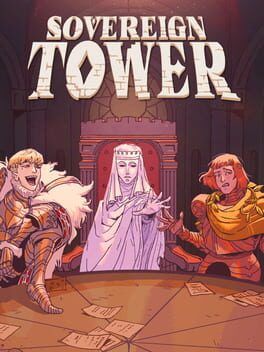
Image: IGDB
Store links: Sovereign Tower on Steam
Sovereign Tower has a Switch date, and it is arriving after months of PC revisions
Sovereign Tower is coming to Nintendo Switch on January 14, 2027, developer Wild Wits and publisher Curve Games announced on November 23. Nintendo Everything, RPG Site, IGN, and the official Games Press release all report the same date, giving the Sovereign Tower Switch announcement a firm slot rather than a vague 2027 promise.
The timing is important because the Switch version is not being positioned as a straight day-one port of the PC launch build. According to Curve Games and Wild Wits, as quoted by RPG Site and Games Press, the Nintendo Switch release will include the game’s post-launch PC updates from the last five months. That package includes a major narrative overhaul, a new Hard Mode that is already available on Steam, fixes, and quality-of-life improvements shaped by PC community feedback.
For a narrative-driven management RPG, that detail carries weight. Sovereign Tower is built around judgment calls, character outcomes, and repeat attempts at messy decisions, so revisions to writing flow and interface friction can change the texture of a campaign. The confirmed Sovereign Tower release window is now a specific mid-January launch, but the larger pitch is that Switch players are getting the game after its first round of public iteration.
A fantasy RPG about ruling from a tower, not roaming as a hero
Wild Wits describes Sovereign Tower as a medieval fantasy round-table RPG. The premise places the player in the role of the Sovereign of the Tower, responsible for a court of eccentric knights, rising demands from the kingdom, and a realm that the official announcement frames as capable of greatness or collapse.
That makes this fantasy RPG Switch release distinct from the usual party-on-the-road structure. The sources provided do not describe direct dungeon crawling, open-world exploration, or turn-based combat in the conventional sense. Instead, the core fantasy is administrative and dramatic: players rule, recruit, assign, judge, recover from poor calls, and live with the social consequences of a court full of difficult heroes.
Nintendo Life reports that the story begins with the player thrust into power after the untimely death of a predecessor. From there, the kingdom has to keep functioning through delegation. Knights are sent to handle tasks such as retrieving stolen manuscripts, confronting evil beings, negotiating with vampires, and other jobs that fit the game’s comic-medieval tone. The Games Press release adds other examples, including recovering lost relics, banishing great evil, and wrangling stray geese.
For RPG players, the hook is less about stat-sheet heroism in isolation and more about whether the ruler can read personalities, assign capable agents, and keep a brittle court from turning heroic ambition into disaster.
The round table system is the main progression question
The clearest mechanical throughline in the announcement is round table management. Curve Games and Wild Wits say each knight has strengths and weaknesses, and players must choose the best-suited knights for quests while keeping their inflated egos under control. Nintendo Everything highlights that success or disaster hinges on player judgment when sending knights into the field.
That suggests a progression loop centered on evaluation rather than reflex. The player is not simply collecting party members because they are charming or powerful. The decision is whether a given knight is right for a specific job, whether their flaws are worth the risk, and whether the court can absorb the consequences if that judgment fails.
The announcement does not provide a full breakdown of character stats, quest categories, upgrade trees, or failure states. Those remain unannounced in the Switch materials supplied. Still, the confirmed features point toward an RPG where builds and party composition are expressed through appointments and missions. A knight’s usefulness appears to depend on context, and the ruler’s build, so to speak, is the shape of the court they assemble and the infrastructure they choose to improve.
Nintendo Life’s feature list, sourced from the announcement, also mentions expanding the tower through new annexes and upgrades, plus outwitting rival rulers. Those details widen the management layer beyond single quest assignments. The tower is presented as a home base that can grow, though the sources do not yet specify how upgrades are purchased, gated, or tied to long-term story routes.
Rewinding time turns failure into information
Sovereign Tower’s most RPG-minded twist is its rewind mechanic. According to the official description shared by Nintendo Everything, RPG Site, IGN, and Games Press, a Demon lurking in the crypts can rewind the player to a specific moment in time. The examples given include a beloved knight’s death, a lapse in judgment, or an awkward conversation.
The important phrasing is that rewinding allows players to use newfound knowledge to unlock new paths, storylines, and dialogue options. That frames failure as reconnaissance. A bad outcome is still a mistake, but it can reveal enough information to make a different branch possible on another attempt.
For choice-driven RPG players, that is the system to watch. If the rewind is generous, Sovereign Tower may lean toward experimentation and route-hunting. If it is limited by cost, timing, or narrative constraint, it could become a sharper risk-management tool. The supplied sources confirm the Demon’s function and the existence of new paths, storylines, and dialogue options, but they do not spell out whether rewinds are unlimited, resource-bound, or restricted to major decision points.
Nintendo Life and Bonus Action also report that romance is part of the game’s appeal, with Nintendo Life’s listed features mentioning forbidden romances. In a court-management RPG, romance is not only flavor text. It can become another layer of loyalty, timing, and character priority, especially when a doomed knight can potentially be saved through a rewind.
The Switch version is being sold as the most complete build so far
The strongest promise from Wild Wits and Curve Games is that the Switch release will arrive with the PC updates already folded in. Games Press says the Nintendo Switch version will bring together post-launch PC updates and improvements from the previous five months, including the narrative overhaul, Hard Mode, fixes, and quality-of-life changes.
Gobert, Creative and Art Director at Wild Wits, said in the Games Press announcement that bringing Sovereign Tower to Nintendo Switch was an obvious choice for the studio and that the game had been designed with handheld play in mind from the earliest stages of development. Gobert also credited the PC community with helping refine the experience and expand the story.
That is a notable statement, though it is still a developer claim rather than independent performance testing. None of the supplied sources provide Switch frame rate targets, resolution, file size, touchscreen support, battery expectations, or loading-time comparisons with the Steam version. For a text-heavy, menu-driven RPG, handheld comfort can be as important as raw performance, but the available announcement materials stop short of technical specifics.
What is confirmed is content parity with the current improved PC direction at launch. For players who waited out the PC debut, the Switch edition is being framed as a cleaner entry point into the Sovereign Tower RPG rather than a late port missing its post-launch work.
Release timing, platforms, and the practical question of whether to wait
Sovereign Tower is available now on Steam, according to IGN and the linked Steam page cited across the source material. The Switch version arrives on January 14, 2027. Bonus Action reports that the game is available to wishlist on the Nintendo eShop, but the supplied sources do not include an eShop listing with price, file size, supported languages, or preorder details.
Platform wording should also be kept precise. The announcement materials consistently confirm Nintendo Switch. They do not confirm a separate Nintendo Switch 2 edition, upgrade path, enhanced version, or physical release. If those details exist later, they are outside the provided source set.
For players deciding between Steam now and Switch in January, the clean answer depends on play style. The PC version already has the new Hard Mode, and the Steam build is the current option for anyone who wants to start immediately. The Sovereign Tower Switch release, however, is close enough that handheld-focused RPG players may prefer to wait for the January version, especially because Wild Wits says the game was built with handheld play in mind and the Switch launch will include the major post-launch updates.
The unanswered questions are the usual ones that matter for a management-heavy RPG on Nintendo hardware: menu readability in handheld mode, save and rewind convenience, loading cadence between court decisions, and whether the interface feels natural on Joy-Con controls. The announcement gives Switch owners a date and a clear systems pitch. The buying decision now turns on how much value players place on portability, and whether they want to enter the Tower after its first five months of revision.