
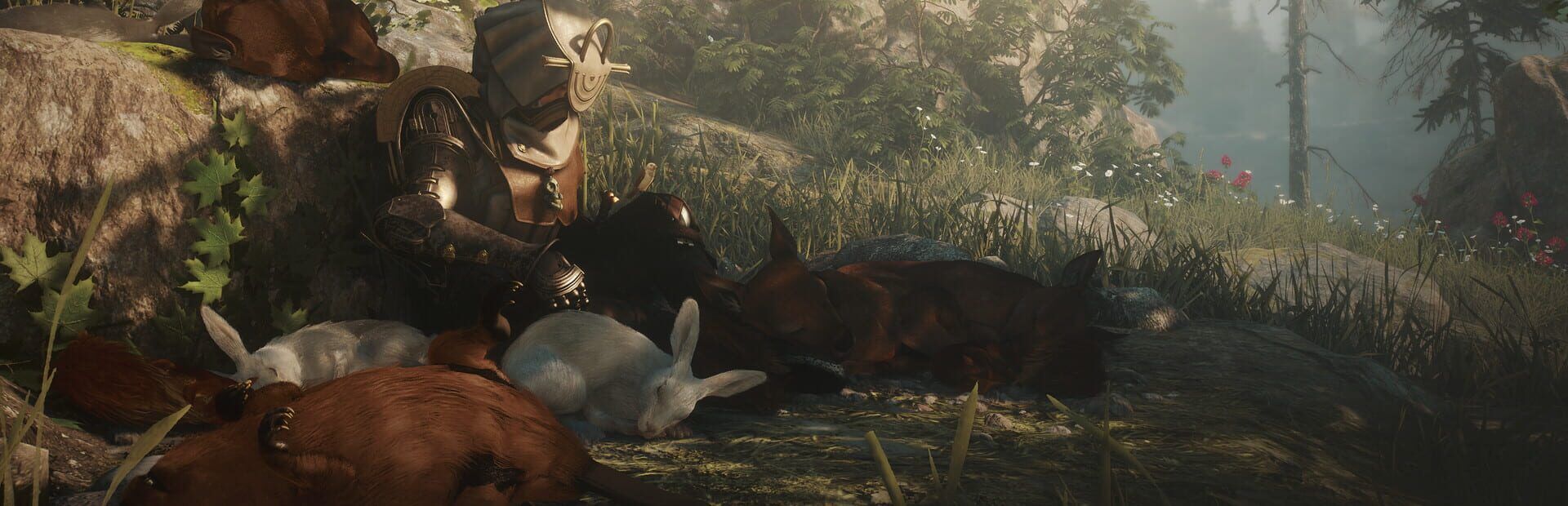

Digital Extremes' next big Soulframe update, Preludes 15: Gods and Ghosts, pushes the MMO’s community features forward with World Tree meetups, early trading, a devastating new morningstar, and subtle systems that prepare players for a broader launch.
Soulframe’s slow-burn public development has been all about getting players into the world early and letting the community shape it in real time. Preludes 15, titled “Gods and Ghosts,” leans hard into that philosophy. Instead of just piling on combat tweaks or content, Digital Extremes is using this update to tighten the social fabric of its nature-haunted MMO, introduce controlled trading, and give players a new way to express themselves through the heavy-hitting Vruscht-IX morningstar.
World Tree meet ups and softer social friction
Soulframe has always felt like a game designed for chance encounters. Preludes 15 formalizes that with new World Tree social features that let players briefly see and connect with others outside their current instance whenever they gather around this central landmark.
The World Tree becomes a kind of social crossroads where multiple shards of the world lightly overlap. Standing near it, you will notice ghosted-in players from other instances, which instantly makes the hub feel more alive. From there you can inspect other players’ equipment, see what builds they are running, and turn a fleeting sighting into an actual party without having to jump through menus or shout in chat.
For a game that is still pre-release, this is a clever way to simulate the bustle of a fully launched MMO without overloading servers or breaking Soulframe’s calmer, more grounded tone. Digital Extremes is clearly using the World Tree as a social testbed, teaching players where to gather and slowly layering on reasons to linger there.
Trading arrives as a carefully fenced system
Preludes 15 also marks the first step toward meaningful player-to-player trade. Digital Extremes is not flipping a switch to open auction houses or global marketplaces. Instead, trading is being introduced in a limited, curated way that fits Soulframe’s slower economy.
Initially, you will only be able to trade within faction-controlled areas. That restriction does two things. It keeps the volume of transactions manageable for the developers while they watch for exploits or unhealthy price behavior, and it anchors trading in the fiction of the world. Factions feel more like real powers when they are the gatekeepers for commerce.
Early trading systems in MMOs often set the tone for years to come. By starting small, Soulframe can tune what items are tradeable, how progression is affected, and how generous the game feels without risking runaway inflation or economic stalling. For players, it is the first time loot and crafting materials start to feel like social objects instead of just personal upgrades.
Vruscht IX the two handed statement piece
On the combat side, the star of Gods and Ghosts is the Vruscht IX, a brutal two handed morningstar that doubles as a showcase for Soulframe’s love of weighty melee combat. It comes with built in elemental effects, which gives it a distinct identity beyond raw damage. You are not just swapping numbers you are choosing a weapon with its own rhythm and visual flair.
Digital Extremes is pairing the Vruscht IX with new combat animations, reinforcing the idea that signature weapons should feel like a complete package. For a game built by the studio behind Warframe, this is an interesting pivot. Where Warframe leans into speed and fluidity, Soulframe is clearly embracing impact and readability, and this morningstar underlines that direction.
For the community, every new weapon in the Preludes phase is a prompt to share builds, theorycraft tempers, and compare approaches. Expect early meta conversations to circle around how the Vruscht IX’s elemental profile pairs with the expanded temper system introduced in this update.
Animal omens, boons, and long term hooks
Social features are not just about chat and party invitations. Preludes 15 also deepens Soulframe’s more ambient systems in ways that quietly tie players to the world and to each other.
Animal omens are a good example. Once you have helped an omen, it can now show up near your login point roughly every 23 hours and offer a choice of boon. This turns a one off discovery into a recurring relationship. Players will naturally end up comparing which omens they have unlocked, what boons they favor, and how these daily touches change their routines.
By rooting these systems in the world instead of in abstract menus, Digital Extremes is encouraging players to talk about Soulframe’s places and creatures the same way MMO veterans reminisce about iconic zones or world bosses.
Quality of life that quietly supports community
Preludes 15 folds in a set of quality of life changes that, taken individually, might seem small but collectively support a healthier community experience.
The temper system is getting more universal and faction specific weapon tempers, which gives players new reasons to experiment with different gear setups instead of defaulting to a single best build. More variation in builds means more interesting co op synergies and more to talk about when you inspect someone at the World Tree.
Improved foliage rendering may sound purely visual, but Soulframe lives and dies on the strength of its atmosphere. Clearer, richer environments make exploration feel more intentional. When people share screenshots, clips, or exploration stories, that visual upgrade is part of what makes the world worth showing off.
A mailbox system is another subtle but important social tool. It supports delayed communication, gifting, and coordination across time zones. In a live service game, being able to leave something for a friend or clan member when they are offline is a quiet foundation for longer lasting groups.
Building community ahead of full release
The most interesting thing about Preludes 15 is how intentionally it uses a test phase to seed long term social structures. Digital Extremes is not simply gathering bug reports. The studio is building habits.
World Tree meet ups teach players where to go if they want to see other people. Limited trading teaches them how to trade responsibly and where economic activity naturally clusters. Weapons like the Vruscht IX give the community shared topics of discussion that blend fashion, function, and feel. Animal omens and boons introduce gentle daily rhythms that players can share without pressure.
With TennoCon on the horizon and more Soulframe reveals promised during and after the event, Gods and Ghosts arrives at a key moment. It gives existing players new reasons to log in and interact, and it prepares the game’s social scaffolding for the larger waves of players that will follow as Soulframe moves closer to a broader release.
If Digital Extremes can keep iterating in this vein refining social spaces, cautiously expanding trade, and anchoring every new system in the collaborative spirit of the game Soulframe could be positioned as one of the more community forward MMOs to emerge from a public pre release cycle.