
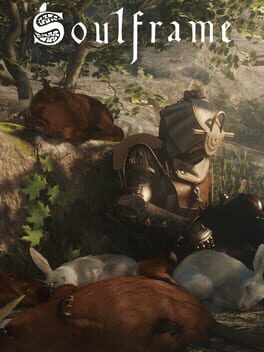
Digital Extremes says Soulframe is chasing a calmer, more hopeful fantasy identity than Warframe, while Elden Ring comparisons set expectations for its slower melee-driven live service design.
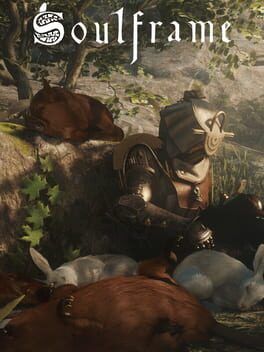
Image: IGDB
Store links: Soulframe on Steam
Soulframe is being pitched as a deliberate step away from Warframe’s velocity
Digital Extremes is now speaking about Soulframe less like a fantasy reskin of Warframe and more like a tonal correction to the studio’s own sci-fi legacy. In a new Rock Paper Shotgun interview, Soulframe design director Scott McGregor, who previously served as Warframe design director, described the team’s goal as building something more inspirational, more redemptive, and less visually explosive than the 2013 free-to-play sci-fi action game that made the studio a live service mainstay.
That is the concrete tension around Soulframe right now. Its greatest asset is also the shadow it has to escape. Warframe gives Digital Extremes a proven community, a decade-plus of live operations experience, and the kind of TennoCon stage most new online RPGs never get. It also gives every Soulframe interview an unavoidable comparison point. When the studio talks about slower melee duels, a rustic fantasy planet, ancient Fey spirits, and a world designed as a kind of refuge from bleakness, players are listening for evidence that Soulframe has its own rhythm rather than Warframe’s parkour momentum in different armor.
Rock Paper Shotgun frames that challenge directly, calling Soulframe’s connection to Warframe both an advantage and a possible curse. The outlet notes that Warframe has kept going since 2013 while live service games face increasingly rocky prospects, and that Digital Extremes, which Rock Paper Shotgun identifies as Tencent-owned, has obvious incentives to carry forward what already works. McGregor’s comments suggest the team is trying to borrow institutional knowledge without copying the feel of Warframe’s combat screen, mission pace, or sci-fi identity.
The new Soulframe interview leans on hope, redemption, and a quieter fantasy mood
McGregor’s strongest comments in the Rock Paper Shotgun interview are not about loot, classes, or release timing. They are about emotional temperature. He said “the world’s becoming so bleak” and that, when the team began working on Soulframe, it was looking for something “a little bit more inspirational” with “a little bit more redemption” than another dark and evil setting.
According to Rock Paper Shotgun’s summary of the premise, Soulframe takes place on a rustic medieval planet being colonized by the Ode, described by the outlet as evil spacefaring invaders governed by a hypnotic Spellsong. Players are Envoys empowered through a pact with ancient Fey spirits, fighting the Ode and freeing creatures that have been imprisoned or corrupted. That setup still includes oppression, corruption, and violence, but McGregor’s comments position those darker elements as contrast for a restoration arc rather than the final mood.
The Warframe comparison is useful here because Warframe’s identity is built on acceleration. Its fiction is strange, metallic, and operatic. Its veteran play often becomes a blur of movement, ability effects, and material pursuit. Soulframe, based on Digital Extremes’ current messaging, is aiming for a different kind of power fantasy: less about slicing through a room before the room has registered, more about inhabiting a wounded world long enough to feel its recovery.
That is interpretation, not a confirmed design outcome. The confirmed part is McGregor’s stated intent: a happier place, a happier world, and a redemption arc shaped by the team’s reaction to real-world bleakness. Whether a live service action RPG can sustain that feeling through years of progression systems, events, boss encounters, and repeatable play is the open question.
Soulframe gameplay is being slowed down on purpose
The clearest mechanical break from Warframe in the Rock Paper Shotgun interview is pace. McGregor told the outlet that Soulframe is still trying to sell players a power fantasy, but “at a different pace and a different scale.” He also described the team as aiming for something “a little bit more cosy” and “a little less bombastic.”
Rock Paper Shotgun reports that Soulframe includes projectile weaponry and ranged magic, but that it hinges on methodical melee duels. The outlet also emphasizes what Soulframe lacks: Warframe’s extreme parkour system, the movement language that lets experienced players blink through spaces while optimizing for resources and mission completion. That absence may be the single most important Soulframe Warframe comparison for returning Digital Extremes players. Movement speed determines how players read a battlefield, how level designers stage encounters, and how much animation weight a weapon can carry before it feels slow.
McGregor’s comment about review meetings is especially telling. He said the team is being conscious of how “explosive” the screen is, how often effects are applied to enemies, and how many enemies the player engages at once. In action game terms, that is a production-side admission that spectacle has a cost. When the screen is filled with overlapping effects, combat can feel powerful, but enemy intent, hit timing, and positional risk become harder to read. Soulframe’s calmer identity depends on whether Digital Extremes can make restraint satisfying over hundreds of hours.
For players tracking Soulframe gameplay, this is the practical takeaway: do not expect Warframe’s kinetic ceiling to be the baseline. The current public messaging points toward fewer simultaneous threats, heavier melee focus, and a fantasy action cadence where distance, timing, and readable enemy behavior matter more than speed-running a tileset.
The Elden Ring comparison matters, but it should not be treated as a genre label
Rock Paper Shotgun reports that Soulframe’s creators are trying to lure a new following with combat mechanics that take inspiration from Elden Ring. That is a meaningful comparison because Elden Ring changed what many players expect from melee fantasy combat: readable animations, dangerous spacing, boss patterns that teach through punishment, and a world whose atmosphere carries as much weight as quest text.
But the Soulframe Elden Ring connection should be handled carefully. The provided sources do not confirm that Soulframe is a Soulslike, a premium single-player RPG, or a FromSoftware-style challenge game. The confirmed description from GameSpace is an upcoming free-to-play fantasy action RPG, while Rock Paper Shotgun’s interview frames Elden Ring as an influence on combat mechanics rather than a complete template.
Polygon’s Elden Ring video offers a useful lens for the comparison even though it is focused on FromSoftware’s visual craft rather than Soulframe directly. Polygon highlights how much storytelling FromSoftware can draw from cloth: shape, texture, and movement. That kind of detail matters because slower action games give players time to notice bodies, fabrics, silhouettes, and environmental mood. If Soulframe is backing away from Warframe’s screen-filling velocity, its fantasy identity will need to do more work in animation, enemy readability, and world texture.
So the Elden Ring comparison matters less as a promise of difficulty and more as a pressure point for presentation and combat rhythm. A slower game cannot hide behind speed forever. Every wind-up, stagger, dodge, spell effect, and boss entrance becomes easier to judge. For an action/adventure audience, that is where Soulframe will either earn its separation from Warframe or invite the criticism that it has slowed the studio’s formula without replacing the thrill.
TennoCon shows a hopeful world with darker systems already pushing back
Digital Extremes’ recent TennoCon 2026 showing complicates the idea that Soulframe is simply the studio’s cozy escape. According to MobileSyrup, more than 4,000 fans attended TennoCon in London, Ontario, with hundreds of thousands more tuning in online. The outlet reported that Digital Extremes showed major updates for both Warframe and Soulframe, with studio president Sheldon Carter describing the event as a “coming-out party” for both games and saying Soulframe’s showcase was meant to clarify the stakes and the real story of the player’s journey.
GameSpace’s TennoCon 2026 recap points to the other side of Soulframe’s identity: corruption, rivalry, and darker progression. The outlet reported that Digital Extremes previewed Warsongs, a new Fable questline planned for later in the fall, built around a corruption-based progression system called the Vadagar Pact. Players who embrace Ichor gain access to abilities including explosive boomerang attacks, ensnaring tendrils, and a stampede of corrosive spectral steeds, according to GameSpace.
That is a useful corrective to any overly soft reading of McGregor’s comments. Soulframe may be chasing redemption and restoration, but Digital Extremes is also building temptation into the player kit. GameSpace says the Warsongs content introduces Tempest Bayor, voiced by Ben Starr, as a red-armed Envoy aligned with the invading Ode forces. The same report says Jennifer English portrays the Empress of Eldveil, suggesting broader political and narrative conflict around Alca.
The result is a clearer outline of Digital Extremes’ balancing act. Soulframe wants to feel calmer than Warframe, but it cannot be frictionless. A fantasy live service needs antagonists, build choices, boss pressure, and systems that generate debate. The Vadagar Pact sounds like one route toward that, though its long-term role in progression remains something players will need to judge as Digital Extremes expands testing.
Access, release timing, and the questions players still cannot answer
For players wondering whether to jump in, the current source material gives a partial answer. GameSpace reported that Soulframe Preludes access was temporarily opened wider around TennoCon 2026, and that anyone who created an account on the official Soulframe website before the July 12 deadline secured permanent access to the current testing phase. The same report says the Mendicant Reinbreaker boss encounter is available now in Preludes, while fishing has been added as a worldbuilding activity and mounts are scheduled to arrive later this year as full-grown wolf companions.
What remains unconfirmed is just as important. GameSpace states that Soulframe still has no full release date. The provided sources do not confirm final platform availability, launch timing, system requirements, monetization specifics beyond the game being described as free-to-play, or how much current Preludes content will resemble the eventual public launch. That makes Soulframe a game to follow closely rather than a product with a clean buyer’s-guide answer.
If you are a Warframe veteran, the safest expectation is contrast. Soulframe is coming from the same studio, but the latest Soulframe interview makes clear that Digital Extremes is trying to reduce the speed, density, and sci-fi bombast that define Warframe at high level play. If you are coming from Elden Ring, the safer expectation is influence rather than equivalence. The sources support a slower melee focus and an admiration for Elden Ring-style combat lessons, but they do not support assuming FromSoftware structure, difficulty, or release model.
The stakes for Digital Extremes are unusually visible. Warframe’s ongoing audience gives Soulframe room to be public early, stumble, adjust, and grow in front of a community. It also means every new system will be measured against a decade of muscle memory. Soulframe’s challenge is to make stillness feel intentional, to make hope survive contact with grind, and to prove that Digital Extremes can build a second live service identity without letting the first one set the tempo.