
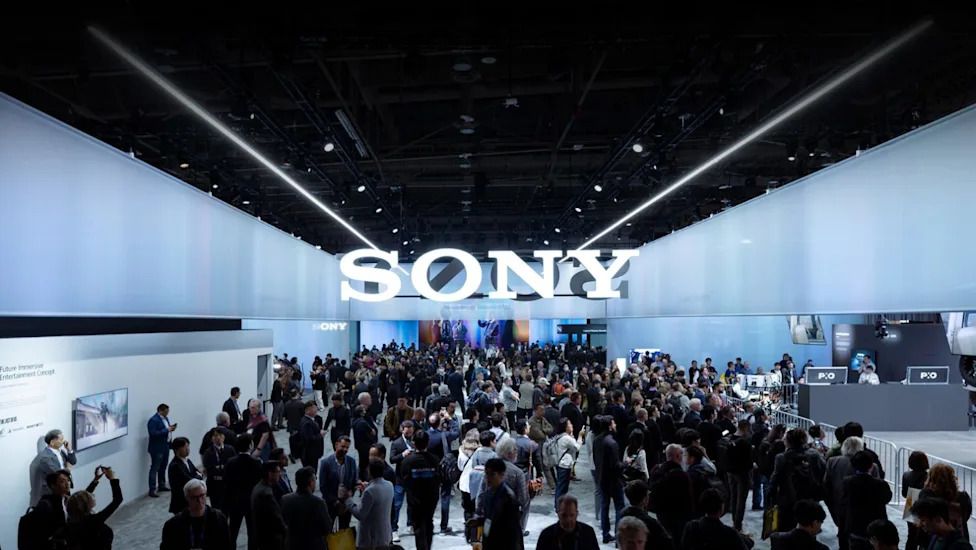

Sony is skipping CES 2027 for the first time since 1967, signaling a deeper shift away from broad electronics showcases and toward entertainment-led PlayStation, film, anime, music, and creator-tech reveals.
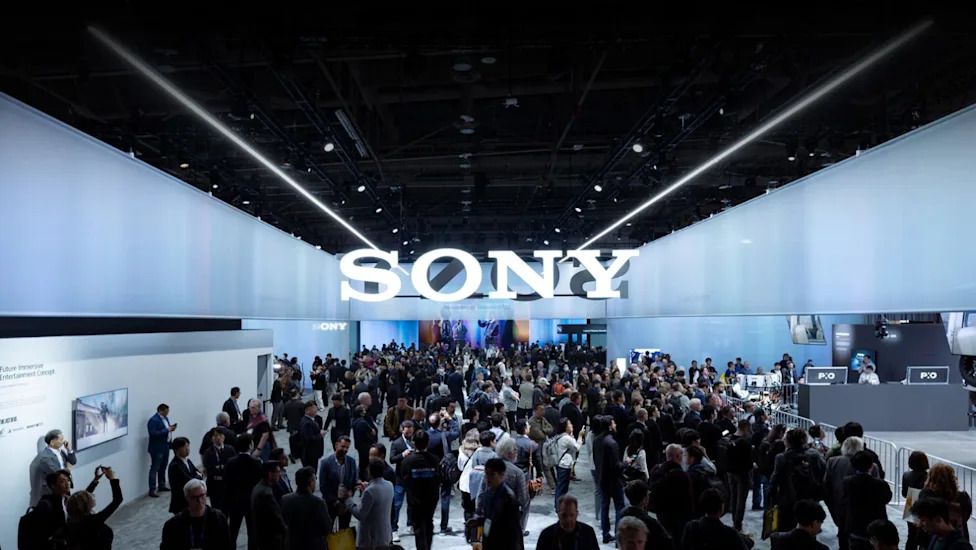
Image: currently.att.yahoo.com
Sony’s 60-year CES run is ending at the exact moment PlayStation watchers are hunting for signals
Sony will not attend CES 2027, ending a presence at the Las Vegas technology show that dates back to the event’s inaugural edition in 1967. Video Games Chronicle, GamesIndustry.biz, GameSpot, and Yahoo all cite reporting tied to Bloomberg, with Sony confirming that it is skipping the January show after evaluating how it communicates across its businesses.
The immediate consequence for PlayStation fans is simple: CES 2027 will not be a place to look for PlayStation news directly from Sony. GameSpot put that most plainly, noting that Sony’s absence means any PlayStation news at the show will not come from Sony itself. CES 2027 is scheduled for January 6 to 9 in Las Vegas, according to GameSpot, but neither Sony nor its affiliates are expected to exhibit, according to GamesIndustry.biz.
Sony’s own explanation is broad, but revealing. A company spokesperson told Bloomberg, as quoted by VGC and GamesIndustry.biz, that Sony “continuously and strategically evaluate[s]” its approach to events and communications based on the needs and priorities of its diverse business. The company also pointed to a stronger focus on “entertainment, intellectual property, and technology geared to support creators.” Engadget’s summary of the same corporate direction specifies entertainment categories including games, anime, films, and music.
That makes Sony skips CES 2027 a bigger story than one missing booth. For decades, CES was a natural stage for a company built around televisions, cameras, audio gear, sensors, prototype devices, and glossy hardware theater. Sony is now signaling that the center of gravity has moved. PlayStation remains hardware-dependent, but the reveal strategy around it increasingly belongs to Sony’s entertainment stack, not the old consumer electronics calendar.
CES was never PlayStation’s main stage, but it served a real strategic role
PlayStation CES moments have always occupied a strange lane. They were rarely the biggest beats in a console cycle, but they were useful temperature checks. Sony’s CES keynotes historically mixed executives, creative leaders, technology demos, and product updates, which gave PlayStation a recurring January window to remind investors, press, and players that it sat inside a much larger electronics ecosystem.
The best example is also the funniest. GameSpot notes that then-PlayStation boss Jim Ryan revealed the PS5 logo at CES 2020, a moment that became a meme because the logo looked exactly as most people expected. VGC frames that same period as Sony using CES to announce the PlayStation 5’s name. Either way, the substance was intentionally limited. The price, release date, and deeper technical specifics came later through PlayStation-focused communications.
That pattern matters. CES gave Sony a venue for controlled, low-risk PlayStation messaging before larger platform reveals. It could show confidence without spending a dedicated showcase slot. It could connect PlayStation to display technology, audio, mobility, streaming, or creator tools. It could also speak to audiences beyond the enthusiast console crowd.
Other PlayStation-related CES beats were more substantial. GamesIndustry.biz and GameSpot both cite CES 2022 as the place where Sony announced PlayStation VR2 and Horizon: Call of the Mountain. VGC also points to past CES appearances for PlayStation Now and Sony’s push into 3D gaming. In recent years, GameSpot says Sony’s PlayStation-related CES announcements leaned into transmedia, including Horizon and Helldivers movie projects.
That history shows the shift clearly. CES was not where Sony tended to unload its deepest console secrets. It was where Sony positioned PlayStation inside broader technology ambitions. Losing that venue does not automatically mean fewer PlayStation announcements. It does mean fewer cross-company signals for anyone trying to read Sony’s hardware roadmap through the old electronics-show lens.
Sony’s statement points to an entertainment-led communications model
The strongest thread across the reporting is Sony’s own language: entertainment, intellectual property, and technology for creators. That phrasing is carefully corporate, but it maps onto the company’s public behavior. Games, anime, films, and music can be packaged through targeted reveals far more cleanly than through a CES booth built around physical devices.
For PlayStation watchers, that changes the meta. Sony no longer needs CES to explain PlayStation as a device business sitting next to televisions and headphones. It can explain PlayStation as part of an IP engine where games, adaptations, music partnerships, anime distribution, and creator technology reinforce one another. GameSpot’s note that recent CES PlayStation beats included Horizon and Helldivers movie announcements fits that direction, even if the company has now decided CES itself is not the right place for the message.
The practical reveal economy has also changed. GamesIndustry.biz reports that Sony has been largely absent from in-person gaming conferences, including Gamescom, and has not attended Gamescom since 2019. The outlet adds that Sony now relies on digital showcases such as State of Play. That is a major structural change from the era when platform holders fought for physical stage dominance at E3, Gamescom, and CES-adjacent press cycles.
A digital-first model lets Sony pick timing around software readiness, trailer availability, preorders, platform updates, and regional marketing. It also avoids forcing PlayStation into a CES news environment where televisions, cars, chips, laptops, smart home products, and speculative prototypes all compete for oxygen. From a strategy angle, this is Sony choosing controlled lanes over high-traffic floors.
There is a tradeoff. A scheduled show like CES creates expectation, even when the announcements are modest. State of Play streams can be more targeted, but they are also easier to skip, easier to judge harshly, and more exposed to direct comparison with Nintendo Directs and Xbox showcases. Sony gains control, but loses one predictable annual checkpoint.
The hardware backdrop makes the exit easier to understand
Sony’s CES withdrawal sits against a hardware story that has become less straightforward. VGC reports that Sony did not operate its own booth at CES earlier this year, while Sony Honda Mobility showcased the Afeela electric vehicle. VGC also says Sony and Honda later announced plans to reassess that joint venture, putting the partnership into question. Push Square characterizes the Afeela situation more bluntly as abandoned, while the more cautious wording in VGC and Yahoo’s article centers on reassessment. The safest confirmed point is that the EV effort no longer appears to be a stable replacement for Sony’s traditional CES presence.
The television business also complicates the old Sony identity. Push Square says Sony sold off its Bravia television division to TCL earlier this year, while Yahoo’s article describes a proposed strategic partnership and joint venture for the Bravia television business, with TCL holding 51 percent and Sony retaining 49 percent, subject to definitive agreements and regulatory approvals. Those descriptions are not identical, so the important takeaway is narrower: Sony’s classic consumer electronics footprint is being reshaped, and that makes a giant CES presence less obviously central than it once was.
Sony still makes consumer electronics, and VGC notes that it remains a major supplier of image sensors for the automotive industry. VGC also says Sony executives have previously discussed the potential for vehicles to become platforms for new forms of entertainment. That is the connective tissue between old Sony and new Sony: hardware remains important, but increasingly as an enabler for content, services, and creator ecosystems.
That distinction matters for PlayStation. A console is still a physical product with supply chains, silicon decisions, peripherals, display standards, storage questions, and price pressure. But the way Sony sells the PlayStation idea is less about being one device among many on a CES floor and more about being a gateway into franchises, subscriptions, adaptations, and social entertainment. The booth disappears; the platform strategy does not.
This also says something about Sony’s appetite for public comparison
There is a competitive layer here that should not be ignored. GamesIndustry.biz reports that Sony was absent from Gamescom while Nintendo and Xbox had a strong presence, with Nintendo hosting two booths including a stage and an area with playable games. The same report says Gamescom’s exhibition area was fully booked, with organizers citing demand for exhibitions as higher than ever.
That contrast weakens any easy argument that big shows no longer matter. They clearly still matter for some companies, in some years, with some product mixes. Nintendo and Xbox can use physical events to put hardware, games, and services directly in front of players, creators, retailers, and press. Sony is choosing a different rhythm.
From a strategy perspective, this looks like a company reducing exposure to uncontrolled comparison windows. At a show, the audience can walk from one platform holder’s playable lineup to another’s. If Sony is between major first-party release beats, or if it wants to avoid showing hardware before the message is polished, a public floor can turn into a disadvantage. A State of Play or dedicated reveal lets Sony frame the conversation around selected assets and specific timing.
There is risk in that discipline. PlayStation fans already scrutinize silence as a signal. When Sony skips a show it attended for 60 years, speculation fills the gap: PS6 timing, PlayStation VR2 support, live-service planning, PC strategy, handheld or cloud ambitions, and the future of creator tools around games. None of those are answered by the CES 2027 decision. The confirmed fact is only that Sony will not exhibit and that it is prioritizing entertainment, IP, and creator-supporting technology in its communications.
The healthier read is to treat the absence as a communications strategy shift, not a product roadmap leak. No source material confirms a PlayStation 6 announcement plan for CES 2027. Yahoo specifically notes that no PS6 announcement for CES 2027 has been confirmed. If anything, the absence makes CES a worse place to hunt for that kind of signal.
How PlayStation fans should recalibrate expectations for 2027
The useful guidance is straightforward: do not mark CES 2027 as a likely source for official PlayStation hardware news. Sony skipping the show removes one of the older January watchpoints from the calendar. If PlayStation has platform updates, the reporting from GamesIndustry.biz suggests Sony’s current pattern points toward digital showcases such as State of Play, dedicated PlayStation communications, or entertainment-specific announcements tied to individual projects.
That does not mean PlayStation becomes less important inside Sony. The sources say the opposite direction is more plausible: Sony’s stated emphasis includes games, and Push Square describes PlayStation as central to a future split across movies, music, and games. The difference is venue and framing. A PS5 accessory, a VR update, a streaming feature, or a creator-tech partnership may once have made sense beside televisions, cameras, and mobility prototypes. In Sony’s current model, those beats may be held until they can support a more focused entertainment message.
For readers following gaming industry news, the key question is whether Sony can replace the trust that predictable appearances used to create. A digital showcase can land harder than a trade-show keynote when it has the goods. It can also make the company feel absent when the cadence slows. CES 2027 will test that absence because it removes a tradition dating back to 1967, not because CES was ever PlayStation’s biggest stage.
Sony’s move also sharpens how we should interpret future reveals. If the next major PlayStation beat arrives through State of Play, a film or anime partnership announcement, or a creator-technology presentation, it will fit the company’s stated direction. Sony is telling the market where it wants attention: entertainment, IP, and tools that support the people making that entertainment. The old CES version of Sony put devices first. The 2027 version is asking audiences to follow the franchises, platforms, and creators instead.