
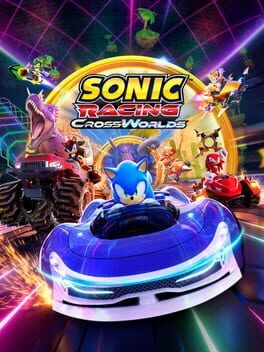

With Sonic Team openly talking about a potential third year of content, Sonic Racing: CrossWorlds is positioning itself as a true long‑term live service kart racer. Here is what the roadmap looks like now, what a Year 3 could bring, and how extended support could help it carve space alongside Mario Kart and other competitors.
Sonic Team Is Already Teasing A Third Lap
In a recent interview covered by My Nintendo News, Sonic Team head Takashi Iizuka confirmed that Sonic Racing: CrossWorlds could receive a full third year of post‑launch support. The studio has not locked anything in yet, but Iizuka makes it clear the team is prepared to keep building new content as long as sales remain strong and players keep showing up for each new drop.
That stance fits how Sega has treated CrossWorlds since launch in September 2025. Instead of a one‑and‑done kart racer, Sonic Team built this as a platform game that keeps pulling in new characters, tracks and crossovers, both paid and free, on a regular schedule.
The Live‑Service Roadmap So Far
CrossWorlds launched with a roadmap that covered post‑launch updates through 2026, and Sega updated that roadmap again in March 2026. Between the official Sonic account and breakdowns from sites like Nintendo Life, Final Weapon and GoNintendo, the plan looks like this.
In Year 1, running from late 2025 into early 2026, Sega leaned on a Season Pass model. Digital Deluxe and Season Pass owners received themed DLC packs built around external IPs. Packs like Minecraft, SpongeBob and Pac‑Man bundled several playable characters, a signature vehicle, a themed track and music, plus a handful of emotes and cosmetic sounds. Alongside those packs, Sega rolled out free content drops for everyone, including extra Sonic universe racers and small balance or quality‑of‑life updates.
The updated 2026 roadmap repositions CrossWorlds as a more traditional live‑service racer. Q2 2026 highlights Mega Man as the next paid guest pack, arriving alongside three new free DLC characters spread across April and May. The roadmap continues into Q3 2026 with additional Season Pass content centered on Teenage Mutant Ninja Turtles and Avatar Legends, each bringing their own characters, a fresh track layout and themed audio.
Across all of this, Sega keeps stressing that free content drops will continue through 2026. That makes CrossWorlds feel less like a boxed kart racer that happens to sell DLC and more like a constantly evolving hub for Sega and crossover fan service.
What A Third Year Could Look Like
Iizuka’s comments about a possible third year are careful but optimistic. He frames Year 3 as something Sonic Team wants to do, provided the audience is still there. If that happens, a third year of support would likely do two things at once: deepen Sonic’s own racing universe and expand the crossover reach even further.
On the Sonic side, Year 3 would be a natural home for more internal Sega fan service. The current roadmap already teases additional Sega characters in Q2 2026. Extending into 2027 could bring whole packs themed around classic Sonic eras, Chao Garden content or deeper cuts from the wider Sega catalog like Jet Set Radio or NiGHTS. New tracks that lean harder into CrossWorlds’ dimensional warping gimmick could shake up the meta in a way that simple balance patches never could.
On the crossover side, the existing guest lineup points to how aggressive Sega is willing to be. Minecraft, SpongeBob, Pac‑Man, Mega Man, TMNT and Avatar Legends already span games, cartoons and anime‑adjacent properties. A Year 3 strategy could double down on that approach, using new IP packs to capture specific regional markets or age groups. The key is that CrossWorlds has already proven it can integrate wildly different worlds into one coherent ruleset, so adding more is a matter of licensing and scheduling rather than technical risk.
For the player base, another full year of drops would signal that investments in Season Passes, cosmetics and ranked grinding will keep paying off. For Sega, it is an excuse to re‑promote the game every few months with a fresh crossover reveal instead of relying solely on discounts and static bundles.
How Long‑Term Support Helps It Compete
The kart‑racing space is brutally competitive. Mario Kart 8 Deluxe still dominates mindshare years after launch, and smaller licensed racers often pop up and vanish in under a year. For Sonic Racing: CrossWorlds to stand out, it needs to be more than a one‑season curiosity.
Long‑term support is one of the few levers Sega can pull to fight back. Mario Kart’s Booster Course Pass showed how a steady drip of tracks can keep an older racer at the center of conversation. CrossWorlds takes a different angle, relying on a mix of brand‑new tracks and high‑profile character cameos that cannot happen anywhere else. By committing to at least two full years, and potentially three, Sega is teaching players to think of CrossWorlds as a living game they check in on regularly, not just something they clear in a weekend.
This kind of support also strengthens the game’s competitive and social scenes. Regular content seasons give ranked players new metas to solve and give casual groups a reason to boot the game back up when a favorite IP joins the roster. Cross‑platform availability on Switch, Switch 2, PlayStation, Xbox and PC means every new content beat has a wide addressable audience.
If Sega can stretch the roadmap into Year 3 without losing momentum, CrossWorlds gains something most kart racers lack: a sense of continuity. Returning after a year would mean finding a materially different game, not just a new balance patch.
The Monetization Balancing Act
Any live‑service racer risks leaning too hard on paid packs. So far, CrossWorlds has walked a careful line. The Season Pass concentrates the biggest crossover drops, but Sega complements those packs with free characters and general updates that keep non‑spenders in the loop.
A third year of content will only work if that balance holds. Players will tolerate another round of Season Passes and themed IP bundles if it is clear that evergreen parts of the game, like the base Sonic roster, core tracks and online features, continue to improve. That means more quality‑of‑life updates, better matchmaking, new event types and festival‑style limited‑time modes rolled out for everyone, with monetization layered on top through cosmetics or early access rather than strict paywalls.
Handled well, that approach could turn CrossWorlds into the closest thing Sega has to a racing platform. It becomes easier to justify putting down money when the game feels alive for years instead of months.
Can Sega Stick The Landing?
Everything comes down to follow‑through. Iizuka’s comments confirm Sonic Team is interested in a third year, but that future depends on how the current roadmap performs. Strong engagement with Mega Man, TMNT and Avatar Legends, plus steady player retention through the free content drops of 2026, will likely decide whether Year 3 gets greenlit.
If it does, Sonic Racing: CrossWorlds could settle into a rare position in the kart‑racing scene. Instead of chasing Mario Kart directly, it would occupy a parallel niche built around fast updates, cross‑media cameos and a Sonic‑centric universe that keeps expanding. For a genre often defined by one dominant game and a rotating cast of short‑lived challengers, that kind of staying power would be an impressive result for Sonic Team’s ambitious live‑service experiment.