
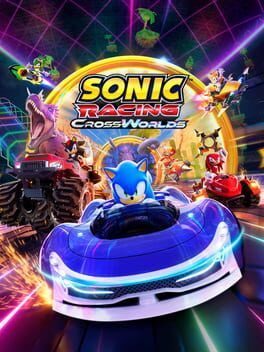
Goro Majima, Angry Birds’ Red, and Puyo Puyo’s Arle headline Sonic Racing: CrossWorlds Patch 3 as SEGA doubles down on free crossover support and a post-launch cadence that is turning the racer into a live-service standout.
Patch 3 for Sonic Racing: CrossWorlds is not just adding more drivers to the grid. It is quietly showing how SEGA wants this racer to live well beyond launch by turning it into a crossover hub that keeps getting weirder, broader, and more generous.
The latest update brings three more free guest characters into the roster: Goro Majima from the Yakuza / Like a Dragon series, mobile icon Red from Angry Birds, and Arle from Puyo Puyo. Red and Majima arrive in April, with Arle following in May, all bundled into the Patch 3 rollout alongside new music for the in-game jukebox and more themed vehicles.
What makes this wave interesting is not just who is arriving, but what it says about how SEGA is supporting CrossWorlds in its first full year.
Majima, Red, and Arle reshape the game’s identity
CrossWorlds launched as a Sonic-centric racer built around dimension-hopping tracks, tag-team mechanics, and a cast pulled from across Sonic history. Since release, SEGA has steadily pushed the lineup further into full-company crossover territory, and Patch 3 is the boldest example of that strategy so far.
Goro Majima is the most striking addition. He comes from the gritty, grounded streets of Kamurocho, which sit about as far from a candy-colored Sonic track as you can get. Dropping him into CrossWorlds leans into the contrast. His custom vehicle, built to match his unpredictable energy, becomes a visual punchline every time he pulls up next to Tails or Amy on the starting grid. It makes the game feel more like a celebration of SEGA as a whole than just a Sonic spin-off, and it invites fans of Like a Dragon who might never have touched a mascot racer to at least look twice.
Red, by comparison, is a very different kind of guest. Angry Birds is not a SEGA property, and its presence signals SEGA’s willingness to reach beyond its own catalog for cross-promotion. Red’s themed kart and animations are all about translating a simple mobile icon into a personality that can stand toe-to-toe with Sonic. In a game already juggling multiple dimensions, seeing an app store superstar line up for a three-lap sprint actually fits the anything-goes premise. It also quietly broadens the audience: players who grew up flinging birds on phones now see that part of their gaming history parked next to the Blue Blur.
Arle reflects SEGA’s internal history more directly. Puyo Puyo has been one of the company’s most consistent puzzle pillars, especially in Japan, and Arle brings that heritage into the racer. Her design and themed vehicle lean into the playful, bright look of Puyo Puyo, but she also gives puzzle-game fans another touchpoint in a racer that already revels in fan-service. When a Sonic track suddenly warps into a Puyo-flavored dimension while the jukebox drops a new remix, it stops feeling like a cameo and more like SEGA stitching its different eras into one shared space.
Each of these characters tweaks the tone of CrossWorlds in a different direction. Together, they push the game even further from a straightforward Sonic kart competitor into something closer to a SEGA multiverse showcase.
Free characters as a long-term visibility play
The key piece tying all of this together is that Majima, Red, and Arle are free. There is no battle pass requirement and no character bundle to buy. Once Patch 3 lands, they simply appear as part of the updated roster.
That generosity has two clear benefits. The first is community goodwill. In a landscape where racers often carve out characters for paid DLC or time-limited events, CrossWorlds has spent its post-launch life steadily giving away more toys to play with. Every time SEGA announces another free guest, the conversation around the game spikes again, not with frustration over monetization, but with curiosity about who is next.
The second is discovery. Crossovers are essentially marketing that players are happy to share. Yakuza fans posting clips of Majima drifting through space, or puzzle players laughing at Arle trading paint with Shadow, naturally broadcast the game to audiences who may have ignored its original launch window. Patch 3’s lineup is tailored to hit several different fanbases at once, and giving those fans free access removes the biggest barrier to checking the game out.
It also cleverly repositions CrossWorlds in the broader Sonic and SEGA ecosystem. Instead of feeling like a one-off spin-off that peaked at release, it behaves more like a platform that can keep absorbing new icons whenever SEGA has something to highlight, whether that is a new Yakuza release, a Puyo Puyo project, or even external collaborations like Angry Birds.
A crossover strategy that keeps the racer in the conversation
In the months after launch, most racers settle into a quieter tail where only hardcore fans keep up with balance tweaks and seasonal cups. SEGA’s incremental updates for CrossWorlds, culminating in Patch 3’s triple guest drop, are designed to disrupt that cycle.
By staggering the arrivals of Red and Majima in April and Arle in May, SEGA effectively turns one patch into a multi-month marketing beat. Each release can be paired with a fresh trailer, new social clips, and a mini wave of discussion. Even players who drifted away at launch are reminded, repeatedly, that the grid looks different now.
This slow, character-focused rollout also gives room for each guest to breathe. Majima can dominate highlight reels for a few weeks before Red’s kart and chaotic energy take their turn in the spotlight, and then Arle can arrive to close out the Patch 3 cycle with another tonal shift. For a racer built around colorful personalities and spectacle, that drip feed keeps the game feeling busy without requiring a complete rework of systems every time.
CrossWorlds starts to have an identity similar to a fighting game roster that never stops growing. The base mechanics remain familiar, but the makeup of the cast keeps shifting, which in practice changes online lobbies, team compositions, and the look of every starting grid.
Is SEGA’s support cadence becoming a competitive advantage?
When you compare Sonic Racing: CrossWorlds with other recent arcade racers, SEGA’s cadence is starting to look like a real edge.
First, there is consistency. Patch 3’s rollout follows previous updates that already added new racers, tweaks, and quality-of-life improvements. The pattern is that major content updates land often enough that the game never feels abandoned, but not so frequently that players are overwhelmed or burned out on grinding for unlocks. The fact that each wave has been headlined by recognizable faces, rather than small balance notes, means that every patch feels like an event.
Second, there is the willingness to pull from both inside and outside SEGA’s library. Many mascot racers rely entirely on their core franchise, which limits how surprising new characters can be. CrossWorlds is building a reputation as the racer where anything with a SEGA connection or a friendly partner deal could show up. That unpredictability keeps people checking patch notes and announcement trailers just to see who is next.
Finally, SEGA’s approach sidesteps some of the friction that drags down other live-service games. Free guests, accessible updates, and an emphasis on fan-pleasing crossovers mean that players are rarely asked to open their wallets just to keep up. Instead, post-launch support feels like a reward for sticking around, which makes it easier for lapsed players to come back and for curious newcomers to jump in.
If SEGA can maintain this rhythm past Patch 3, CrossWorlds could carve out a unique niche among modern racers. It may not chase the hyper-realism of a sim or the dense seasonal grind of some live-service titles, but it offers something more straightforward: a reliably updated, crossover-heavy party racer where every major patch is an excuse to return.
Patch 3 as a glimpse of the future
Majima, Red, and Arle do more than fill out character select portraits. They show how SEGA sees Sonic Racing: CrossWorlds as a flexible stage for its brands and partnerships, supported by a post-launch plan built on frequency, surprise, and generosity.
In practical terms, Patch 3 means more options, more music in the jukebox, and more reasons to hop back into matchmaking. In broader terms, it suggests that CrossWorlds is not winding down after its launch window, but settling into a long-term life where the question is less whether new content is coming and more who will be invited to the grid next.
For a game that already treats racing as a dimension-hopping spectacle, that is exactly the kind of future it needs.