
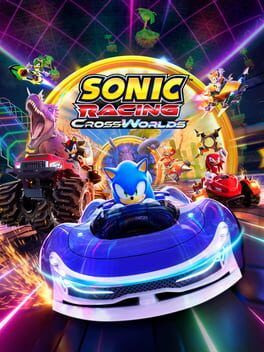
Takashi Iizuka wants Sonic Racing: CrossWorlds to represent every era of Sonic. With Tangle and Whisper opening the door for deeper-cut picks, we break down the most likely comic and spin-off racers and how an expanded roster could drive the game’s long-term future.
Tangle & Whisper Were The Test Run – Now The Door Is Open
When Sonic Racing: CrossWorlds added Tangle the lemur and Whisper the wolf as free DLC, it felt less like a random guest spot and more like a mission statement. These two started in IDW’s Sonic comics rather than the mainline games, yet Sega treated them like headline additions complete with bespoke karts, animations, and voice work.
In recent interviews, Sonic Team boss Takashi Iizuka has made that intent explicit. He describes CrossWorlds as a celebration of “all eras of Sonic” and says he is open to more “deep cut” characters from the extended Sonic universe as future DLC, provided “the opportunity feels right.” That caveat likely translates to how long CrossWorlds keeps its momentum, but the message to fans is clear: if Tangle and Whisper can race, almost anyone can.
That raises a fascinating question for the game’s long tail. If CrossWorlds really is going to keep pulling from comics, spin-offs, and legacy media, who are the most realistic contenders, and how could an ever-growing roster shape the game’s support over the next few years?
What Iizuka’s Comments Actually Signal
It is easy to read “we’re open to deep cuts” as a throwaway line, but Tangle and Whisper prove there is more intent behind it. Iizuka frames CrossWorlds as a platform that can unify “Sonic’s rich cast” across eras. He also notes that Sega began lining up collaborations and guest content long before launch, and that the team is “always thinking about who might be next.”
Those comments matter because they imply two things about DLC decisions:
First, character picks are less about strict canon hierarchy and more about representing different corners of the franchise. Comics, mobile runners, even one-off spin-offs are all fair game if the character has a vocal enough fanbase and a distinct identity.
Second, there is a roadmap mentality. Packs like the NiGHTS, AiAi, and SpongeBob crossovers show Sega wants steady beats of surprise guests. Deep-cut Sonic characters can slot into that cadence as “fan service” anchors between broader collaborations.
Tangle and Whisper are essentially proof of concept. They show that Sega is willing to build a full racer package for characters who never headlined a console game. That opens the floodgates for a certain class of fan favourite who has lived just outside the mainstream.
The Comic-Book All-Stars Waiting In The Wings
If CrossWorlds is serious about mining the extended universe, the most obvious hunting ground is the comics. The IDW run has already proven its value with Tangle and Whisper, but it is far from tapped out.
Surge the Tenrec and Kit the Fennec feel like the next big swing. This duo has quickly become the breakout villain pair of the IDW era, with clear visual hooks and contrasting personalities. Surge’s chaotic, punk aesthetic practically designs her kart for the artists, while Kit’s more subdued blue palette could influence a hydro-themed vehicle. From a gameplay and marketing standpoint, you get an instantly recognisable pair, easy to sell as a bundle, who naturally slot into the hero versus anti-hero dynamic that Sonic thrives on.
Lanolin the Sheep, though less flashy, fits the “deep cut that became a sleeper favourite” mold. She is a strong candidate for a support-style racer with defensive abilities, perhaps themed around her resistance work. Including someone like Lanolin would send a message that CrossWorlds is not only about headliners but about acknowledging the broader tapestry of modern Sonic lore.
On the legacy side, fans never stop asking about the Archie Comics era. Legal and rights complexity has always been the stumbling block, and Iizuka’s comments make no promises there, but if even a single design from that universe slipped through it would hit like an earthquake. Characters such as Sally Acorn or Bunnie Rabbot are perennial wishlist staples. A theoretical “Freedom Fighters Pack” would be one of the most requested DLCs in Sonic history, even if it is also one of the least guaranteed from a licensing perspective.
Even within IDW itself, the supporting cast is now vast enough to fuel years of updates. Belle the Tinkerer, Tangle and Whisper’s allies like Jewel, or more villainous presences like Mimic all come up in fan discussions. CrossWorlds would not need to add all of them, but picking one or two each year would keep the comics audience engaged and give every new arc a potential path into the game.
Forgotten Game And Spin-Off Icons
Beyond the comics, there is an entire layer of “extended” Sonic games and shows that Iizuka’s comments implicitly cover. If the goal is to represent all eras, then the spin-offs and oddities of the past 30 years are a treasure trove.
Sticks the Badger from Sonic Boom is the frontrunner here. Boom is no longer an active sub-brand, but Sticks outlasted the show as a fandom favorite. She has a strong comedic identity and an instantly readable silhouette, plus a personality that would contrast nicely with Tangle’s earnest energy and Whisper’s stoicism. From a design standpoint, a ramshackle, trap-filled kart practically writes itself.
Marine the Raccoon from Sonic Rush Adventure is another fan-requested wild card. She represents the Nintendo DS era, which is under-served in most modern crossovers, and offers an excuse for more water-centric track gimmicks or cosmetic unlocks. A nautical-themed kart with exaggerated steering and wave effects would give Marine a clear identity on the track.
The Babylon Rogues, especially Wave and Storm, are already established in racing-adjacent titles through the Sonic Riders series. Jet the Hawk being included at some point feels almost inevitable given his long-running rivalry with Sonic over speed and flight tech. Yet using Wave or Storm as the “deep cut” pick could serve Iizuka’s goal better, highlighting characters who have rarely left their specific spin-off bubble.
Then there are curiosities like Honey the Cat, who originated from scrapped Sonic the Fighters concepts before resurfacing in modern ports and merchandising. Honey is the definition of a deep cut: a character resurrected and then slowly embraced over years of cameos. Adding her to CrossWorlds would be a wink at long-time arcade historians and a nod to Sega’s own preservation of the brand’s weirder corners.
How A Bigger Roster Could Shape CrossWorlds’ Future
A racing game lives or dies on track variety and handling models, but roster decisions quietly dictate its lifespan. CrossWorlds is already positioned as a multi-year platform, with Iizuka discussing collaborations lined up well before launch and a season-based reveal cadence. Leaning into deep cuts can give that plan structure rather than treating each DLC drop as a disconnected surprise.
Regular comic and spin-off additions keep specific sub-fandoms engaged. When Tangle and Whisper arrived, IDW readers lit up social feeds with clips, fan art, and lore threads, effectively doing free marketing for the game. Repeating that effect with characters like Surge, Sticks, or Marine would ensure that every new comic arc or anniversary milestone has a tie-in moment in CrossWorlds.
There is also a practical game-design benefit. Deep-cut characters tend to occupy more extreme archetypes, either visually or mechanically. Designing karts and abilities around those extremes lets the developers push handling categories and cosmetics in directions that would feel out of character for core cast members. A chaotic trickster like Surge suggests high-risk boost-focused tuning, while a technical mind like Wave could lean into precision handling or gadget-heavy passive bonuses.
From a service model perspective, a growing roster provides a gentler way to keep players invested compared to aggressive monetisation. If Sega continues the Tangle and Whisper route by mixing free character updates with occasional paid packs, the community has recurring reasons to reinstall and re-engage without feeling shaken down. The excitement becomes about who is next, not how much it costs to stay current.
Finally, deep cuts help CrossWorlds double as a soft Sonic encyclopedia. For casual players, seeing characters like Tangle, Whisper, or Sticks might nudge them toward checking out the comics or spin-off games where those racers originated. That cross-pollination is valuable for Sega: every DLC drop becomes a small marketing beat for older or parallel Sonic media, strengthening the brand outside the mainline platformers.
The Road Ahead After Tangle & Whisper
The arrival of Tangle and Whisper proved two things. First, Sonic Racing: CrossWorlds is genuinely willing to pull from beyond the games for its roster. Second, Iizuka’s talk about representing all eras of Sonic is not just a slogan but an active strategy that could sustain the game for years.
Whether the next wave belongs to IDW villains like Surge and Kit, spin-off stalwarts like Sticks and Marine, or long-requested oddities such as Honey the Cat, the template is in place. If CrossWorlds maintains its momentum and Sega keeps listening, the grid could eventually look less like a typical mascot racer lineup and more like a moving museum of Sonic history.
And for a franchise defined by speed and forward motion, there is something fitting about its racing spin-off being the place where every forgotten and beloved character finally gets a chance to catch up.