
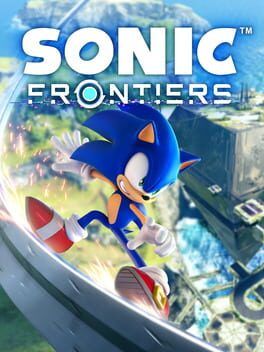

Breaking down the Korean rating leak, the rumored June Switch 2 launch, and what a true Sonic Frontiers Definitive Edition could deliver as a bridge to the next mainline Sonic game.
Sonic Frontiers is not done running yet. After a Korean rating board listing outed Sonic Frontiers Definitive Edition and reliable leaker Billbil-kun pointed to a 23 June 2026 Switch 2 release date, it looks like Sega is preparing one more major lap for its open zone experiment right as Sonic hits his 35th anniversary.
What is concrete so far is thin. South Korea’s Game Rating and Administration Committee rated Sonic Frontiers Definitive Edition, which is often the first hint that a new SKU is being readied. No platforms were listed in that filing, but multiple reports point to Nintendo’s next hardware, with a June launch window that conveniently lines up with Sonic’s birthday on 23 June and a reported price of $49.99 with a physical version planned.
Everything else is speculative, yet there are some realistic expectations when you combine what we know about the original release, how the Switch version performed and how Sega has handled Sonic reissues recently.
Why a Definitive Edition Makes Sense Now
Frontiers has quietly become one of the most important Sonic titles of the last decade. Sega reported 4.57 million copies sold as of late 2025, helped by a long tail of free content updates that added new moves, difficulty options and story DLC. It introduced the open zone structure that Sega has openly described as the new foundation for mainline Sonic.
But the one version that never really did that vision justice was the original Switch release. It ran, but it struggled with severe pop in, low resolution, inconsistent frame rates and noticeably downgraded foliage and geometry. On PS5 and Xbox Series X you could see what Sonic Team was going for. On Switch you mostly saw the compromises.
A Definitive Edition tied to Switch 2 is an opportunity to fix that split. Sega gets to reintroduce the “future of Sonic” right as Nintendo launches its own next generation, and it can do that without risking a brand new mainline entry on unproven hardware.
What a Switch 2 Definitive Edition Could Realistically Include
The obvious expectation is that every piece of post launch content will be on the card from day one. That likely means the previously released challenge towers, Battle Rush, new moves like the Spin Dash, the Extra Difficulty mode and the story focused The Final Horizon update rolled into the base package. Calling it Definitive without all of that already included would be a tough sell at any price.
Past that, the more interesting question is how far Sega will push technical upgrades on new Nintendo hardware. Given how scalable the current console versions already are, a realistic scenario for Switch 2 looks like this.
Frontiers on PS5 and Xbox Series already offers a performance focus at 60 frames per second with cuts to resolution, or a higher resolution mode at 30. A Switch 2 version could target a more stable 60 frames per second even in the busier open zones, particularly if Nintendo’s next system really is closer to current gen power. Sonic’s moveset in Frontiers relies heavily on snappy inputs, parries and aerial combo routing, and the game simply feels more in sync with its own ideas when it runs at full speed.
Resolution is the second pillar. The original Switch version had to slash image quality to keep up, which made far off landmarks and rails hard to parse in handheld mode. On a higher resolution screen with more modern upscaling, Sonic’s huge vistas become navigational tools rather than washed out background dressing. Seeing grind rails, puzzle totems and bosses clearly from longer distances does more than just look nice, it helps sell the fantasy of an interconnected island playground.
Then there is draw distance and pop in. The open islands are built around spotting things from afar and sprinting toward them, but on Switch the world seemed to build itself only a few meters ahead of Sonic. A Switch 2 Definitive Edition could lean on beefier memory bandwidth and CPU to push the LOD transitions much further out. Rails, enemies and collectibles appearing naturally in the distance would make exploration feel planned instead of improvised by the engine.
Finally, there is room for cleaner asset work. Higher resolution textures on character models, sharper environmental detail and improved shadows and reflections would pull the game away from the flat, slightly sterile look that crept into some areas. Sega does not have to remake Frontiers to justify a new version, it just needs to unleash assets that were already compromised to squeeze onto 2017 hardware.
The Open Zone Format Loves More Power and Portability
Frontiers is built around long runs, short bursts of combat and scattered puzzle solving. It is a structure that maps surprisingly well to handheld play, and that is part of why a stronger portable is an appealing fit.
On current Switch, portable play magnified the game’s shortcomings. Lower resolution and heavier pop in made scanning the horizon for objectives or parkour lines more difficult on a small screen. Fights against towering Guardians, which depend on reading patterns and climbing their bodies at speed, became harder to parse when detail blurred together.
A more capable handheld mode on Switch 2 would attack those specific pain points. A sharp image at a higher native resolution would make it easier to track rings, rails and enemy tells without sacrificing the sense of scale that the Starfall Islands need. If Sega can keep frame pacing tight in handheld, the result could be the definitive way to play an open zone Sonic on the go, without choosing between speed and clarity.
And because the islands are broken up into discrete spaces with quick travel and clear objectives, they lend themselves to shorter sessions of exploration, challenge clearing or fishing with Big without losing your progress or narrative thread. Frontiers already had the bones of a great portable time sink. The limiting factor was the hardware, not the structure.
A Bridge to the Next Mainline Sonic
The timing of this Definitive Edition is almost as interesting as the technical leap. Sonic Team has already hinted that the next mainline game will build on Frontiers’ template rather than abandon it. If that is the case, a polished re release on new Nintendo hardware functions as both a victory lap and a primer.
Getting Frontiers on Switch 2 in a form that more closely mirrors the higher end versions lets Sega reset the narrative around the open zone experiment for a wider audience. Many players who only tried the game on Switch bounced off the performance. Giving those players a better first impression before the next big project lands could be crucial if Sega wants this structure to stick around.
It also keeps Sonic in the conversation throughout 2026 without forcing Sonic Team to rush a true sequel. A 35th anniversary year anchored by a definitive, technically improved Frontiers on fresh hardware buys time while still giving fans something substantial to play. When the follow up eventually appears, there is a larger base of players familiar with the control scheme, progression ideas and world design that Sonic Team is is likely to evolve rather than replace.
Will Sega Go Beyond Technical Fixes
The wildcard is whether Sega uses this Definitive Edition to tweak any of Frontiers’ design rough edges. Criticisms of the original went beyond performance, from uneven pacing between islands to a reliance on 2D cyberspace levels that some fans felt clashed with the new open format.
Deeper structural changes are less likely, if only because they are expensive and risk fragmenting how the game is discussed across platforms. Still, a Definitive Edition could bundle quality of life refinements that Sonic Team added based on post launch feedback, such as expanded control options and balance tweaks to progression. Even small changes to reward rates, skill unlock pacing or enemy health values can make repeat playthroughs feel smoother.
If Sega wanted to surprise people, an additional short episode set on a new island or framed as a side story for supporting characters would be the clearest way to justify the Definitive label beyond power perks. There is no concrete evidence of that yet in the ratings or rumors, but if the game is launching in the middle of an anniversary celebration window, Sega may want at least one tangible reason for returning veterans to double dip.
What It Means for Sonic on Nintendo’s Next System
If the Korean rating and June date prove accurate, Sonic Frontiers Definitive Edition will likely arrive as one of the early third party showcases for Switch 2. It will not be the most visually impressive thing on the platform, but it is a recognizable IP that already straddles the gap between traditional platforming and open world design.
For Sega, success here could set expectations for how far it is willing to go in optimizing Sonic for Nintendo hardware rather than simply scaling down from other consoles. For Nintendo, having Sonic’s first modern open zone outing represented properly on its new system fills a genre gap that its own launch window lineup might not cover.
There are still many unknowns. Sega has not officially confirmed the project, there is no upgrade path announced for existing Switch owners, and we do not know if other platforms will receive similar bundles. What the rating leak and reported Switch 2 launch window make clear, though, is that Sonic Frontiers is not a one and done experiment.
If Sonic’s future really is built on the open zone blueprint, then a polished, portable, technically confident Definitive Edition on Nintendo’s next handheld hybrid is not just a rerelease. It is stage setting for whatever comes next.