
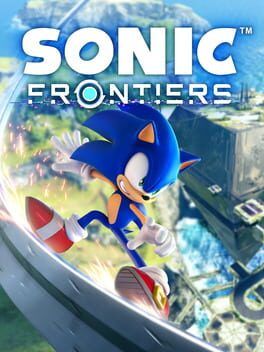

A Korean rating has outed Sonic Frontiers: Definitive Edition. Here’s what a new version could realistically include, how it might treat existing owners, what it means for Switch 2, and whether Frontiers deserves a second commercial run.
Rumors around Sonic rarely stay quiet for long, and Sonic Frontiers is back in the spotlight thanks to a new listing from South Korea’s Game Rating and Administration Committee. The board has rated something called “Sonic Frontiers: Definitive Edition,” which instantly pushes this from wild speculation into “this is basically happening, we just don’t know how yet.”
The rating itself is barebones. There are no platforms, no feature breakdown and no description beyond the title. That leaves fans and analysts reading between the lines, and there is actually quite a lot we can reasonably infer from Sonic Frontiers’ history, Sega’s recent re‑release strategy and the current hardware landscape.
What the Korean rating actually confirms
Ratings boards leak games constantly, but they almost never list a new edition unless a publisher has submitted real paperwork and content. South Korea’s board previously outed Sonic Origins Plus before Sega announced it, and the Sonic Frontiers: Definitive Edition listing follows the same pattern.
The important part is the wording. “Definitive Edition” suggests more than a simple price drop or GOTY label. It implies a content‑complete, possibly improved build that Sega can put back on digital store shelves as a fresh product window. For Frontiers that timing lines up with Sonic’s 35th anniversary window and Sega’s broader push to keep older titles cycling alongside new projects like Sonic X Shadow Generations.
What we do not have yet is any indication that this is a platform‑exclusive situation. The original game shipped on PS5, PS4, Xbox Series X|S, Xbox One, Switch and PC. A Korean rating usually lists a single product, not per‑platform SKUs, so it simply tells us a new build exists, not where it will end up.
What a "Definitive Edition" realistically includes
Sonic Frontiers already occupies a weird space for a re‑release. Most “complete” or “definitive” editions bundle paid DLC into a single package. Frontiers launched in 2022, got several title updates and then a substantial Final Horizon story expansion in 2023, all of which were free. There is no season pass to fold in or cosmetic packs to bundle.
That means a Definitive Edition has to justify itself in three main ways: new content, structural or mechanical tweaks, and technical upgrades.
On the content side, the safest bet is that every post‑launch update ships on disc or in the base download. That includes the challenge modes, jukebox, new moves and Final Horizon’s playable Tails, Knuckles and Amy. For new buyers this removes the need to pull down multiple patches and creates a single, coherent version of the game.
The more interesting question is whether Sega goes beyond this. Given how heavily Sonic X Shadow Generations leans on refining the Frontiers style of movement and combat, there is a realistic chance that Sonic Team has used the last few years to iterate on their open‑zone template. A Definitive Edition is the perfect place to quietly slot in those improvements: slightly tighter physics, better homing attack targeting, smoother combo cancel windows and maybe some reworked enemy patterns on the islands.
There is also room for genuinely new micro‑content that does not require building entirely new islands. Shorter cyberspace stages, extra Guardian encounters, new Koco challenges or time attack variants of existing missions are all plausible. Sega does not need to promise a full “Frontiers 1.5” to make the package feel fresher, it simply needs enough additions that marketing can bullet point “new challenges” and “expanded open zones.”
The biggest wishlist item from fans is visual and structural polish. Pop‑in was the single loudest criticism at launch, particularly on Switch. A Definitive Edition with reworked asset streaming, adjusted draw distances, more aggressive level of detail and better foliage culling would not just look better, it would make the open zones feel less bare and fragile. On current consoles and PC there is room to also tweak resolution and framerate targets, giving PS5 and Xbox Series X|S players more stable 60 frames per second modes.
Expect any physics‑heavy or combat rebalance tweaks to appear in a patch for existing owners as well. Sega has generally kept parity between versions, with the paid product positioning coming from how neatly everything is packaged for newcomers.
Upgrade paths and how Sega usually plays this
The delicate part is how Sega treats people who already bought Sonic Frontiers. History suggests a few likely paths.
With Sonic Origins Plus, Sega sold the “Plus” content as a cheap upgrade for existing owners while also putting a complete new SKU on shelves. For Yakuza and Like a Dragon, the publisher has alternated between free next‑gen upgrades and paid re‑buys depending on how extensive the changes were.
Because almost all of Frontiers’ current DLC is free and already available to everyone, it is difficult to imagine Sega walling off fundamental gameplay or quality‑of‑life improvements behind a full‑price re‑purchase. If the Definitive Edition introduces systemic tweaks, expect those to land as a patch on the existing game. That keeps the player base unified and avoids a backlash from fans who supported the game early.
Where Sega can justify a new purchase is with bonus content and convenience. A likely scenario is a modestly priced upgrade on current platforms that unlocks any new challenges, cosmetics or side missions, with the Definitive Edition branding reserved for a boxed release and a clean digital listing targeting players who never picked Frontiers up in the first place. Limited‑run physical extras and artbook‑style packaging would make sense here, especially for collectors who missed the original print.
If Sega decides to treat certain technical enhancements as platform features, such as ray tracing modes on PS5 or Series X, these would almost certainly arrive as free title updates. Modern console storefronts are not kind to fragmented builds, and Sega has been moving toward single, versioned apps rather than parallel “old” and “new” clients for the same game.
Switch, Switch 2 and where this likely lands
The original Sonic Frontiers was a minor miracle on Switch. It ran, it was fully featured and it delivered the open‑zone concept on aging hardware, but the trade‑offs were plain: heavy pop‑in, lower resolution and a frequently inconsistent framerate. A Definitive Edition surfaces right as Nintendo’s next system is widely expected to arrive, which naturally raises the question of how Sega plans to handle both.
For existing Switch owners, a straight port of the Definitive Edition is almost a given. The Korean rating does not name platforms, but Sega has no reason to abandon a user base where Sonic traditionally sells well. Expect a patched and bundled build on current Switch that rolls every update and Final Horizon into one, possibly with slightly more aggressive optimization now that Sonic Team has spent years with the codebase.
The more exciting angle is a potential Switch 2 version. If the new hardware delivers the sort of performance leap rumored by developers, then Sonic Frontiers suddenly has room to breathe. Higher native resolution, a locked 60 frames per second target, dramatically improved draw distances and higher quality textures would finally bring the “Sonic in an open world” pitch closer to how it looks on PS5 and Series X, but with the portability Nintendo hardware offers. Sega likes to be present early on Nintendo platforms, and a shiny, improved Frontiers is an easy candidate for a cross‑gen launch window release.
Whether Switch 2 gets a separate “Next‑Gen” SKU or simply runs the Definitive Edition with enhanced settings will come down to Nintendo’s upgrade policies. If Nintendo supports smart delivery‑style upgrades or cross‑buy, Sega could position the Switch 2 build as a free or low‑cost upgrade for digital owners, mirroring how some third‑party publishers handled the PS4 to PS5 transition. If it does not, then a full‑price next‑gen listing is more likely, perhaps with introductory discounts for early adopters.
Does Sonic Frontiers deserve a second commercial push?
The last piece of the puzzle is whether Sonic Frontiers is actually strong enough to justify this re‑launch. On paper the answer leans toward yes.
Commercially, Frontiers has been one of Sonic Team’s better modern performers. The game has cleared millions of copies across platforms and has shown long tail legs thanks to discounts, word of mouth and the generous support cycle that culminated in Final Horizon. Critically it landed in the low to mid‑70s, but fan reception skewed more positive, especially among players hungry for an ambitious Sonic experiment after years of safer 3D entries.
Perhaps more importantly, Frontiers is a foundational pivot for the 3D series. Sega has already indicated that future Sonic games will continue building on its open‑zone structure. That alone makes a Definitive Edition strategically attractive. It gives Sega a second chance to lock in the game as a reference point, fix the roughest edges, surface the best post‑launch content for late adopters and keep the Frontiers style in circulation while whatever comes next stays in development.
The risk is fatigue. A portion of the audience already played Frontiers to exhaustion, especially if they pushed through Final Horizon’s late‑game difficulty spike. For them the appeal of another purchase will depend entirely on how substantial the new content and technical upgrades are. A glorified “everything on disc” release would land softly, recognized more as a convenience for newcomers than a must‑have for veterans.
From a market perspective though, the timing is intelligent. A re‑release aligned with Sonic’s 35th anniversary celebrations and a possible new Nintendo system gives Sega clear beats to market against. It provides an action‑heavy, open‑ended Sonic to sit on shelves next to whatever new project the anniversary brings, while also letting the publisher squeeze more value out of a game that already has its engine, content structure and pipeline in place.
The realistic expectation right now
Until Sega formally announces Sonic Frontiers: Definitive Edition, the safest working assumption is a package that standardizes the “final” version of the game across platforms, bundles every free update and Final Horizon, lightly tweaks gameplay and balancing based on the last few years of feedback and tightens up performance where possible. New buyers get an easier entry point, current owners get patches and a potential low‑cost upgrade to any fresh content, and Sega gets a relatively low‑risk way to keep Sonic’s open‑zone experiment in the conversation as the series heads into its next phase.
The Korean rating means it is no longer a question of if this Definitive Edition exists, only when Sega wants to show it and how generous it plans to be with the improvements. For Sonic Frontiers, a game that already felt like a prototype for the future of 3D Sonic, that second swing might be exactly what it needs.