
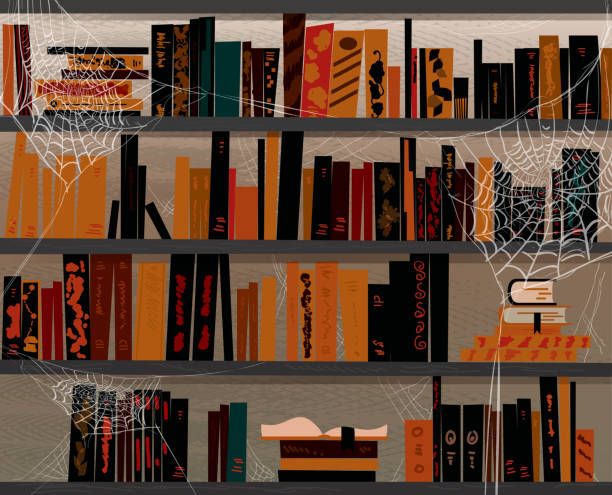

Strange Scaffold has revealed Something Is Wrong With the Library, a PC haunted library game about shelving real books, civic violence, and one long night inside a library that will not stay quiet.
Image: istockphoto.com
Strange Scaffold’s next horror setup starts with a shelving cart
Strange Scaffold has announced Something Is Wrong With the Library, a haunted book sorting horror game coming to PC via Steam this fall. The reveal, distributed through a Games Press announcement and covered by outlets including Gematsu, GamesBeat, MonsterVine, and Console Creatures, puts players inside the Alex Dieter Public Library and Center for Reflection for one tense night of cleaning, organizing, and uncovering why the building is haunted.
The concrete hook is unusually practical for an indie horror game: players shelve hundreds of real books, return fallen and misplaced titles, and organize the collection using Dewey Decimal System classification, author, and title. The pressure comes from what Strange Scaffold says is behind the mess. The library is built around the crimes of Alex Dieter, a billionaire credited with reshaping the small mountain town of Sweet Elm into a curated technology-focused community, while also killing unhoused people and hiding their bodies in the library walls.
That contrast is the reveal’s sharpest edge. Something Is Wrong With the Library is being pitched as a cozy organizing game haunted by blood, meat, supernatural violence, and civic complicity. The result sounds less like a chase-heavy survival horror pitch and closer to a slow, procedural nightmare, where the task is simple enough to understand and the building keeps making that task feel unsafe.
A quiet library job is a strong horror engine
The announcement leans into a familiar fear that horror games often overlook: the terror of a place that is supposed to be calm becoming acoustically wrong. Strange Scaffold studio head Xalavier Nelson Jr., quoted in the press release and by Gematsu and GamesBeat, described the feeling of a library at night as “unexpectedly warm and full of possibility” until an unfamiliar sound reminds you that you are surrounded by “towering shadows.” Nelson also said he is a former librarian, and hopes players come away loving their local library despite the “objectively messed up things” they will witness.
That background matters because the horror here appears to be built from labor, layout, and attention rather than from weapon stats or inventory scarcity. A player sorting books has to read labels, remember rules, scan rows, and turn their back on open space. Every shelf becomes a blind corner. Every fallen book can be either a task marker or evidence that something has moved. A Dewey number is calm on paper, but in a haunted library game it becomes a reason to walk deeper into the stacks.
Strange Scaffold’s stated features point toward tension created through interruption. The game has a fully voiced story and “an entire library of eerie manifestations to unlock,” according to the Games Press announcement. MonsterVine reports that players can trigger numerous supernatural manifestations throughout the night, while noting that Strange Scaffold is keeping some of those events vague for now. That vagueness is sensible for horror marketing, but it also leaves the key design question open: how often will the haunting alter the job, and how often will it simply decorate it?
The books are real, and the sorting rules sound deliberately mundane
Across the announcement materials, Strange Scaffold emphasizes that the Alex Dieter Public Library is filled with thousands of real book titles. Players are tasked with returning hundreds of them to order. The work is specific: fallen and missing books must be organized by Dewey Decimal System classification, author, and title.
That specificity is the part to watch. Book sorting horror only works if the sorting has enough texture to create focus without becoming clerical noise. If Something Is Wrong With the Library treats its catalog as a readable space, players may learn the building the way survival horror players learn police stations, mansions, and doomed facilities. If the classification work is too frictionless, the horror risks losing the careful attention that makes a quiet room dangerous.
The announced Modular Chaos System is the most important mechanical signal so far. According to the Games Press release, every playthrough gives players a different set of books to shelve. MonsterVine similarly describes the system as changing which books need attention during each run. That suggests the game is designed to make repeat visits less predictable, though Strange Scaffold has not detailed whether the system changes only the workload, the haunting events, or the route players take through the building.
For players who prefer horror with clear resource pressure, this may be a different rhythm. The announced materials do not mention weapons, combat, fail states, stamina, light management, or hiding. The pressure currently confirmed is organizational, narrative, and environmental. That can be enough if the library behaves like a hostile space and the player’s attention becomes the resource being drained.
Sweet Elm’s haunting is political, not accidental
The story premise is unusually blunt. Strange Scaffold’s description says Alex Dieter has revitalized Sweet Elm through fiber internet, landscaping, and civic initiatives, while also killing unhoused people as part of a stated effort to “cleanse” the city and hiding their bodies in the local library. The building is now haunted, and players work with former administrator Phillip Shed to clean and organize it while unraveling a story of complicity, supernatural violence, and what it takes to bring a haunted place peace.
That framing gives the haunted library game a different charge than a simple ghost story. The haunting is tied to public image, municipal comfort, philanthropy, and whose suffering gets sealed away to preserve a town’s pleasant surface. The sources describe the library as both a community institution and a crime scene. That tension gives Strange Scaffold room to make every act of restoration morally uneasy. Are players repairing a violated public space, disturbing evidence, or helping the dead be acknowledged? The announcement confirms the broad premise, but not how much agency the player has in confronting it.
The presence of Phillip Shed is also worth watching. Console Creatures refers to him as a former librarian, while the Games Press announcement and Gematsu describe him as the library’s former administrator. That is a small wording difference, but in a story about institutional complicity, job title can carry weight. The sources agree that Phillip helps the player through the night. They do not yet clarify what he knew, what he failed to stop, or whether his guidance can be trusted.
The Drowning Room is the reveal’s loudest unanswered question
Of all the confirmed features, the strangest is the shortest: “The Drowning Room.” It appears in the official key features as a standalone line, repeated by GamesBeat, Gematsu, and MonsterVine. Strange Scaffold has not explained what it is.
That restraint is doing work. Horror design often lives or dies on named spaces that teach players to dread a door before they open it. “The Drowning Room” implies a location, an event, or a system with enough importance to be advertised without context. In a game about a library, a room defined by drowning cuts against the expected dry quiet of paper and carpet. If the rest of the game asks players to maintain order, this is the feature that suggests the building has a deeper, less orderly anatomy.
The reveal also leaves several practical survival questions unanswered. We do not know whether manifestations can hurt the player, whether the night has a timer, whether incorrect shelving has consequences, or how much replayability the Modular Chaos System adds beyond a changed to-do list. We also do not know whether the fully voiced story is linear, branching, or tied to which books and manifestations players encounter. Those are the details that will determine whether Something Is Wrong With the Library plays like an atmospheric narrative sim, a task management horror game, or something harsher.
Release timing, platform gaps, and publisher details
The confirmed launch plan is PC via Steam this fall. Gematsu links the Steam page, and the Games Press announcement says the Strange Scaffold horror game is launching on PC via Steam. No exact release date has been announced in the provided materials. There is also no confirmed price, no PC requirements, no Steam Deck status, and no console version listed in the sources.
Publisher information is slightly uneven across coverage. Gematsu identifies Frosty Pop as publisher, and Strange Scaffold as publisher and developer. The Games Press release frames Strange Scaffold as the developer announcing the title. GamesBeat and MonsterVine also describe Strange Scaffold as the developer. Until store and press materials settle into a final credits page, readers should treat Strange Scaffold as the confirmed creative studio behind the game and note that Gematsu reports Frosty Pop involvement on the publishing side.
For now, the practical guidance is simple: wishlist or follow the Steam page if the premise appeals, but wait for a release date and system requirements before planning around launch. Players looking for combat-heavy horror should also wait for footage or hands-on impressions that clarify whether the game has direct threats. Players drawn to oppressive spaces, audio-led tension, and the stress of performing careful work while a place turns hostile have much more reason to keep it on the radar.
What to watch before the library opens
The next meaningful updates should answer how the game balances cozy organization with danger. The best version of Something Is Wrong With the Library would make every ordinary action carry a cost: checking a title, crossing a dark reading room, returning to a shelf that was straight a minute ago, hearing one sound too many from somewhere behind nonfiction. The reveal’s strongest promise is that the player’s job requires attention, and horror is excellent at punishing attention.
The announcement trailer, referenced in the Games Press materials and Gematsu’s coverage, should be the first stop for readers who want tone rather than feature language. After that, the important details to watch are release date, price, PC requirements, how the Modular Chaos System changes repeated nights, and whether “eerie manifestations” are scripted scares, systemic threats, or both.
Something Is Wrong With the Library has a clean pitch because the everyday task is already vulnerable. A library after closing is all silence, rows, and rules. Strange Scaffold is adding bodies in the walls, a billionaire’s buried violence, and a shelving job that asks players to keep working anyway. For horror players, that is the part that lingers: the monster may be in the building, but the game still expects you to alphabetize.