
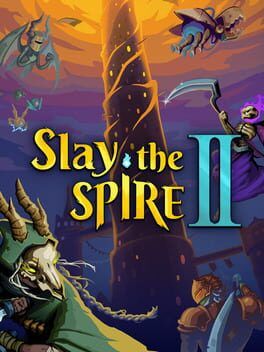

Mega Crit’s second major Slay the Spire 2 update tackles a broken RNG system exposed by an eight hour fan investigation, removes a divisive Act 3 boss, adds Steam Workshop support, and rebalances progression, all in direct response to community feedback.
A Community-Powered Course Correction
Slay the Spire 2’s second major update is less a routine patch and more a public case study in how responsive Early Access can be when a developer is willing to listen. In one sweep, Mega Crit has rebuilt the game’s RNG, added full Steam Workshop support, removed and replaced a controversial Act 3 boss, and reshaped progression across runs. Nearly every headline change can be traced directly back to player feedback, from broad sentiment on Reddit and Discord to one player’s obsessive eight hour dive into the game’s random number generator.
The Eight Hour RNG Exposé That Forced a Rework
For months, parts of the community insisted that Slay the Spire 2’s randomness did not feel quite right. Neow’s Bones curses seemed to clump. Certain outcomes felt eerily repeatable across fresh saves. The kind of pattern recognition that only thousands of runs can give you was telling veteran players that something was off.
One player, known as tckmn, decided to prove it. They recorded an exhaustive eight hour video investigation that treated the game’s RNG like a lab specimen. By controlling variables, repeating specific scenarios, and documenting results in painful detail, they showed that some outcomes were not as independent as they should be. Mega Crit later described the discovery as “correlated RNG” and openly acknowledged that without this investigation they probably would not have caught the issue.
That level of transparency matters. Instead of hiding behind patch notes, the studio directly credited the player’s work, admitted the system was behaving in unusual ways, and committed to a full rework rather than a quick bandage. In terms of community dynamics, it sent a clear signal: if you bring hard evidence, the team will engage.
How the RNG Rework Changes the Spire
The core goal of the rework is to make outcomes feel independent and fairly distributed over time. The patch specifically calls out Neow’s Bones curses, whose rolls now use a separate, properly randomized system instead of sharing state that could create streaks or patterns. Under the old setup, the same types of curses or events could appear at suspiciously high frequencies if you nudged the system the right way, which in a roguelike can quietly warp balance.
For players, the change is less about suddenly winning more and more about trusting the climb. When you wipe on a doomed run now, the blame lands on your draft, your routing, or your combat sequencing rather than a half broken dice roller. That psychological shift is enormous in a genre where perceived fairness is the difference between “one more run” and uninstalling.
It also raises the ceiling on high level play. When randomness behaves consistently, expert players can better evaluate risk, estimate the value of events, and fine tune their builds around expected distributions instead of weird superstitions that came from buggy odds. The update quietly restores the same feeling that made the original Slay the Spire so enduring: randomness that is sharp, punishing, but reliably honest.
Steam Workshop Support Turns Modding Into a First Class Feature
While the RNG saga grabbed headlines, another community request finally landed in this patch: native Steam Workshop support. Modding has always been a core part of Slay the Spire’s long tail on PC, but in Slay the Spire 2’s early access phase most mods lived in a rougher, manual install ecosystem.
With Workshop support, Mega Crit has essentially formalized what the community was already doing. Players can now browse, subscribe, and manage mods directly through Steam. The update also adds extra guardrails on the technical side, such as preventing broken or removed mods from deleting progress and improving how the game handles mod data. For creators, official Workshop integration reduces friction and expands their audience. For everyday players, it transforms modding from a niche hobby into a mainstream feature.
This is also a subtle but meaningful acknowledgment of how vital the mod scene has been to Slay the Spire’s identity. The community did not just ask for mod support; it effectively proved there was a ready made modding ecosystem that deserved official tools. Mega Crit’s answer is a system that respects that investment instead of trying to replace it.
From Doormaker to Aeonglass: A New Act 3 Boss Born From Criticism
The patch does something most developers treat as a last resort: it removes an entire Act 3 boss from the game. The Doormaker, a strange late game encounter introduced in Slay the Spire 2, had become a lightning rod for criticism. Players found it awkwardly tuned, more frustrating than tense, and mismatched with the rest of the act’s pacing.
In response, Mega Crit took the nuclear option and scrapped the fight outright. In its place stands Aeonglass, a newly designed Act 3 boss that asks very different questions of your deck. Aeonglass leans into Wither curses, feeding your hand with debuffs that directly damage you and scale up as the boss upgrades them. The flow of the fight pushes you toward a race between your deck’s damage scaling and the rapidly intensifying punishment of those curses.
This redesign is a clear case of feedback shaping content, not just numbers. Instead of quietly tweaking Doormaker’s damage or health, the team accepted that the concept simply was not working and started over. That willingness to burn a boss slot in the name of long term health is only possible because early access encourages radical iteration, and because the volume of consistent player criticism made it impossible to ignore.
Progression Rebalanced Around Player Friction
Beyond headline features, the update makes broad balance and progression changes that again track closely with what players have been asking for. Early access feedback repeatedly highlighted pain points such as uneven difficulty spikes in certain acts, overperforming or underperforming relics, and a sense that some characters’ routes through the Spire lagged behind others in terms of rewards and viable builds.
The patch adjusts encounter difficulty, shuffles relic and card balance, and refines how rewards are doled out between fights, shops, and events. The goal is not to make the game easier but to make each run’s power curve feel smoother and more responsive to your choices. When you invest in a build path now, the odds of finding payoffs along that route feel more reasonable without losing the high variance that makes roguelike deckbuilders so addictive.
Community sentiment seems to have guided not only individual buffs and nerfs but also the overall philosophy of the changes. Players wanted a game that hits harder but more fairly, where spikes feel earned rather than arbitrary. Combined with the RNG rework, the new tuning nudges Slay the Spire 2 toward a state where losses feel like harsh lessons instead of bad dice.
Early Access As A Dialogue Instead Of A Demo
Taken together, these changes paint a clear picture of how Mega Crit views early access. The studio is not using it as a marketing period for a mostly finished product. It is using it as a space where systems such as RNG, endgame bosses, and progression can be torn down and rebuilt in public, guided by a community that is both vocal and unusually analytical.
The RNG fix would not exist without an eight hour community deep dive. The new Act 3 boss is a direct replacement for an encounter that players repeatedly criticized. Steam Workshop support is the formal recognition of a modding culture that had already proven its value. And the progression changes are laced with small, specific tweaks that read like direct answers to thousands of forum posts and run breakdowns.
In a crowded roguelike landscape, that kind of responsiveness is becoming a differentiator. Slay the Spire 2’s latest update shows that Mega Crit is comfortable letting players into the design process, even when it means admitting that core systems are flawed. If this is what “four patches in one” looks like this early in development, the climb to full release might be as fascinating to watch as it is to play.