
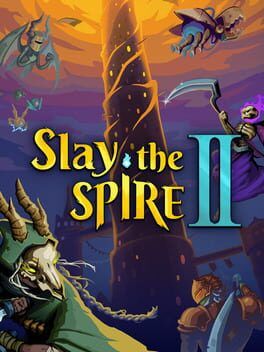

Mega Crit’s roguelike sequel exploded out of Early Access with 3 million sales in a week, but its newly announced phobia accessibility mode and incoming Steam Workshop support may be what truly future‑proof the Spire.
Slay the Spire 2 has had the kind of Early Access launch most studios only dream about. In its first week, Mega Crit’s sequel racked up 3 million copies sold and over 25 million runs according to studio co‑founder Casey Yano, instantly turning it into one of Steam’s biggest roguelike launches.
What is interesting is how quickly the team has pivoted away from victory laps and toward infrastructure that could reshape who can play the game and how long they will stick with it. The headline items in Mega Crit’s early post‑launch plans are not more cards or a new class, but a phobia accessibility mode and official Steam Workshop support.
Those two features say a lot about how Slay the Spire 2 is being positioned in Early Access: not just as a content treadmill for an already‑captive audience, but as a platform that can welcome more players in and let the community help carry it for years.
Phobia accessibility mode: opening the door to players who bounced off the first game
The original Slay the Spire did not lean on explicit horror, but its art style has always been tinged with the grotesque. Slay the Spire 2 pushes further with weirder, more detailed creature designs, and for some players that is an immediate deal‑breaker. Spider‑like enemies, writhing appendages, and insectoid bosses are not just “a bit creepy” for people with specific phobias. They can be completely unplayable.
Mega Crit’s March “Neowsletter” confirms that a dedicated phobia accessibility mode is coming in a future update. The feature was highlighted again in coverage that called out a particularly unsettling enemy, the Decimillipede, as the sort of design likely to trigger discomfort. The goal is simple: let players adjust or hide the most disturbing enemy visuals without gutting the rest of the game’s personality.
The studio has not detailed the exact implementation yet, but there are a few likely directions. Some games swap out spider models and similar creatures for alternative art, others let you toggle simplified silhouettes or heavily blurred textures. Mega Crit’s language points toward “diminishing the creepiness” of specific foes rather than removing them entirely, which suggests they are looking for solutions that keep combat readable and mechanically intact while softening or replacing the worst triggers.
For a single‑player deckbuilder, that sort of accessibility might sound niche. In practice it could quietly add a large group of players who watched Slay the Spire for years, knew every relic by name from Twitch, and still never touched it because one screenshot set their skin crawling. Early Access is typically framed around balance passes and difficulty curves, but content accessibility is just as important for growing an audience beyond your core.
The interesting wrinkle is how this feature intersects with Slay the Spire 2’s broader aesthetic ambitions. The sequel’s creatures are stranger, more animated, and more lavishly rendered than before. Committing to a phobia mode this early means Mega Crit is baking flexibility into their art pipeline during Early Access, which should make future enemies easier to “tone down” without compromising their basic design. That is a strong signal that accessibility will be treated as an ongoing pillar rather than a one‑off toggle.
Workshop support: giving a 3 million‑player audience tools to keep the Spire alive
If phobia mode is about who can play Slay the Spire 2, Steam Workshop support is about how long they will keep coming back.
Slay the Spire 1’s modding scene helped keep that game relevant for years past launch. Entire fan‑made characters, challenge modes, and mechanical rewrites flourished even without fully integrated Workshop tools. For the sequel, Mega Crit has been clear that moddability was a design goal from the ground up. The game is running in a new engine, with more modern hooks, and the team has openly said they want to expand mod support over the course of Early Access.
The March update roadmap finally puts a name on that ambition: Steam Workshop support is confirmed as a planned feature. The developers are not attaching a specific date, but they are publicly committing to the infrastructure that turns Slay the Spire 2 from a single authored experience into a long‑term platform.
For a roguelike deckbuilder, Workshop integration is especially potent. The core loop of Slay the Spire is built around discovering new card synergies, improvising builds on the fly, and navigating unpredictable runs. Mods slot into that structure almost perfectly. New characters can arrive with entirely fresh resource systems. Custom cards and relics can push wild, high‑variance strategies that would never survive official balance passes. Alternate acts or events can fill in the gaps between Mega Crit’s own content drops.
The sheer size of Slay the Spire 2’s Early Access audience changes the calculus too. Three million players in a week does not just mean impressive revenue, it means an enormous pool of potential mod makers and playtesters. When you bolt Workshop on top of that base, you get an ecosystem that can generate and refine ideas at a pace no small studio can match on its own.
There are risks. The more central modding becomes, the more fragile long‑term compatibility can feel as official patches roll out. But Workshop support at least gives the community standardized tools, clearer versioning, and a central discovery hub. For players who bounced off of hand‑tuned difficulty spikes or specific encounters in the base game, curated mod collections and mode overhauls can make Slay the Spire 2 feel approachable in ways the vanilla climb never does.
Early Access without a rigid roadmap
Both of these features sit inside a broader philosophy Mega Crit has laid out for Slay the Spire 2’s Early Access period. The studio has been unusually direct about not publishing a detailed, date‑driven roadmap for major features. Outside of what is already confirmed, like alternate acts for Acts 2 and 3 plus more cards and events, the team wants freedom to react to feedback rather than chase self‑imposed deadlines.
Instead of a glossy infographic of quarterly milestones, the current picture looks more like a cluster of pillars that reinforce each other.
Phobia accessibility mode sits alongside a badge and scoring system revamp, a friends‑only leaderboard filter, and more art and VFX. Those changes are aimed squarely at letting more people feel comfortable playing and competing. Steam Workshop support is grouped with multiplayer quality‑of‑life improvements and Twitch plugin integration, a trio of features that turn Slay the Spire 2 into a better spectator and social experience.
That is an interesting contrast to the game’s raw sales momentum. Many studios follow a big Early Access blowout with aggressive content roadmaps that try to convert launch buzz into pre‑sold DLC or hard seasonal beats. Mega Crit is instead spending their early capital on infrastructure: accessibility options, mod hooks, and systems that help the community entertain itself.
For players, the practical upshot is that the next few months of Early Access may feel less like a conveyor belt of new cards and more like a period of foundational work. Those foundations matter. If the original Slay the Spire is any indication, balance passes and new relics will keep coming, but the features that most determine the game’s long tail are the ones that govern who can step onto the Spire at all and how many different ways they can climb it.
Expanding audience and replayability at the same time
It would be easy to look at three million sales in a week and assume Slay the Spire 2 has already tapped out its market. The phobia accessibility mode is a reminder that there is still a meaningful number of potential players quietly sitting on the sidelines. Workshop support is a promise that the players who are already in will have reasons to keep climbing long after the official content list is “done.”
The combination is what makes this Early Access roadmap stand out. Accessibility modes often arrive late and feel tacked on, while Steam Workshop integration can be limited to a checkbox and a lightly moderated upload form. In Slay the Spire 2, both features are being surfaced early and treated as headline items in the same breath as sales milestones.
That framing matters more than the numbers. The first week proves that the audience is there. Phobia mode and Workshop are about making sure that audience can actually play comfortably, shape the game in their own image, and keep the Spire alive long after Early Access ends.