
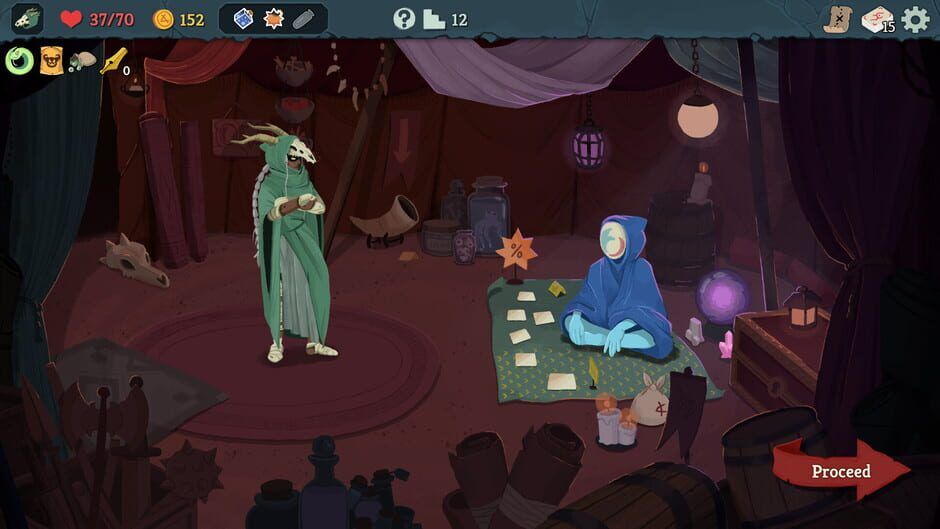

Mega Crit’s refusal to add microtransactions in Slay the Spire 2 isn’t nostalgia, it’s a systems choice that reinforces its premium roguelike identity and reshapes how its 2026 roadmap and early access are built.
Slay the Spire 2 is launching into early access at a time when almost every successful, replayable game gets pushed toward a battle pass, a cosmetics shop, or a “just skins, don’t worry” cash register in the corner of the main menu. Mega Crit has gone in the opposite direction and drawn a line in the sand: no microtransactions, now or later.
That stance is not just a feel‑good quote for social media. It is a design constraint that shapes how Slay the Spire 2’s systems, progression, and roadmap have to work if the sequel is going to stay relevant through 2026 and beyond.
A premium roguelike that sells itself once
Lead developer and Mega Crit co‑founder Casey Yano has been very clear in recent interviews: the studio are “microtransaction haters.” Players have already flooded forums and social feeds promising to buy any cosmetics the team might someday sell. Mega Crit’s response is to do nothing. Once you’ve bought Slay the Spire 2, that is the last time the game expects money from you.
Framed in purely systemic terms, that decision forces Slay the Spire 2 to live and die on three things: the depth of its card pools, the richness of its random events, and the longevity of its difficulty curve. There is no fall‑back plan where a weak content patch still makes money because it shipped with a lucrative skin bundle.
Instead, the “product” Mega Crit is selling for the next several years is the core run. Every draft choice, every relic synergy, every new character and alternate act has to be strong enough that players want to come back based solely on the experience, not on a fear of missing out.
Why players reacted so strongly
The reaction to Mega Crit’s stance has been loud enough to become its own news cycle. Part of that comes from simple relief. Slay the Spire is the rare series where players genuinely want to spend more money. The original has become a comfort game for millions of people, an evergreen staple of the roguelike and deckbuilder scenes, and it still sells years after release.
In that context, hearing “no microtransactions ever” feels almost alien. Fans are used to seeing games like this pivot into battle passes, seasonal cosmetics, or experience boosters once they prove sticky. When a developer voluntarily walks away from that money, it sends a signal that their priorities really are aligned with players.
There is also a trust dividend. Slay the Spire 2 is already in very active early access development. Systems will be rebalanced, characters will be buffed and nerfed, and whole mechanics like Ascension will continue to evolve. Knowing that none of those balance passes are being steered to optimize shop engagement makes people more willing to ride out the bumps.
That shows up in how people talk about the game. Reviews and forum posts keep coming back to the idea that Slay the Spire 2 “feels like an old school premium PC game” even while it is experimenting with modern co‑op, modding hooks, and a long tail roadmap.
Early access as a substitute for live‑service monetization
In a typical service game, the live team’s job is to drip feed just enough content to keep players around between big updates, then monetize attention through time‑limited cosmetics and passes.
Slay the Spire 2 has opted for a different loop. The early access period is the service. Mega Crit is selling a front‑loaded ticket to a long, evolving series of design experiments. Instead of promising that you can forever buy new hats for your characters, the studio is promising that your existing characters will keep getting more interesting ways to break the rules of the game.
That changes how content is structured. Small weekly tweaks that might exist in a free‑to‑play title primarily to keep people checking the shop are less important. What matters are the chunky, systemic updates that change how you approach a run: new card archetypes that turn a losing deck into a surprise combo engine, fresh relics that upend how you value energy or card draw, and new map variants that force you to rethink pathing.
The early access cadence becomes less about retention metrics and more about re‑igniting discovery. Each big patch has to make players ask a fundamental question: “What if I try this character or build again under the new rules?”
A 2026 roadmap built around systems instead of skins
Even early in its life, Slay the Spire 2 already has a roadmap stretching through the 2026 full release. Where another roguelike might be planning monetized character skins or premium expansions, Slay the Spire 2’s plans are almost entirely systemic.
New characters are the stars. In a deckbuilder, a character is not just a model and an ultimate ability, it is an entire ecosystem of cards, relic synergies, and event hooks. Without microtransactions, a character release is not a sales beat for a new cosmetic bundle. It is a seismic shift in the meta the way new classes were in the original Slay the Spire.
Alternate acts and new event types fill a similar role. Swapping in a different second act, or inserting new events into old routes, changes how valuable particular cards and relics feel. Because you cannot sell a pass that guarantees access to a specific act, every player will encounter these changes together. That shared context is powerful in a game that lives or dies on community discussion of broken decks and cursed seeds.
Difficulty also lives on the roadmap. Ascension levels, which return from the first game, are one of the most important tools Mega Crit has to keep veterans engaged long after they have “beaten” the early access build.
Ascension as the real endgame economy
Slay the Spire 2’s Ascension system might be the single clearest example of how the absence of microtransactions pushes everything toward pure systems design.
After you clear a run, you unlock Ascension tiers that layer additional penalties on top. In the current early access build, there are ten discrete Ascension levels per character in single player. Each level tweaks a different resource or combat parameter: elites show up more often, healing is less effective, gold income shrinks, you lose a potion slot, you start cursed, rest sites thin out, rarer cards and upgrades appear less frequently, and eventually enemies become both harder to kill and more lethal. The capstone forces you to fight two bosses at the end of Act 3.
Taken together, these modifiers create an organic difficulty ladder that can occupy hundreds of hours per character. Because Ascension progression is character specific in solo play, “finishing” one hero is not the end. Unlocking and mastering higher tiers on the full roster becomes a parallel progression track to chasing new cards and relics.
In a free‑to‑play economy, this kind of endurance content might be tied to boosters or reroll tokens. In Slay the Spire 2, the only thing you can spend to climb Ascension is your time and knowledge. The “grind” is learning how to reshape your deck around those constraints, not farming currency to buy a stronger starting relic.
Co‑op complicates things in a productive way. Ascension unlocks do not carry over from solo, and in multiplayer they are not tied to specific characters at all. Beating the game in co‑op unlocks the next Ascension level for the whole roster in that mode. That makes progression a shared achievement instead of a personal treadmill, a design that again makes more sense when there is no monetized pass riding on individual engagement metrics.
Designing long‑term hooks without a cash shop
If Mega Crit is not going to sell cosmetics or battle passes, it has to think carefully about what makes someone reinstall Slay the Spire 2 a year from now.
The roadmap’s answer is to stack long‑tail systems on top of one another. New characters inject fresh card pools and archetypes. Alternate acts and events remix familiar routes. Ascension keeps pushing ceiling players to refine their understanding of the rules. Mod support, which the team has also committed to improving during early access, hands the community the tools to push even further, turning the game into a platform for experimental challenges.
None of these systems produce immediate revenue once a copy is sold, but they do create a durable reputation. The original Slay the Spire’s word of mouth and years of post‑launch updates are exactly why the sequel exploded out of the gate in early access. Mega Crit is effectively betting that Slay the Spire 2 can repeat that arc: invest in depth and generosity now, trust that the audience will keep growing.
There is also a subtle benefit to balance. When every player has access to every relic, card, and act variant, there is no pressure to protect the perceived value of a premium item. If a relic is warping runs in an unfun way, it can be nerfed hard without anyone feeling like they wasted real money. If a new character overperforms on higher Ascension levels, the team can safely gut or rework problem cards.
What “premium roguelike identity” really means here
Calling Slay the Spire 2 a premium roguelike is not just about the price tag or the lack of a battle pass. It is about committing to a specific kind of relationship with players.
You pay once. In return, you get a game that keeps changing and expanding purely through systems: more interesting choices in combat, more dangerous paths through each act, and more ways for a single draw pile to feel utterly different from your last attempt.
Mega Crit’s dislike of microtransactions sets the boundaries for what Slay the Spire 2 can be. Within those boundaries, the 2026 roadmap, early access structure, and Ascension endgame are all pointing in the same direction. They are building a game whose longevity is measured not in how many cosmetics it can sell, but in how many times you are willing to climb the Spire again just to see if this is finally the run where everything comes together.